
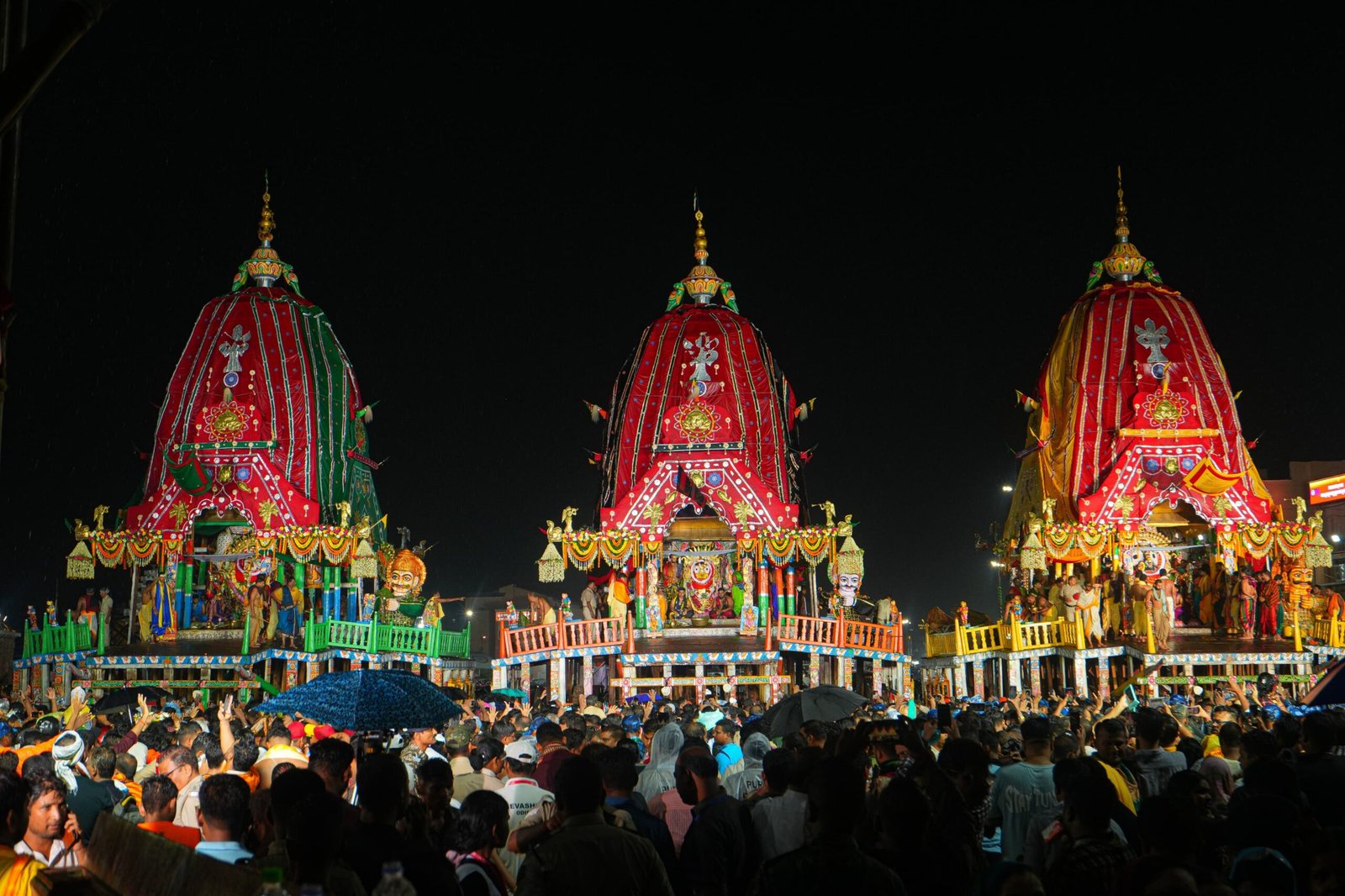
The Rath Yatra of Lord Jagannath is a grand festival celebrated in Puri, Odisha, and is known for its vibrant colors, elaborate rituals, and spiritual significance. The festival culminates in two important rituals: Adhara Pana & Niladri Bije . These rituals are significant not only for their spiritual importance but also for the satisfaction they bring to the creatures and the devotees.
Adhara Pana: A Refreshing Drink for the Deities
Adhara Pana is a ritual where the deities, Lord Jagannath, Lord Balabhadra, and Goddess Subhadra, are offered a refreshing sweet drink made of nine ingredients: Milk, Cheese, Sugar, Banana, Camphor, Water, Black Pepper & Nutmeg. The drink is prepared in huge brass containers on the chariots, and then transferred to earthen pots, which are offered to the deities. The earthen pots are then broken, and the drink spills over the chariots, symbolizing that it is not meant for human consumption but for the subsidiary deities and invisible ghostly bodies that trail the deities during the Car Festival.
The Adhara Pana ritual is significant because it is believed that the drink satisfies the invisible ghostly bodies, evil spirits, and dissatisfied souls, allowing them to attain Moksha (Salvation). Despite the drink not being meant for human consumption, devotees assemble around the chariots to collect the spilled Adhara Pana, which they believe will bring them blessings.
The Significance of Adhara Pana
The Adhara Pana ritual holds great significance in the Rath Yatra festival. It is believed that the drink is offered to the deities to refresh them after their nine-day journey on the chariots. The ritual also symbolizes the satisfaction of the invisible ghostly bodies and evil spirits that trail the deities during the festival. By offering the Adhara Pana, the devotees believe that they can bring peace and salvation to these spirits.

Niladri Bije: The Homecoming Ceremony
Niladri Bije is the final ritual of the Rath Yatra, where the deities return to the main temple after their nine-day stay at the Gundicha Temple. The ritual is marked by a ceremonial procession, where the deities are taken inside the temple via the Jay Vijaya entrance. The procession is known as “Goti Pahandi”.
The most interesting part of the ritual is the tug of war between the servitors representing Goddess Lakshmi and those representing Lord Jagannath. Goddess Lakshmi refuses to let Lord Jagannath enter the temple, angry that she was not allowed to accompany him to the Gundicha Temple. Lord Jagannath tries to convince her, but she remains steadfast. Finally, he offers her Rasagollas, and she accepts his apology, allowing him to enter the temple.

The Significance of Rasagolla in Niladri Bije
The offering of Rasagolla to Goddess Lakshmi is a significant part of the Niladri Bije ritual. Rasagolla is a traditional Odia sweet dish made of cottage cheese and sugar syrup. The offering of Rasagolla symbolizes Lord Jagannath’s apology and his love for his consort. The ritual is also celebrated as “Rasagolla Dibasa” in Odisha, marking the importance of this sweet dish in the state’s culture.
The love of Rasagolla on the occasion of Niladri Bije is a testament to the enduring power of love and devotion. The ritual reminds us that love and devotion can conquer all, even the anger of a goddess. The offering of Rasagolla is a symbol of Lord Jagannath’s love and apology, and it brings joy and satisfaction to the devotees.

Conclusion
The last two rituals of Lord Jagannath’s Rath Yatra, Adhara Pana and Niladri Bije, are significant not only for their spiritual importance but also for the satisfaction they bring to the creatures and the devotees. The rituals remind us of the importance of love, devotion, and apology, and the power of traditional sweets like Rasagolla to bring people together. The Adhara Pana and Niladri Bije rituals are a testament to the rich cultural heritage of Odisha and the enduring power of love and devotion.
By -Debi Prasad Rath