

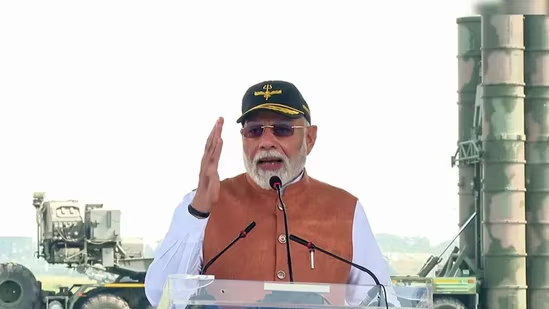
India is set to further strengthen its air defence capabilities as the fourth unit of the S-400 Triumf is currently en route from Russia and is expected to arrive at an Indian port by mid-May. The development comes close to the anniversary of Operation Sindoor, during which the system reportedly played a crucial role.
Deployment Planned in Rajasthan to Strengthen Western Front
According to defence sources, the newly arriving S-400 unit is likely to be deployed in the Rajasthan sector to enhance India’s air defence coverage along the western border with Pakistan. The system is capable of detecting and neutralising aerial threats at distances of up to 400 kilometres, making it one of the most advanced long-range missile defence platforms in the world.
Pre-dispatch inspections of the system by the Indian Air Force were completed by April 18, and the shipment was dispatched shortly thereafter.
Fifth System Scheduled for Delivery Later This Year
India is also expected to receive the fifth S-400 system by November 2026. Reports suggest that this unit may be deployed in the middle sector, keeping strategic considerations involving China in mind.
The government has already approved the procurement of five additional S-400 systems, further expanding India’s multi-layered air defence shield.
Missile Stockpile Being Replenished After Operation Sindoor
Following the extensive use of S-400 missiles during Operation Sindoor, India has reportedly decided to procure around 280 short- and long-range missiles to replenish its inventory and build a strategic reserve.
During the operation, it is estimated that multiple long-range missiles were deployed to intercept and neutralise aerial threats, including fighter jets and surveillance aircraft.
Pakistan Adjusted Air Strategy Amid S-400 Threat
The effectiveness of the S-400 system reportedly forced Pakistan to reposition its aerial assets to bases deeper within its territory, such as Quetta and Peshawar, to avoid potential interception.
Defence analysts suggest that the system’s long-range radar and tracking capabilities significantly altered the aerial dynamics in the region during the conflict.
Plans for Local Maintenance and Additional Defence Systems
India is also exploring the establishment of a domestic Maintenance, Repair and Overhaul (MRO) facility for the S-400 system, potentially involving private sector participation and technology transfer from Russia.
To complement the S-400 and enhance protection against drones and loitering munitions, India is planning to procure at least 12 units of the Pantsir air defence system through a government-to-government deal. Additionally, around 40 more systems may be produced domestically under the “Make in India” initiative.
Strengthening India’s Multi-Layered Defence Network
The induction of additional S-400 systems and supporting platforms is expected to significantly bolster India’s air defence architecture, providing enhanced protection against a wide range of aerial threats, including missiles, aircraft, and unmanned systems.
As geopolitical tensions persist in the region, these developments underline India’s focus on strengthening its defence preparedness and strategic deterrence capabilities.