
Nepal has formally objected to India and China’s decision to conduct the upcoming Kailash Mansarovar Yatra through the strategically sensitive Lipulekh Pass, asserting that the high-altitude Himalayan corridor lies within its sovereign territory and cannot be used without Kathmandu’s consent.
The statement issued by Nepal’s Foreign Ministry has once again brought the long-standing territorial dispute involving India, Nepal, and China into sharp focus, just as preparations begin for the 2026 pilgrimage season.
Trigger: Yatra Announcement for 2026
The controversy was sparked after India’s Ministry of External Affairs announced that the 2026 Yatra will be held between June and August in coordination with China. Around 1,000 pilgrims are expected to travel in batches via two routes — one through Nathu La Pass and the other via Lipulekh in Uttarakhand.
Nepal has objected strongly, stating it was neither consulted nor informed about the use of Lipulekh for the pilgrimage. Kathmandu has conveyed its concerns to both New Delhi and Beijing through diplomatic channels, reiterating that the region forms an integral part of Nepali territory.
India Responds: “Position Clear and Consistent”
Responding to Nepal’s objection, India maintained that its stance on Lipulekh remains unchanged. Officials said the route has been used for the Kailash Mansarovar Yatra since 1954 and that the current plan does not represent any new development.
New Delhi also rejected Nepal’s territorial claims, calling them inconsistent with historical evidence, while emphasizing its willingness to resolve outstanding boundary issues through dialogue.
Roots of the Dispute: A Colonial-Era Boundary
The disagreement over Lipulekh dates back to the Treaty of Sugauli, which defined the Kali River as Nepal’s western boundary.
Nepal maintains that the river originates at Limpiyadhura, placing Lipulekh, Kalapani, and surrounding areas within its borders. India, however, argues that the river’s source lies further east, thereby placing the disputed region within Indian territory.
The area gained strategic importance after the Sino-Indian War, when India established a military presence in Kalapani — a deployment that continues to this day.
2020 Flashpoint: Road Construction Row
Tensions escalated sharply in 2020 when India inaugurated a road connecting Dharchula to Lipulekh, aimed at improving access for pilgrims and boosting border infrastructure.
Nepal strongly protested the move and subsequently released a revised political map incorporating Lipulekh, Kalapani, and Limpiyadhura within its territory. The map was later endorsed by Nepal’s Parliament, turning the territorial claim into a constitutional issue.
India dismissed the move as unilateral, further straining diplomatic ties between the two neighbours.
China’s Role Adds Complexity
China, which controls Tibet — the destination of the pilgrimage — has remained a key but cautious player in the dispute.
In 2015, India and China agreed to use Lipulekh as a trade and pilgrimage route without Nepal’s participation, prompting objections from Kathmandu. More recently, discussions between the two countries have again included reopening the pass for trade, drawing renewed criticism from Nepal.
While China has acknowledged Nepal’s concerns, it has largely maintained that the dispute is a bilateral matter between India and Nepal.
Diplomatic Stalemate Continues
Despite repeated protests and diplomatic engagement, Nepal has struggled to assert control on the ground in the disputed region. The country currently lacks physical infrastructure or administrative presence at Lipulekh and Kalapani.
However, Kathmandu continues to rely on historical claims, constitutional backing, and diplomatic channels to press its case.
What Lies Ahead
With the pilgrimage season approaching, the issue is once again at the forefront of regional geopolitics. Nepal has reiterated its commitment to resolving the dispute peacefully through dialogue, but no immediate breakthrough appears likely.
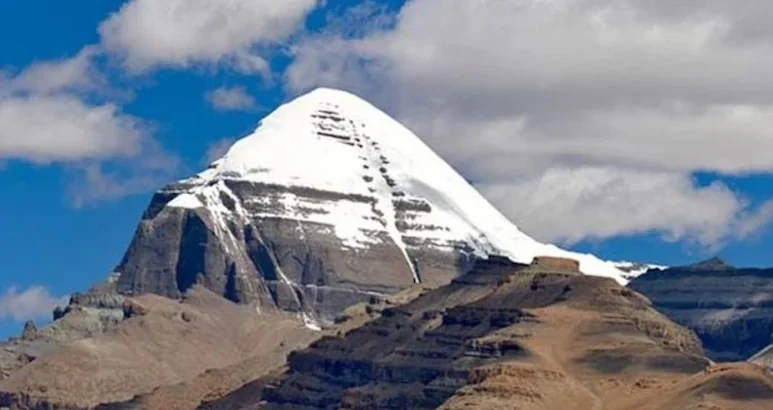
As pilgrims prepare to traverse one of Hinduism’s most sacred routes, the geopolitical tensions surrounding Mount Kailash and Lake Mansarovar continue to underscore the complex interplay of faith, territory, and diplomacy in the Himalayas.