
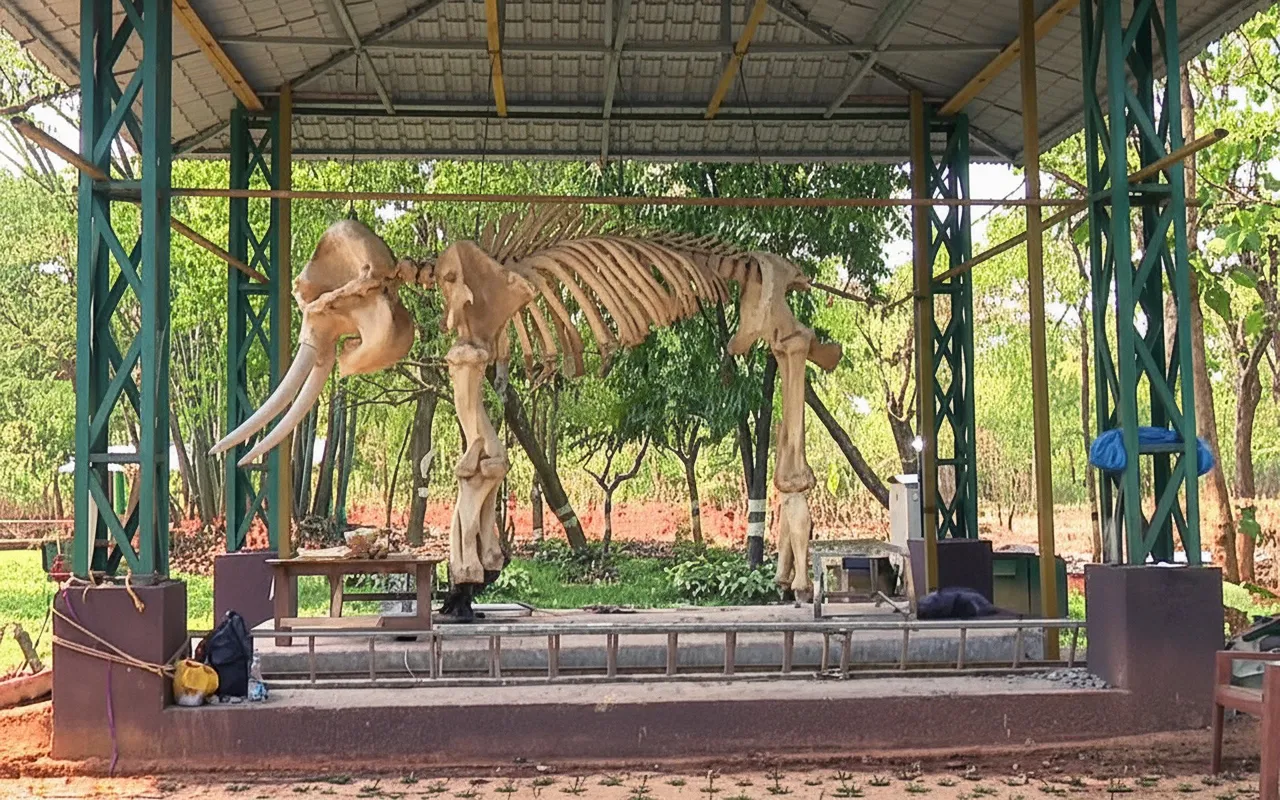
In a remarkable blend of conservation, education, and scientific effort, Odisha is set to unveil a unique wildlife exhibit as the skeletal remains of an elephant named ‘Ramu’ are being reconstructed for public display at Godibari Nature Camp on the outskirts of Bhubaneswar. The initiative aims not only to preserve the memory of the tusker but also to promote awareness about wildlife protection and ecological responsibility.
Ramu, an adult elephant estimated to be around 41 years old at the time of its death, was a familiar presence in the forests of Chandaka-Dampara and nearby Khurda regions. Its remains were discovered in December last year within the Chandaka-Dampara Wildlife Sanctuary. Forest officials recovered nearly 250 bone fragments, which are now being meticulously assembled to recreate the elephant’s full skeletal structure.
A dedicated team of five experts is leading the reconstruction process, ensuring anatomical precision and scientific accuracy. The effort is being guided by renowned zoologist Siba Prasad Parida, along with former honorary wildlife warden Subhendu Mallick. According to officials, the assembly work is nearing completion, marking a significant milestone in the project.
Once completed, the skeleton will be housed in a specially designed glass enclosure at Godibari Nature Camp. The exhibit is expected to be opened to the public by May, offering visitors a rare opportunity to observe the anatomy of one of India’s most iconic wildlife species up close.
Beyond the skeletal display, the site will also feature detailed information about Ramu’s life, habitat, and movement patterns. Authorities believe this will enhance visitor understanding of elephant behavior, forest ecosystems, and the challenges faced by wildlife in rapidly changing environments.
The circumstances surrounding Ramu’s death have also added an important dimension to the initiative. Forest officials suspect that the elephant died due to electrocution, as evidence at the site indicated contact with a live wire near the boundary of Bharatpur reserve forest. The incident highlights ongoing threats to wildlife, particularly from human-induced hazards such as illegal electric fencing and habitat encroachment.
Officials say the display will serve as both an educational tool and a reminder of the urgent need to protect wildlife. By showcasing Ramu’s story, the Forest Department hopes to inspire greater public engagement in conservation efforts and encourage responsible coexistence with nature.
The upcoming exhibit is also expected to boost eco-tourism in the region, attracting students, researchers, and nature enthusiasts. As Odisha continues to strengthen its conservation initiatives, projects like this underscore the importance of preserving not just wildlife, but also the stories they leave behind.