

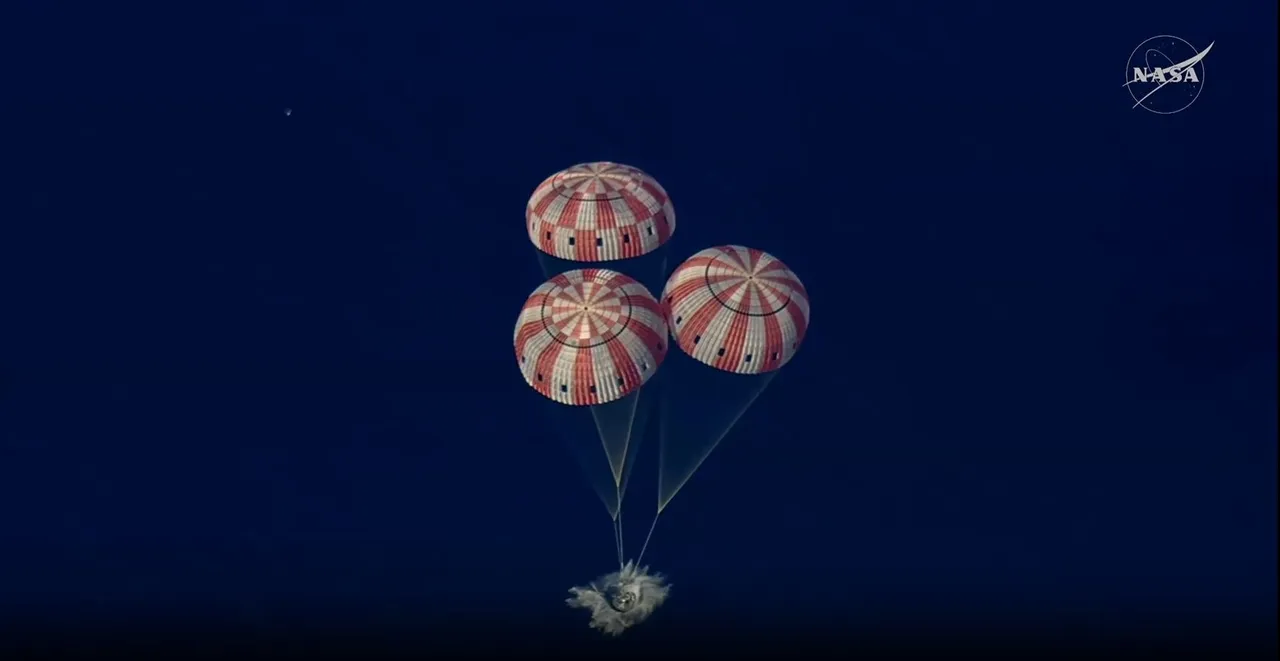
In a landmark achievement for global space exploration, NASA’s Artemis II mission has successfully concluded, with its crew safely returning to Earth after completing a historic journey around the Moon. The mission marks the first human voyage beyond low-Earth orbit in over five decades, ushering in a new era of lunar exploration.
The Orion spacecraft carrying four astronauts made a controlled splashdown in the Pacific Ocean, bringing an end to the multi-day mission. Recovery teams quickly secured the capsule and ensured the safe return of all crew members.
A Crucial Step for Deep Space Exploration
While Artemis II did not involve a lunar landing, it was designed as a critical test flight to evaluate key systems, including:
- Spacecraft performance
- Crew safety mechanisms
- Navigation and communication systems in deep space
The mission successfully validated these technologies, marking a major milestone for future human spaceflight beyond Earth’s orbit.
Paving the Way for Future Moon Missions
During the journey, astronauts travelled vast distances around the Moon, gathering valuable scientific data and operational insights. These findings will play a vital role in upcoming missions under the Artemis program.
The success of Artemis II lays the foundation for Artemis III, which aims to land astronauts on the Moon in the coming years.
A New Era Beyond the Apollo Legacy
This mission revives ambitions last seen during the Apollo program, while also strengthening international collaboration in space exploration with astronauts from multiple countries participating.
With Artemis II’s successful completion, the world moves closer to establishing a sustained human presence on the Moon, and eventually, future missions to Mars and beyond.