
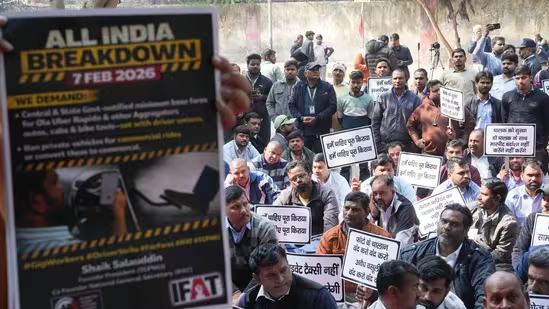
Ride-hailing services operated by Ola, Uber and Rapido remained disrupted across several parts of the country on February 7 following a day-long nationwide strike called by app-based transport workers. The protest, termed an “All India Breakdown”, has been organized by the Telangana Gig and Platform Workers Union (TGPWU) along with multiple national labour bodies to press for long-pending demands, including the notification of minimum base fares.
According to labour unions, the strike is expected to last for around six hours, during which drivers have collectively switched off their ride-hailing applications. Apart from passenger transport services, delivery operations through the Porter app are also likely to face disruptions as part of the coordinated action.
Unions Flag Regulatory Gaps, Seek Fare Protection
In a letter addressed to Union Transport Minister Nitin Gadkari, the unions highlighted what they described as unresolved structural issues affecting gig and platform workers across India. The primary concern raised is the absence of government-notified minimum base fares, despite the existence of the Motor Vehicle Aggregator Guidelines, 2025.
The unions allege that in the absence of fixed fare structures, aggregator companies continue to unilaterally decide pricing, leading to falling incomes, longer working hours, and increased financial stress for drivers operating cabs, autos and bike taxis.
“App-based transport workers across India will observe an All India Breakdown on February 7. No minimum fares. No regulation. Endless exploitation,” the TGPWU said in a post on X.
‘Guidelines Exist, But Not Implemented’: Union Leaders
Shaik Salauddin, Founder President of TGPWU and Co-Founder and National General Secretary of IFAT, said the failure of both the Centre and state governments to enforce fare regulations has allowed aggregator platforms to pass operational risks entirely onto workers.
“The Aggregator Guidelines, 2025 clearly mandate consultation with recognized worker unions before fare fixation. However, governments have failed to act, enabling platform companies to arbitrarily lower fares and deepen exploitation,” Salauddin said.
The unions have also raised concerns over rising fuel prices, vehicle maintenance costs, insurance expenses and commission structures, which they say have made gig-based transport work increasingly unsustainable.
Impact on Commuters
Commuters across major cities are likely to experience significant inconvenience, particularly during peak morning and evening hours. While the extent of disruption may vary by region, passengers dependent on app-based cabs, autos and bike taxis have been advised to plan alternative travel arrangements for the day.
Cities Likely to See Maximum Disruption
Metropolitan cities such as Delhi, Mumbai, Bengaluru and Hyderabad are expected to be among the worst affected, given their high dependence on app-based ride-hailing services for daily commuting.
The unions have warned that if their demands are not addressed, further intensified protests could follow, signalling prolonged uncertainty for both drivers and commuters in India’s fast-growing gig mobility sector.