
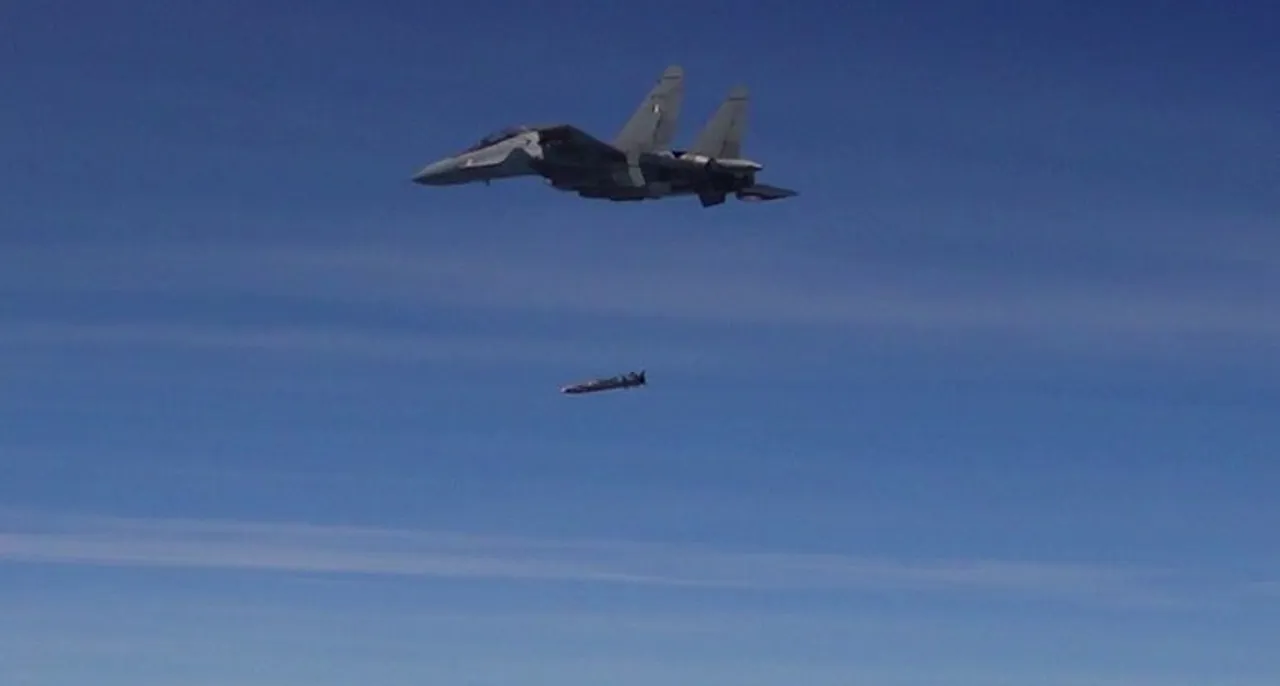
Chandipur, Odisha: India’s indigenous defence capabilities received a major boost with the successful flight tests of the RudraM-II air-to-surface missile, jointly conducted by the Defence Research and Development Organisation (DRDO) and the Indian Air Force (IAF). The achievement not only demonstrated the missile’s precision-strike capabilities but also underscored the crucial contribution of Odisha’s Integrated Test Range (ITR) at Chandipur in validating advanced weapon systems.
The RudraM-II missile was launched from an airborne platform under extreme release conditions, designed to simulate challenging operational scenarios. According to DRDO, the missile accurately followed its planned trajectory and successfully engaged the designated target, achieving all mission objectives with high precision.
A key highlight of the trial was the extensive monitoring and tracking support provided by the Integrated Test Range (ITR), Chandipur. The Odisha-based facility deployed its sophisticated network of telemetry, radar, electro-optical tracking systems, and data acquisition infrastructure to capture critical flight parameters throughout the mission.
Defence scientists emphasized that while a successful target strike is an important milestone, the true measure of a missile’s effectiveness lies in the detailed flight data collected during testing. The telemetry data gathered by ITR Chandipur confirmed that every subsystem of RudraM-II, including guidance, navigation, propulsion, and targeting mechanisms, performed according to design specifications.
Developed indigenously by the Research Centre Imarat (RCI), Hyderabad, RudraM-II represents another significant achievement under India’s self-reliance mission in defence manufacturing. The project involved collaboration among several DRDO laboratories, including the Defence Research and Development Laboratory (DRDL), High Energy Materials Research Laboratory (HEMRL), Armament Research and Development Establishment (ARDE), and Integrated Test Range (ITR).
The missile programme also received support from public sector defence enterprises, certification agencies, private industry partners, and production agencies, reflecting the growing strength of India’s defence ecosystem.
Military experts believe the successful testing of RudraM-II will significantly enhance the Indian Air Force’s operational capabilities. As modern warfare increasingly depends on stand-off precision weapons capable of neutralising high-value targets from safe distances, advanced systems like RudraM-II are expected to play a critical role in future combat operations.
Defence Minister Rajnath Singh congratulated the scientists, engineers, armed forces personnel, and industry partners associated with the project. He described the successful trial as another important milestone in India’s journey towards technological self-reliance under the Aatmanirbhar Bharat initiative.
The achievement has also brought renewed attention to the strategic importance of Odisha’s Integrated Test Range at Chandipur. Over the years, the facility has been instrumental in the testing and validation of several indigenous missile systems, making it one of India’s most critical defence research and testing centres.
With world-class tracking capabilities and advanced testing infrastructure, ITR Chandipur continues to serve as a cornerstone of India’s missile development programme. The successful RudraM-II trials further reinforce Odisha’s growing significance in the country’s defence and aerospace landscape.
As India accelerates efforts to develop next-generation weapon systems and strengthen national security, the successful RudraM-II missile test stands as a powerful symbol of the country’s expanding technological capabilities, with Odisha playing a pivotal role in transforming innovation into operational military strength.