
A fresh Notice to Airmen (NOTAM) issued for the Odisha coast has sparked speculation over a possible long-range missile test in the Bay of Bengal between May 6 and May 9.
The restricted airspace notification covers a vast stretch extending nearly 3,560 kilometres from the Integrated Test Range (ITR) at Dr. APJ Abdul Kalam Island, located off the Odisha coast near Dhamra, into the Indian Ocean. During the notified period, aircraft movement through the designated corridor will remain prohibited as part of standard safety procedures followed during strategic missile trials.
While authorities have not officially named the missile system scheduled for testing, the scale of the restricted zone has drawn the attention of defence observers. Analysts believe such a large exclusion area generally indicates preparations for a long-range strategic missile trial, possibly involving a platform capable of travelling deep into the Indian Ocean.
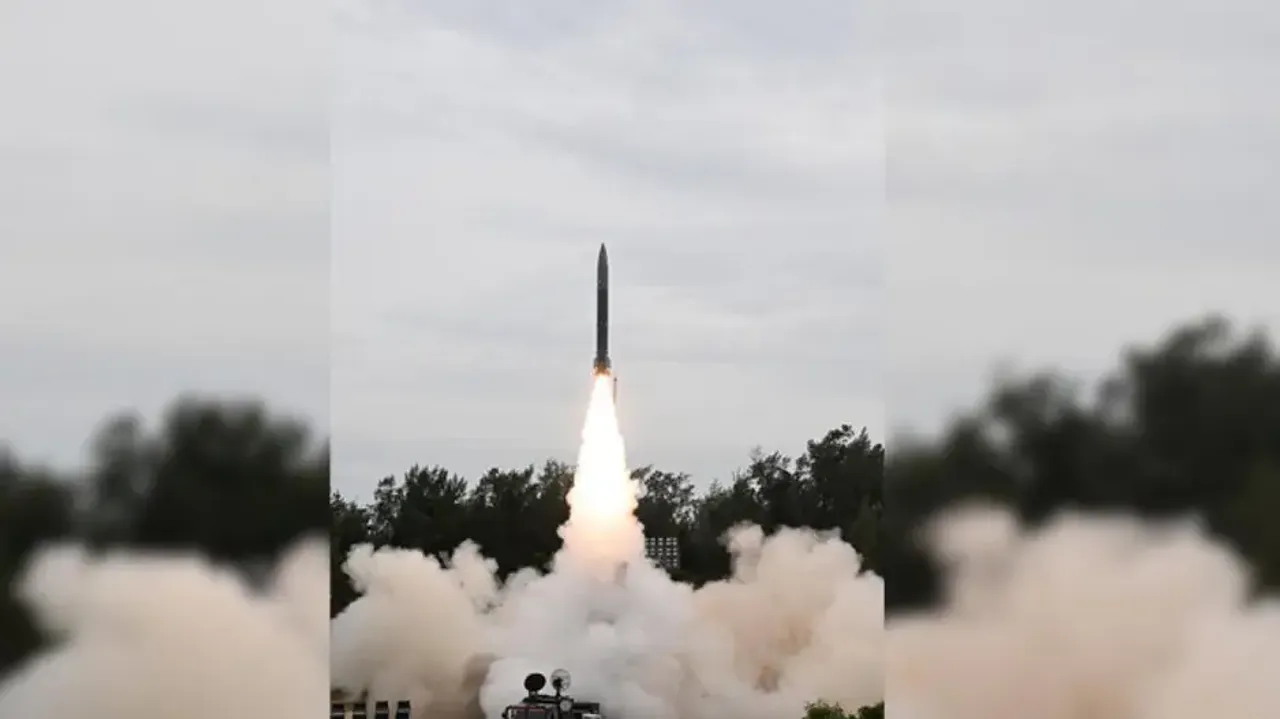
The latest development comes just days after India successfully carried out the Phase-II trial of its indigenous long-range hypersonic anti-ship missile (LR-AShM) on May 2 from a defence testing facility off the Odisha coast.
Developed by the Defence Research and Development Organisation (DRDO), the advanced hypersonic missile is designed to strike hostile warships at ranges of approximately 1,500 kilometres. With speeds estimated at five to ten times the speed of sound, the missile represents a major leap in India’s precision-strike capability.
Defence experts say hypersonic weapons significantly alter the strategic balance because of their high velocity, manoeuvrability, and low reaction time for enemy defence systems. Conventional radar networks and existing air defence shields often find it extremely difficult to detect, track, and intercept such weapons.
The issuance of the new NOTAM has therefore generated strong interest in strategic circles, particularly because Odisha’s coast has increasingly become a crucial launch site for testing India’s advanced missile systems. Over the years, several important trials of ballistic missiles, cruise missiles, and next-generation tactical weapons have been conducted from the same range.
Though speculation remains strong, officials have maintained silence on whether the upcoming activity is linked to another trial of the long-range hypersonic anti-ship missile or a completely different strategic missile platform.
The timing of the notification is also significant. India has been steadily expanding its indigenous missile development programme with a focus on long-range deterrence, maritime strike capability, and rapid-response precision systems. Repeated successful tests from the Odisha coast underline the country’s growing technological maturity in advanced defence research.
For now, the exact nature of the missile test remains unconfirmed. However, with the restricted air corridor now in place, all eyes will be on the Bay of Bengal over the coming days as India may prepare for another major milestone in its strategic weapons programme.