
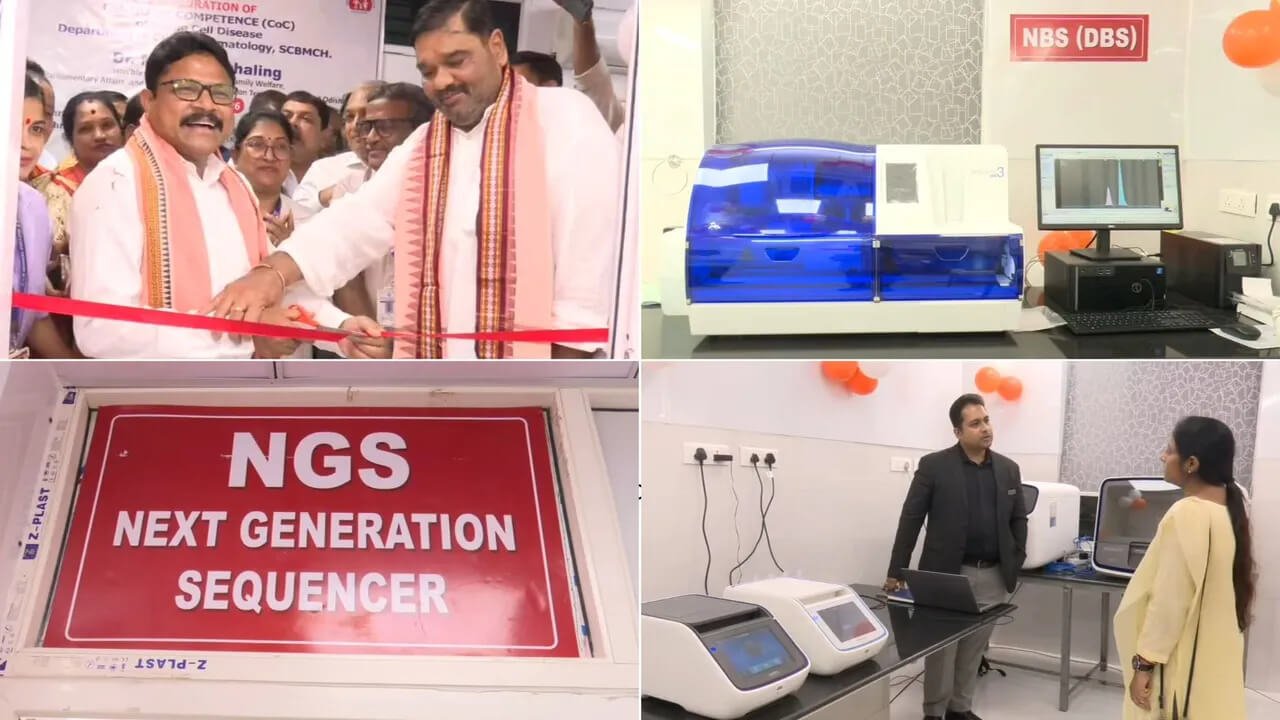
Cuttack: A new Centre of Competency for sickle cell disease has been inaugurated at the Department of Haematology of SCB Medical College and Hospital in Cuttack, marking an important step towards strengthening specialised care for patients affected by the hereditary blood disorder in Odisha.
Health Minister Mukesh Mahaling inaugurated the new facility on Tuesday. The centre is expected to strengthen early detection, diagnosis, treatment, counselling and long-term monitoring of sickle cell disease while improving access to specialised care for patients across the State.
Focus on Early Detection and Advanced Diagnosis
Sickle cell disease is a hereditary blood disorder that can require lifelong monitoring and specialised medical management. Early identification of the condition can help healthcare professionals initiate appropriate treatment and monitor patients more effectively.
The newly established centre will focus on early detection, diagnosis, treatment, patient management and follow-up. It will also support the diagnosis and management of other blood-related disorders.
The facility is expected to bring together advanced diagnostic capabilities and specialised medical expertise, helping create a more coordinated approach to the treatment of sickle cell patients.
New Technology to Help Detect Sickle Cell Disease
Speaking at the inauguration, Health Minister Mukesh Mahaling highlighted the importance of advanced diagnostic technology in identifying diseases at an early stage.
He said that a newly introduced machine can analyse a blood sample collected from a newborn to determine whether the baby has sickle cell disease. Early identification could allow doctors and families to plan appropriate medical care and monitoring in the future.
The minister also highlighted another advanced machine capable of detecting cancerous cells in newborns, expanding the diagnostic capabilities available at the medical college.
Next-Generation Sequencing to Support Gene-Level Analysis
Another major addition highlighted during the programme was the Next-Generation Sequencing (NGS) machine.
According to the minister, the technology can assist in analysing DNA at the gene level using molecular diagnostic techniques, including Polymerase Chain Reaction (PCR).
Such advanced genetic testing can be particularly significant for hereditary disorders such as sickle cell disease, where changes in genes are responsible for the condition.
The availability of advanced genetic and molecular diagnostic facilities at SCB is expected to strengthen the institution’s ability to undertake more detailed investigations of blood disorders.
SCB to Strengthen Sickle Cell Awareness and Counselling
Apart from diagnosis and treatment, the Centre of Competency will also focus on awareness, counselling and patient support.
Minister Mahaling said the facility would play an important role in educating patients and their families about sickle cell disease and helping them understand the importance of diagnosis, treatment and regular monitoring.
Awareness is particularly important because sickle cell disease can remain undetected in some individuals. Genetic or DNA-based testing can help identify the disorder and enable timely medical intervention.
The centre is therefore expected to serve not only as a treatment facility but also as a platform for improving awareness and strengthening the overall management of sickle cell disease.
SCB Claims Major Milestone in Eastern India
The Health Minister said the introduction of these advanced technologies represents a significant development in the State’s healthcare system.
According to him, SCB Medical College is adopting a new approach to the diagnosis and treatment of sickle cell disease using advanced technology and genetic-level analysis. He described the facility as a first-of-its-kind initiative at a government hospital in Eastern India and a major milestone for Odisha.
A similar facility is also planned at VIMSAR Medical College and Hospital in Burla, which would help extend access to advanced diagnostic and treatment capabilities to patients in western Odisha.
Healthcare Workers to Receive Skill Enhancement
The Centre of Competency will also place emphasis on capacity building and skill development among healthcare professionals.
Training and knowledge enhancement for healthcare workers are expected to improve the identification, treatment and long-term management of sickle cell disease.
With better-trained healthcare personnel and access to advanced diagnostic tools, the State aims to establish a more coordinated system for patient care, monitoring and follow-up.
New Centre Expected to Benefit Patients Across Odisha
The establishment of the centre at SCB Medical College is expected to strengthen Odisha’s efforts to tackle sickle cell disease through a combination of early detection, advanced diagnosis, specialised treatment, counselling and continuous patient management.
The integration of modern diagnostic technologies with specialised healthcare expertise could help improve the identification of hereditary blood disorders and provide patients with more comprehensive medical support.
The planned replication of the facility at VIMSAR, Burla, is also expected to expand the reach of such specialised services and contribute to a stronger statewide healthcare network for people affected by sickle cell disease.