
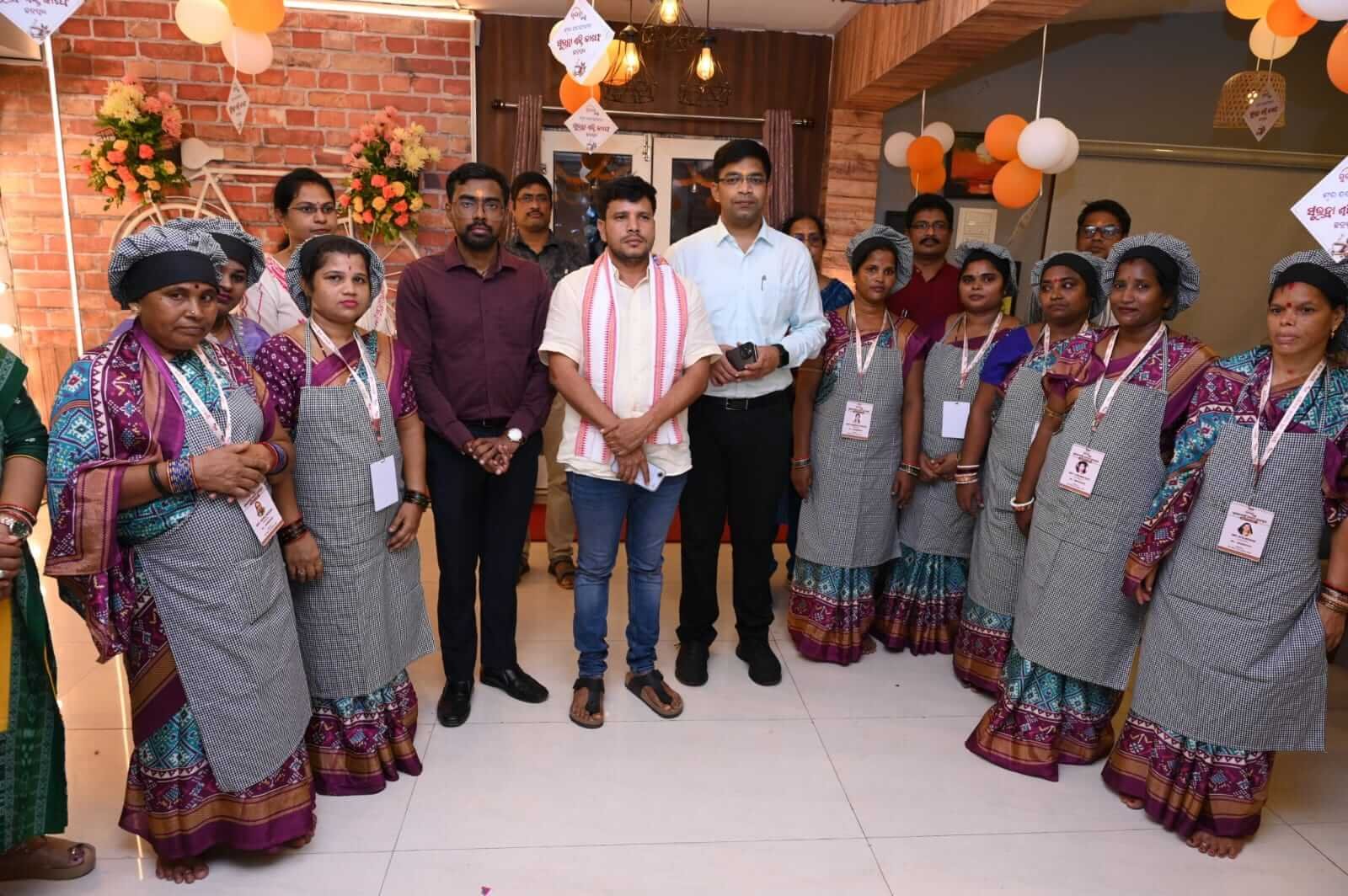
Chatrapur: A new ‘Subhadra Shakti Café’ has been inaugurated at the premises of the Ganjam Zilla Parishad office in Chhatrapur, marking a significant step towards promoting women’s employment, financial independence and entrepreneurship in the district.
The initiative is aimed particularly at women associated with Self-Help Groups (SHGs), providing them with a platform where they can utilise their existing skills, gain practical work experience and develop sustainable sources of income.
The café is expected to serve as both a livelihood opportunity for women and a convenient food and refreshment facility for employees, visitors and members of the public coming to the Zilla Parishad office.
Café Inaugurated in Presence of District Officials
The inauguration ceremony was attended by Chatrapur MLA Krushna Chandra Nayak, Ganjam Collector V. Keerthivasan and Ganjam Zilla Parishad Chief Development Officer Sameer Kumar Jena.
The dignitaries formally inaugurated the facility by cutting the ribbon, marking the beginning of its operations and a new avenue for women in the district to participate in economic activities.
The initiative is expected to strengthen the connection between women’s SHGs and livelihood-generation opportunities at the local level.
Focus on Women’s Financial Independence
The primary objective of the Subhadra Shakti Café is to provide women with an opportunity to earn while becoming more financially self-reliant.
Women involved in operating the café can gain hands-on experience in various aspects of running a small food-service business. These include food preparation, customer handling, sales, inventory management, café operations and day-to-day administration.
Such practical exposure can help women improve their confidence and develop skills that may eventually support them in establishing independent businesses.
SHG Members to Gain Entrepreneurial Experience
For members of women’s Self-Help Groups, the café is expected to provide more than a regular employment opportunity.
By participating in the café’s operations, women can strengthen their decision-making, teamwork, customer-service and business-management skills. The experience could also encourage SHG members to explore other forms of small-scale entrepreneurship.
The initiative has the potential to demonstrate how community-based enterprises can create sustainable livelihood opportunities while giving women greater control over their economic activities.
Café to Serve Zilla Parishad Employees and Visitors
The Subhadra Shakti Café will also cater to the needs of people visiting the Ganjam Zilla Parishad office.
Government employees, visitors and members of the public will be able to access food and refreshments at the facility while carrying out their official work.
This creates a direct connection between livelihood generation for women and the needs of the local community, allowing the café to function as a service-oriented enterprise as well.
Strengthening Women’s Role in Local Entrepreneurship
The launch of the café comes as another effort to encourage women to participate more actively in income-generating activities.
Women associated with SHGs have increasingly been involved in different livelihood and entrepreneurial initiatives. A dedicated café can provide them with a structured environment to put their skills into practice and understand the practical challenges involved in running a business.
With proper support and sustained public participation, such initiatives can help women gradually move from group-based livelihood activities towards independent entrepreneurship.
New Opportunity for Women in Ganjam
The inauguration of the Subhadra Shakti Café in Chatrapur marks a new opportunity for women in Ganjam to strengthen their financial independence and acquire practical entrepreneurial skills.
Beyond providing employment, the initiative aims to create an environment where women can build confidence, gain business experience and contribute more significantly to their household incomes.
The success of the café will depend on continued institutional support and participation from the local community. If sustained effectively, the initiative could become a model for community-based women-led enterprises and livelihood generation in other parts of the district.