
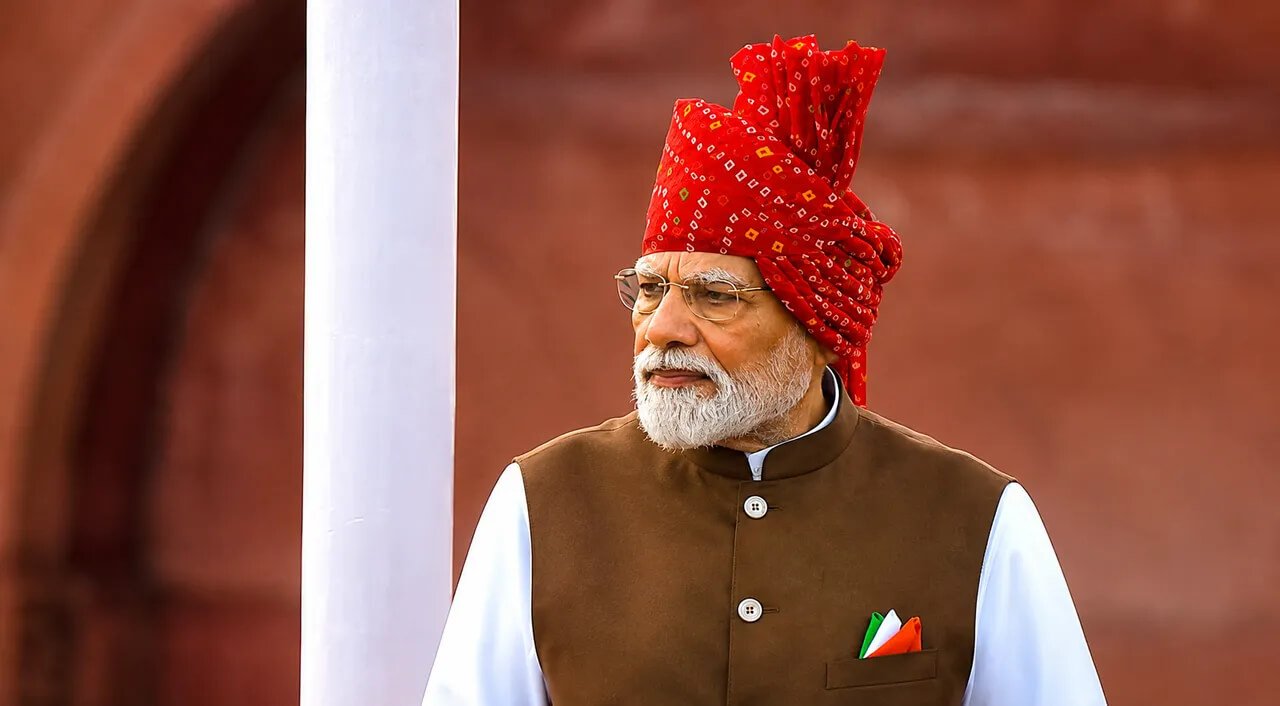
New Delhi: Prime Minister Narendra Modi, in his 80th Independence Day address from the historic Red Fort, unveiled the vision of ‘Shakti Ki Saptadhara’, identifying seven key strengths that he said would drive India’s economic transformation and help build a Viksit Bharat.
Addressing the nation after hoisting the National Flag, PM Modi emphasised the need for India to convert its strengths into globally competitive capabilities. He said the seven streams of strength would play a crucial role in determining the country’s growth trajectory in the coming years.
Manufacturing To Drive India’s Economic Growth
The Prime Minister placed manufacturing at the forefront of India’s growth strategy. He called for India to emerge as a reliable global manufacturing and supply-chain hub, covering the entire journey from design to production.
PM Modi stressed that Indian manufacturers must focus on cost, quality and scale to compete successfully in international markets. He urged industries not to miss the opportunity created by the ongoing transformation of global supply chains.
According to the Prime Minister, strengthening domestic manufacturing will not only boost economic growth but also generate employment and increase India’s presence in international markets.
Agriculture And Food Processing Identified As Second Strength
Agriculture and food processing formed the second pillar of the ‘Saptadhara’ vision. PM Modi said Indian farmers must increasingly connect with global markets and benefit from the opportunities created through Free Trade Agreements (FTAs).
He called for Indian agricultural products such as millets, spices, traditional foods, fruits and flowers to be developed into globally recognised brands.
The Prime Minister highlighted the need to move beyond traditional farm production and build stronger links between agriculture, food processing and exports. He said the country’s rich agricultural diversity could become an important component of India’s global economic identity.
Technology And Innovation To Shape India’s Future
The third strength identified by PM Modi was technology and innovation.
He highlighted emerging sectors such as Artificial Intelligence, quantum technology, robotics, space technology and data centres, saying India must become a global hub for innovation.
Referring to India’s achievements in UPI and Digital Public Infrastructure, PM Modi said the country now needs to take its digital technologies to the rest of the world.
He also stressed the importance of developing next-generation communication technologies, including Made-in-India 6G, and strengthening India’s technological capabilities to meet emerging global challenges.
Gati Shakti To Strengthen Connectivity
The fourth pillar is Gati Shakti, with the Prime Minister calling for seamless, high-speed connectivity across the country.
He emphasised the need for stronger high-speed rail networks, modern highways, inland waterways, airports, multimodal logistics hubs and ports.
PM Modi also highlighted the importance of port-led development, suggesting that better connectivity and logistics infrastructure would be crucial for India’s manufacturing and export ambitions.
Defence Production And Self-Reliance
Defence production was identified as the fifth strength of the Saptadhara framework.
The Prime Minister reiterated the importance of Atmanirbhar Bharat in defence, saying India should reduce dependence on foreign sources and develop the capability to become a global supplier of defence equipment.
He called for greater focus on next-generation defence technologies and domestic manufacturing, arguing that India must move beyond being a major defence market and emerge as an important producer and exporter.
Green Energy And Blue Economy
The sixth pillar is green energy, with PM Modi highlighting opportunities in renewable energy, green hydrogen and energy storage.
He said India should aim for global leadership in these emerging sectors while developing technologies and solutions that can address international energy challenges.
The Prime Minister also pointed to the potential of India’s Blue Economy, particularly in areas such as fisheries, coastal tourism and ocean technology. He said these sectors could open new avenues for economic growth and employment.
India’s Soft Power To Become Seventh Strength
The seventh and final strength is India’s soft power.
PM Modi highlighted India’s cultural and creative strengths, including Yoga, Ayurveda, handicrafts, films, animation, gaming and digital content. He said India’s cultural influence has already established a strong global presence and should be leveraged further.
The Prime Minister also highlighted India’s tourism potential, including its national parks and cultural heritage, and said India’s soft power could attract more international visitors.
He referred to India’s growing creative economy and the global interest generated by initiatives such as the WAVES summit, which focuses on India’s media and entertainment sectors.
Indigenous Guns Used During 21-Gun Salute
The Independence Day ceremony also featured a 21-gun salute synchronised with the hoisting of the National Flag at the Red Fort.
The ceremonial salute was carried out by personnel of the 1721 Field Battery (Ceremonial) using indigenous 105mm Light Field Guns. The ceremonial battery was commanded by Major Pawan Singh Shekhawat, while Naib Subedar Anuthosh Sarkar served as the Gun Position Officer.
With ‘Shakti Ki Saptadhara’, PM Modi presented a broad economic and strategic roadmap covering manufacturing, agriculture, technology, connectivity, defence, green energy and soft power. The seven priorities underline the government’s vision of building a more self-reliant, innovative and globally competitive India on the path towards Viksit Bharat.