

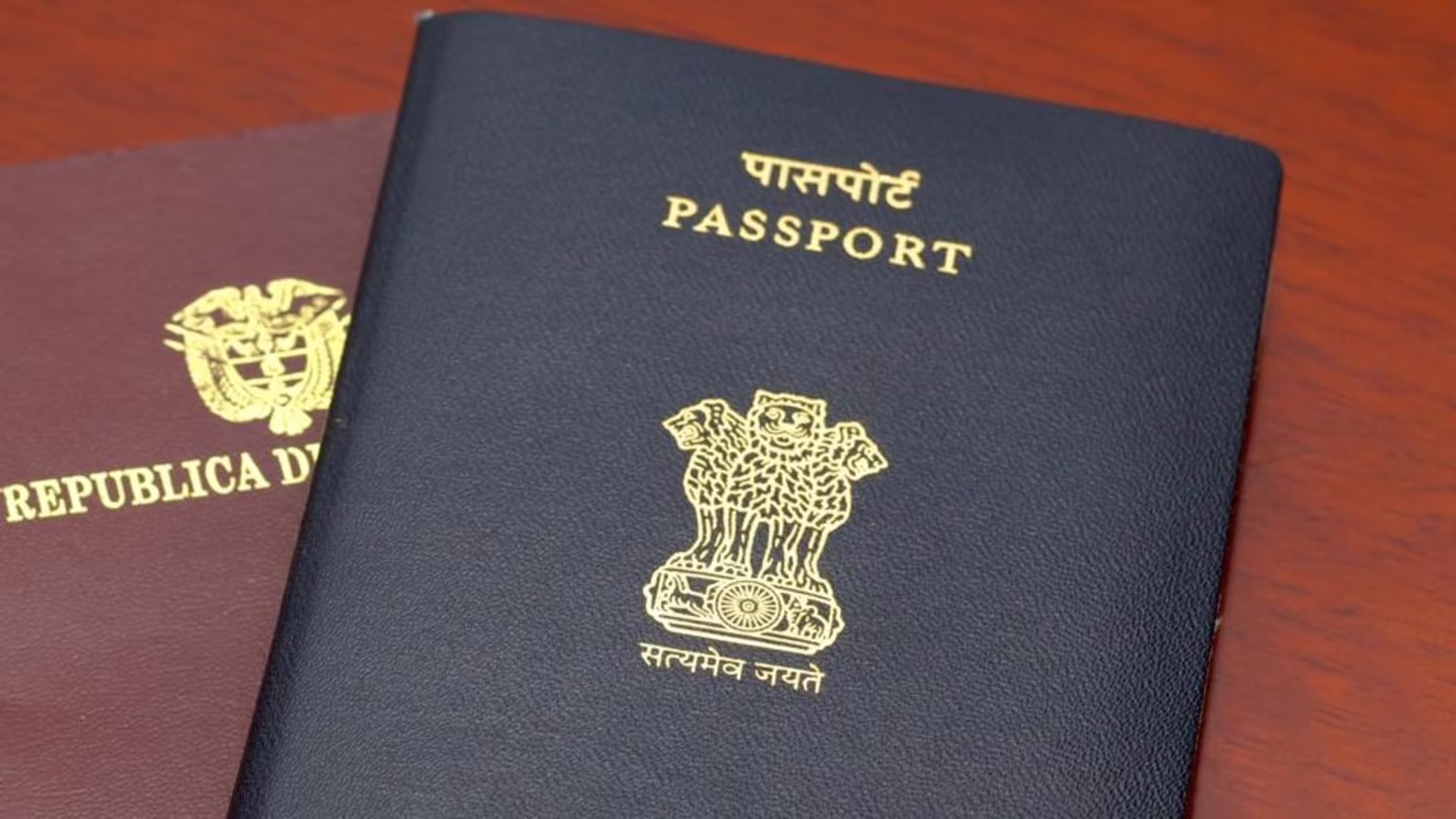
The Ministry of External Affairs (MEA) has clarified that an Indian passport cannot be treated as conclusive proof of Indian citizenship, emphasizing that its primary purpose is to serve as a travel document for international journeys and as a means of identity verification abroad.
The clarification comes amid ongoing discussions regarding the legal status of passports and their role in establishing citizenship. According to the ministry, while a passport is issued by the Government of India, possession of the document alone does not automatically establish or certify an individual’s citizenship status under Indian law.
Passport Primarily Meant for International Travel
The MEA explained that the primary objective of issuing a passport is to facilitate safe and secure international travel for Indian nationals. It also serves as an identity document that helps foreign authorities verify the holder’s identity while travelling or residing abroad.
Officials stated that a passport is not designed to function as a standalone certificate of citizenship. Instead, it is a travel document issued after verification of documents submitted by applicants during the application process.
The ministry noted that passports help establish identity and nationality for travel purposes but should not be confused with legal proof of citizenship.
Citizenship Determined Through Legal Processes
According to the clarification, citizenship is governed by provisions under Indian law and is determined through prescribed legal processes and supporting records.
The ministry stated that the issuance of a passport is based on documents provided by applicants, and therefore the document itself cannot be considered final proof of citizenship in every circumstance.
Authorities may examine additional records and documents whenever questions regarding an individual’s citizenship status arise.
Passports Obtained Through Fraud Do Not Confer Citizenship
The MEA further highlighted that individuals who obtain passports using forged, fabricated, or fraudulent documents cannot claim Indian citizenship merely because they possess an Indian passport.
The ministry stressed that if a passport is secured through misrepresentation or submission of false information, it does not create any legal right to Indian citizenship.
Officials pointed out that citizenship status must be established independently through lawful documentation and verification procedures, irrespective of whether a passport has been issued.
Government Retains Ownership of Passports
The ministry also reiterated that every Indian passport remains the property of the Government of India.
Under the provisions of the Passports Act, the government retains the authority to revoke, impound, suspend, or recall a passport whenever required under law.
This authority may be exercised in cases involving fraud, misrepresentation, security concerns, legal violations, or other circumstances specified under the applicable legal framework.
Distinction Between Identity and Citizenship
The clarification underlines an important legal distinction between proof of identity and proof of citizenship.
While a passport can serve as a valid identity document and facilitate international travel, it does not automatically establish citizenship in situations where citizenship status is under scrutiny.
Legal experts note that citizenship is determined by constitutional and statutory provisions, whereas a passport is an administrative document issued to facilitate travel and verify identity.
Why the Clarification Matters
The MEA’s statement is significant because passports are often perceived by the public as definitive proof of citizenship. The ministry’s clarification reinforces that citizenship determination is a separate legal matter and cannot rest solely on possession of a passport.
By reiterating the legal status of passports, the government has sought to clarify misconceptions regarding their role and to emphasize that citizenship claims must be supported by valid legal documentation and verification processes.
The clarification also serves as a reminder that the issuance of a passport does not override legal scrutiny in cases involving questions of nationality, identity fraud, or citizenship disputes.