
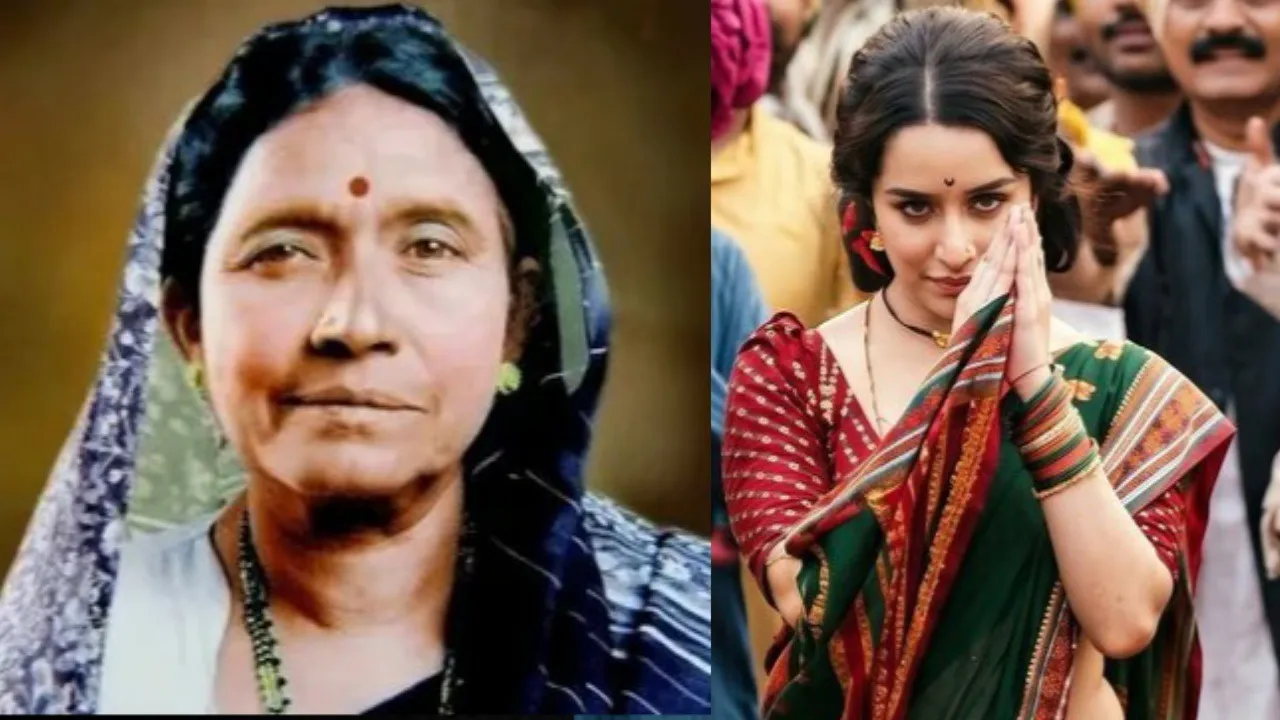
As anticipation builds around Eetha, the upcoming Maddock Films production starring Shraddha Kapoor, audiences are becoming increasingly curious about the remarkable woman whose life inspired the film. Directed by Laxman Utekar and produced by Dinesh Vijan, Eetha is based on the extraordinary journey of Vithabai Bhau Mang Narayangaonkar, one of Maharashtra’s most celebrated folk performers and a pioneer of Tamasha and Lavani.
The recently released teaser has generated significant buzz, introducing viewers to a powerful story rooted in art, resilience, and cultural heritage. More than a biographical drama, Eetha seeks to revive the legacy of a performer who played a crucial role in preserving and popularising Maharashtra’s traditional folk theatre.
Who Was Vithabai Narayangaonkar?
Born in July 1935 in Pandharpur, Maharashtra, Vithabai Narayangaonkar emerged as one of the most influential figures in Marathi folk entertainment. Raised in a family deeply connected to traditional performance arts, she stepped onto the stage at a very young age and quickly gained recognition for her exceptional talent.
Vithabai became synonymous with Tamasha and Lavani, two of Maharashtra’s most vibrant folk art forms. Her commanding stage presence, powerful singing voice, expressive performances, and natural storytelling ability made her a crowd favourite across rural and urban Maharashtra.
Over the decades, she transformed from a young performer into a cultural icon whose name became inseparable from Marathi folk theatre.
How Vithabai Revolutionised Tamasha and Lavani
At a time when women performers often faced social stigma and limited opportunities, Vithabai broke barriers and established herself as one of the biggest stars of folk theatre.
Her performances helped bring Tamasha and Lavani to wider audiences, elevating them from regional entertainment formats to respected cultural traditions. Through her dedication, these art forms gained greater visibility and acceptance across the state.
She became known not only for entertaining audiences but also for preserving Maharashtra’s folk heritage during a period of rapid social and cultural change.
Awards and Recognition
Vithabai’s immense contribution to Indian folk arts earned her several prestigious honours throughout her career.
Some of her notable recognitions include:
- The title “Tamasha Samradni” (Queen of Tamasha) conferred by the Maharashtra Government.
- Presidential medals awarded in 1957 and 1990.
- Numerous cultural honours recognising her contribution to Marathi folk theatre.
Her achievements established her as one of the most respected folk artists in India.
A Life Marked by Struggles and Determination
Despite enjoying fame and widespread admiration, Vithabai’s personal journey was far from easy.
She faced numerous professional and personal challenges throughout her life. While her performances attracted massive audiences and earned critical acclaim, financial stability remained elusive.
In a tragic contrast to her celebrated public image, she reportedly spent her later years facing economic hardship and poverty. However, even during difficult times, her dedication to performing and preserving folk culture never diminished.
Her story remains a powerful example of perseverance, sacrifice, and devotion to art.
Why Is the Film Titled Eetha?
The title Eetha is derived from “Vitha,” the affectionate name by which Vithabai was lovingly known among family, friends, and admirers.
The film symbolises her personal journey—from a young village performer to a legendary cultural icon whose influence continues to shape Marathi folk arts even today.
The Quote That Defines Her Legacy
One of Vithabai’s most remembered statements perfectly captures her spirit and lifelong commitment to performance:
“Padi padi mari toh bechari kehlaungi, naachte hue mari toh misaal ban jaaungi.”
(“If I die lying down, I will be remembered as helpless; if I die dancing, I will become a legend.”)
The quote reflects her unwavering passion for the stage and her determination to live through her art, regardless of the hardships she faced.
Shraddha Kapoor to Bring the Legend to Life
In Eetha, Shraddha Kapoor portrays Vithabai Narayangaonkar, taking on one of the most challenging roles of her career. The film also features Randeep Hooda and Mohammed Zeeshan Ayyub in significant roles.
Directed by Laxman Utekar and backed by Maddock Films, the movie spans several decades—from the 1940s to the 1990s—showcasing Vithabai’s rise, struggles, achievements, and lasting impact on Maharashtra’s cultural landscape.
The film is scheduled for a theatrical release on August 28, 2026.
Why Eetha Matters
At a time when audiences are increasingly drawn to stories rooted in real lives and cultural history, Eetha offers a rare opportunity to celebrate an artist who dedicated her life to preserving India’s folk traditions.
Beyond being a biopic, the film serves as a tribute to the resilience of women artists, the richness of Marathi folk culture, and the enduring legacy of Vithabai Narayangaonkar—an icon whose influence continues to inspire generations.