
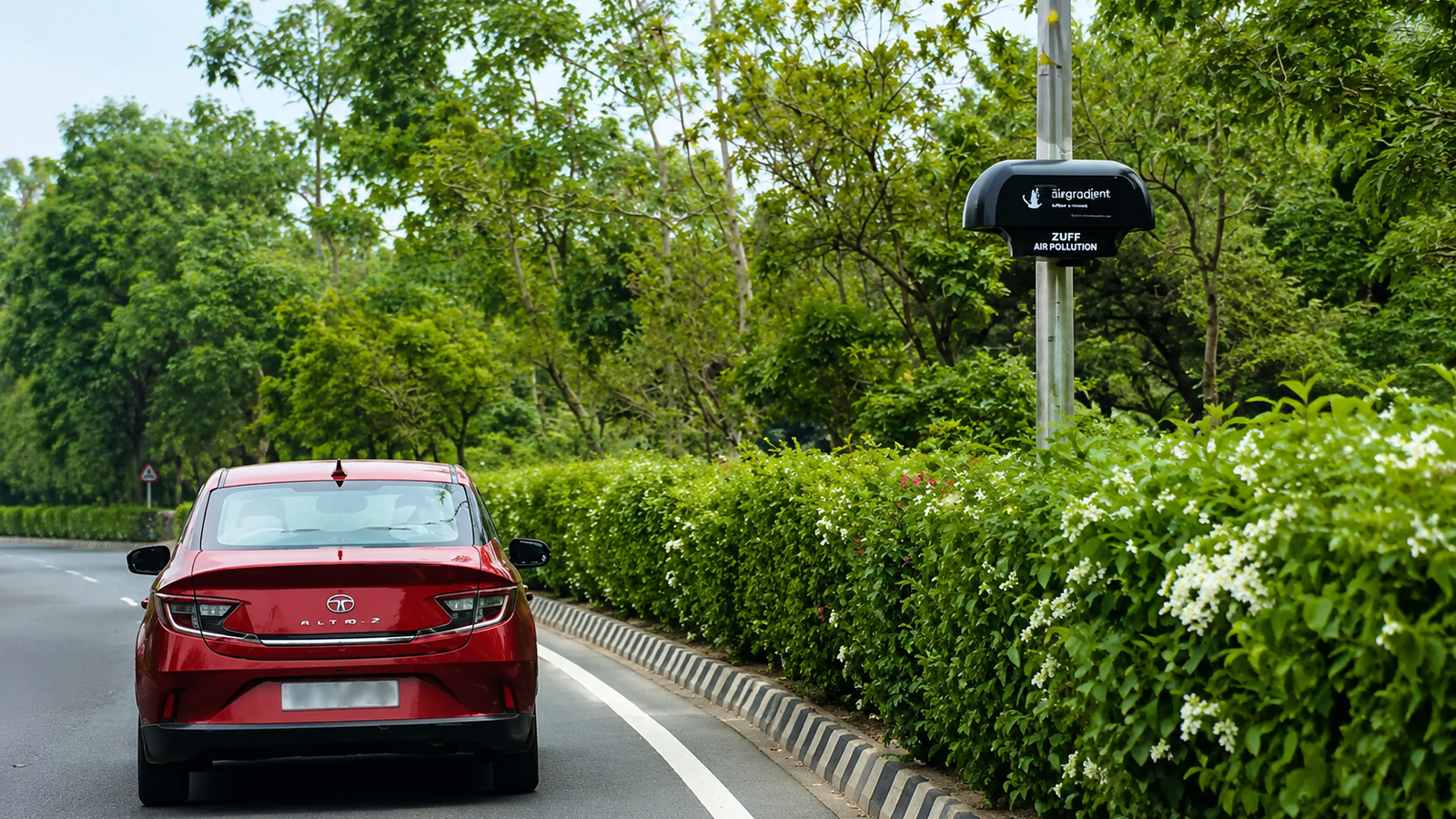
In a significant step towards improving urban air quality, the Bhubaneswar Municipal Corporation (BMC) has launched a pilot project involving the installation of specialised dust collectors along some of the city’s busiest traffic corridors. The initiative, introduced under the Government of India’s National Clean Air Programme (NCAP), aims to reduce airborne dust particles and curb pollution levels in the capital city.
As part of the pilot phase, around 20 dust-collecting devices have been installed on electric poles located along the road median between KIIT Square and Patia Square, one of Bhubaneswar’s most congested stretches. Similar installations have also been carried out near Lingaraj Temple and environmental monitoring stations across the city.
How The Dust Collectors Work
The newly installed devices are equipped with sensor-based chambers that continuously draw in surrounding air and capture dust and particulate matter. Once the collection chamber reaches its storage limit, the system automatically sends a digital alert to BMC authorities, prompting manual cleaning and maintenance.
Unlike conventional outdoor air purification systems that require periodic filter replacement, the technology adopted by BMC operates without disposable filters, making it a more cost-effective and sustainable option for long-term use.
Bhubaneswar Eyes Top Spot In Clean Air Rankings
The project comes after Bhubaneswar secured the fourth position nationally in clean air standards in 2025. Civic authorities believe innovative interventions such as these dust collectors can help the city further improve its air quality and potentially secure the top ranking in the coming years.
With the launch of the pilot initiative, Bhubaneswar has become only the third city in India to adopt this particular dust filtration technology after Delhi and Jaipur.
BMC Highlights Cost-Effective Technology
BMC Commissioner Chanchal Rana said the initiative was introduced to address dust pollution generated by increasing vehicular movement across the city.
“With the rise in vehicle traffic, loose dust and soil particles get dispersed into the air. An agency approached us with this technology, and after laboratory testing and evaluation, we decided to implement it on a pilot basis in selected locations,” Rana said.
He further explained that the corporation deliberately chose a non-filter-based system to avoid recurring maintenance costs associated with traditional air purification units.
“Out of the various outdoor air purification technologies available, this system appeared to be more suitable. The company has installed these devices free of cost in two stretches of Bhubaneswar as part of the pilot project,” he added.
Scientific Evaluation Underway
To assess the effectiveness of the technology, BMC plans to closely monitor air quality data from nearby environmental monitoring stations. Citizen feedback will also be collected to evaluate the impact of the devices on local air pollution levels.
“We will analyze both scientific data and public feedback. If the technology proves effective and remains financially viable, we may consider installing these devices permanently across more stretches of the city,” Rana said.
A Step Towards Cleaner Urban Air
As Bhubaneswar continues to expand and witness growing traffic volumes, dust pollution remains a key environmental challenge. The pilot dust collector project reflects the city’s efforts to adopt innovative and sustainable solutions for cleaner air, better public health, and improved urban living conditions.