

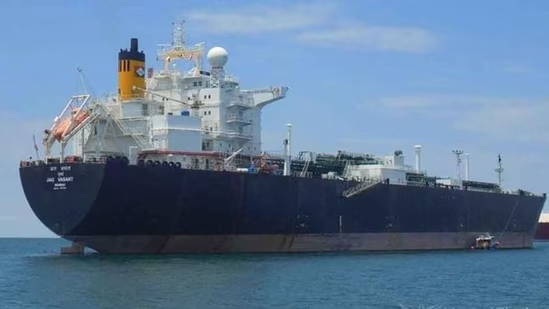
As tensions in the Persian Gulf continue to disrupt global shipping routes, two LPG carriers from the United Arab Emirates and a crude oil tanker from Saudi Arabia are heading towards Indian ports to help bridge the emerging energy supply gap. The developments come amid heightened security concerns in the region due to the ongoing Iran–US conflict and instability in the Strait of Hormuz.
According to officials familiar with the matter, the movement of the vessels is being closely monitored, while the Indian Navy has stepped up maritime security operations to ensure the safe passage of Indian-linked ships through sensitive waters.
LPG Tankers Leave UAE for India
Two Indian-linked LPG carriers — MV Jag Vasant and MV Pine Gas — departed from UAE ports early Monday after receiving clearance from Iran to transit through the strategically crucial Strait of Hormuz.
The ships, which sailed approximately five nautical miles apart, left their anchorage at 6:00 am IST and crossed the Strait later in the evening. Together, the vessels are carrying over 92,612 metric tonnes of LPG destined for India.
According to the Ministry of Shipping, the vessels have 33 and 27 Indian seafarers on board, respectively.
- MV Jag Vasant is expected to reach Kandla Port in Gujarat on March 26.
- MV Pine Gas is scheduled to arrive at New Mangalore Port on March 28.
Indian Navy to Provide Escort in High-Risk Waters
Once the ships entered the Gulf of Oman, they were to be escorted by Indian Navy warships for around 24 hours to ensure their safety before continuing their journey towards India’s western coastline.
The decision comes as shipping activity across the Persian Gulf region has become increasingly risky, with reports of missile launches, drone attacks, and rising military activity affecting commercial maritime traffic.
Crude Oil Carrier from Saudi Arabia Also En Route
In addition to the LPG shipments, a crude oil tanker named MT Kallista is currently loading cargo at Yanbu port in Saudi Arabia. The vessel is expected to depart on Tuesday and will head towards Paradip Port in Odisha, with a stop at Jeddah along the way.
The Panama-flagged tanker will also receive security escort from Indian naval ships while transiting the Gulf of Aden, in coordination with the Petroleum Ministry.
Indian Seafarers Under Stress Amid Missile Threats
The escalating conflict has created significant anxiety among Indian crew members working on tankers operating in the Gulf region, where missile and drone attacks have become increasingly frequent.
Officials said that both ship owners and the Indian Navy are in constant communication with the crews to ensure their safety and boost morale during the tense situation.
Navy Chief Cancels Foreign Visit
Amid the evolving crisis and its implications for India’s energy security, Chief of Naval Staff Admiral Dinesh Tripathi has cancelled his scheduled bilateral visit to Australia and New Zealand, which was planned from March 19 to March 23.
Sources said the decision was taken to allow the Navy leadership to focus on maritime security operations and the protection of Indian shipping interests in the Gulf region.
India Deploys Warships Near Strategic Sea Routes
To safeguard commercial vessels, the Narendra Modi government has instructed the Indian Navy to deploy Kolkata-class destroyers in the Gulf of Oman and Gulf of Aden.
These warships are expected to provide rapid response capabilities and maritime protection for Indian-flagged ships passing through critical international sea lanes.
However, Iranian authorities have reportedly not allowed Indian warships to escort Indian vessels directly through the Strait of Hormuz, which remains under tight security control.
The Iranian embassy in New Delhi has also denied reports suggesting that Tehran is demanding $2 million per vessel for passage through the strait.
Energy Security Under Watch
With the Strait of Hormuz handling a significant portion of global oil and gas shipments, disruptions in the region could have serious implications for energy-importing countries like India.
Officials said the government is closely monitoring shipping movements and fuel supplies to ensure there are no major disruptions to domestic energy availability.