
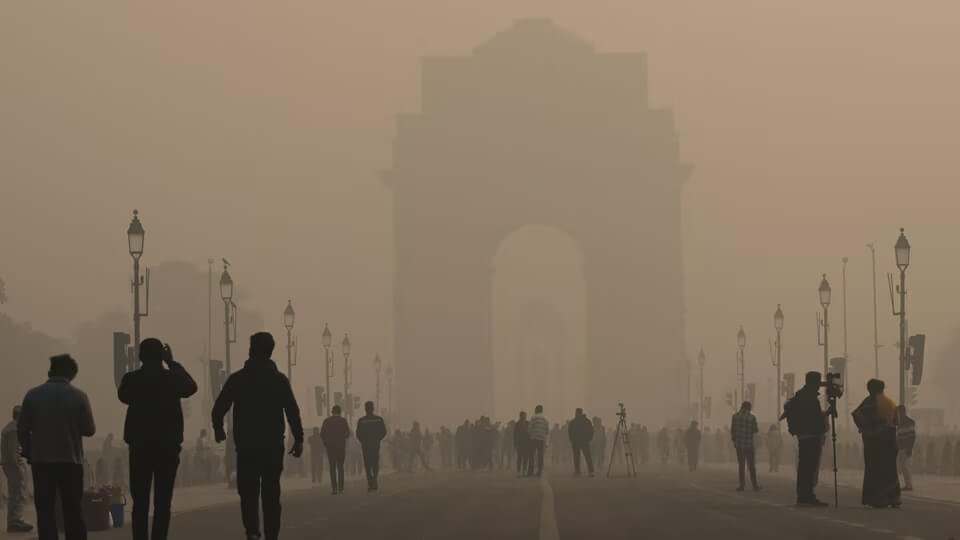
New Delhi: With winter approaching and air pollution typically becoming a major concern across the Delhi-NCR region, the Delhi government has announced a series of measures aimed at controlling emissions, reducing private vehicle use and managing identified pollution hotspots.
Delhi Environment Minister Manjinder Singh Sirsa announced the measures following a meeting attended by senior state and central government representatives, including Union Environment Minister Bhupender Yadav, Delhi Chief Minister Rekha Gupta and Delhi PWD Minister Parvesh Verma.
The measures include stricter enforcement of the “No PUCC, No Fuel” policy, action against end-of-life vehicles, additional electric buses, higher parking charges and changes to office timings.
“No PUCC, No Fuel” Enforcement to Be Intensified
One of the key measures announced by the Delhi government is the strengthening of the “No PUCC, No Fuel” policy.
Under the approach, vehicles without a valid Pollution Under Control Certificate (PUCC) face restrictions on purchasing fuel. The government plans to intensify enforcement as part of its efforts to address vehicular emissions during the winter pollution season.
The authorities are also preparing to strengthen the infrastructure and monitoring mechanisms associated with pollution certification.
Strict Action Against End-of-Life Vehicles
The Delhi government will also conduct a stricter enforcement drive against end-of-life vehicles across the city’s petrol pumps.
According to Sirsa, the campaign will cover 500 petrol pumps equipped with Automatic Number Plate Recognition (ANPR) cameras. The technology will be used to help identify vehicles that fall under the end-of-life category.
The government also plans to launch a public awareness campaign in October to inform vehicle owners about the measures.
PUC centres are scheduled to be upgraded in November, with the aim of improving the system used to monitor vehicle emissions and compliance.
Delhi to Add 150 More Electric Buses
Public transport is another major component of the government’s pollution-control strategy.
Sirsa said 150 additional electric buses would be introduced on Delhi’s roads. Once these buses are added, the total number of electric buses in the city’s fleet is expected to cross 700.
At present, 588 electric buses are operating in Delhi, according to the figures shared by the minister.
The expansion of electric public transport is intended to provide commuters with additional public mobility options while supporting efforts to reduce emissions from conventional vehicles.
42 of 62 Pollution Hotspots Reportedly Under Control
The government has also prepared measures targeting areas identified as pollution hotspots.
According to Sirsa, Delhi has identified 62 pollution hotspots, of which pollution levels at 42 locations have reportedly been brought under control.
The government plans to continue working on the remaining hotspots.
Special attention will be given to locations and activities that can contribute to localised air pollution, including cremation grounds, dumping sites and construction and demolition waste sites.
District magistrates are being involved in managing these locations and coordinating measures to address pollution-related problems.
Parking Charges to Double From November 1
To discourage excessive dependence on private vehicles, the government has decided to double parking charges at authorised parking facilities from November 1.
The measure is part of a wider strategy to reduce private vehicle usage and encourage commuters to consider public transport and other alternatives.
The revised parking charges will remain applicable during the winter period.
Staggered Office Timings Announced
The government has also announced changes to office timings from November 1 to February 28.
During this period:
- Municipal Corporation of Delhi (MCD) offices: 8:30 am to 5:00 pm
- Government of the National Capital Territory of Delhi (GNCTD) offices: 10:00 am to 6:30 pm
The staggered timings are intended to help manage traffic congestion during peak hours and reduce the concentration of vehicles on Delhi’s roads at the same time.
50% Work From Home to Be Implemented
A 50% work-from-home arrangement will also be implemented for government and private offices during the same period.
The measure is aimed at reducing the number of daily commuters and consequently lowering traffic-related emissions.
The government has included the arrangement as part of its broader winter preparedness plan for managing air quality and congestion.
Focus on Pollution and Traffic Hotspots
The Delhi government has said that it will continue monitoring areas where pollution and traffic congestion are particularly significant.
The strategy combines measures targeting vehicle emissions, public transportation, parking, office travel patterns, construction waste and other local sources of pollution.
With winter approaching, authorities are preparing to implement the measures in phases, with several initiatives scheduled to begin in October and November.
The effectiveness of the measures will depend on their implementation, compliance by residents and businesses, and the broader weather and pollution conditions across Delhi-NCR during the winter months.