
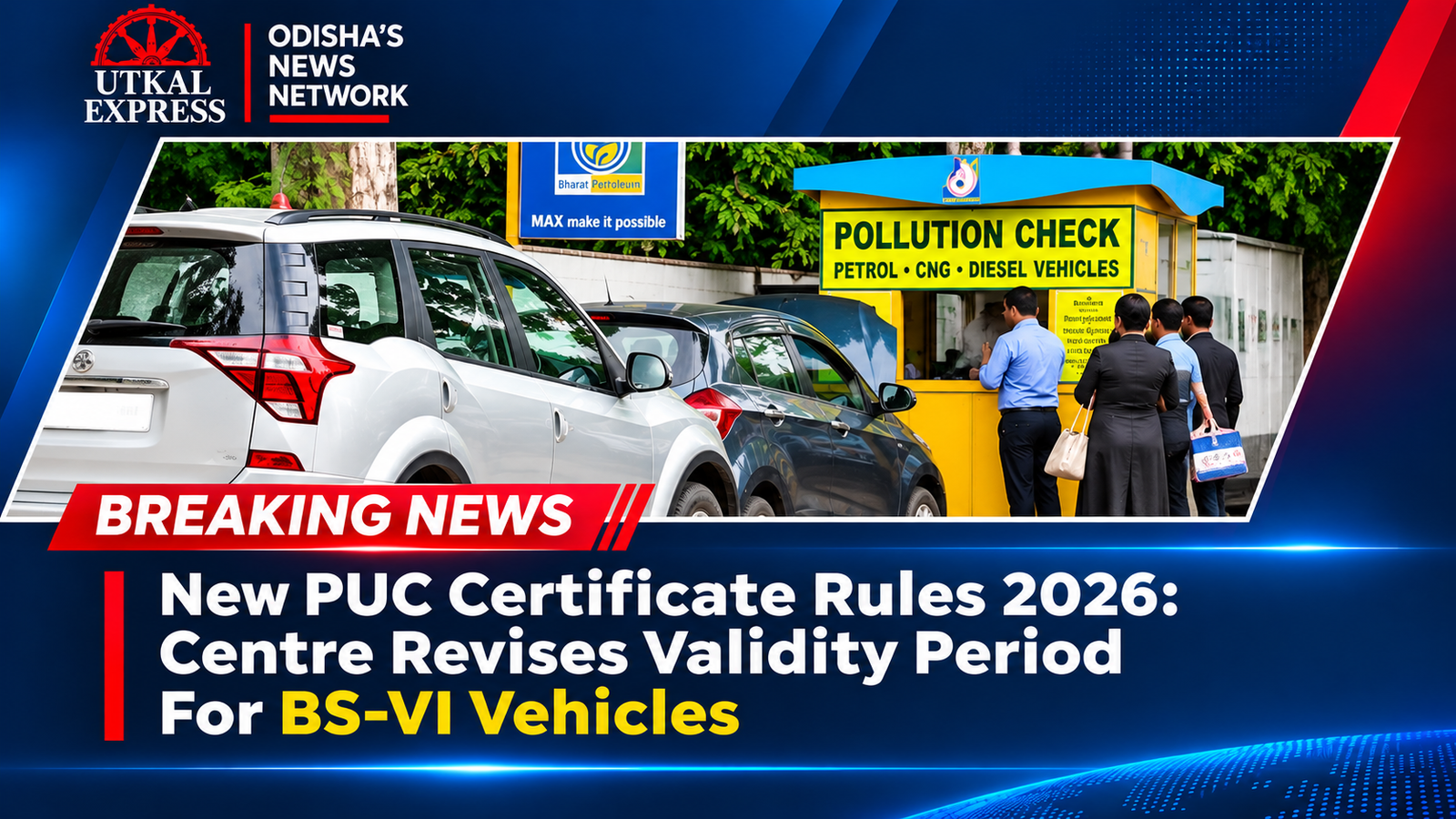
The Central Government has revised the validity period of Pollution Under Control (PUC) certificates for vehicles across India, introducing different renewal timelines for Bharat Stage-VI (BS-VI) vehicles based on their age and category. Under the new rules, private BS-VI vehicles up to six years old will receive PUC certificates valid for three years, while older vehicles will have to undergo more frequent emission testing.
The Ministry of Road Transport and Highways (MoRTH) notified the Central Motor Vehicles (Sixteenth Amendment) Rules, 2026, on November 13, amending the Central Motor Vehicles Rules, 1989.
The revised regulations aim to streamline the PUC certification process while maintaining emission compliance across different categories of vehicles. The new framework distinguishes between transport and non-transport vehicles and prescribes separate certificate validity periods according to their age.
The amended rules came into effect from the date of their publication in the Official Gazette.
New PUC Validity Rules For BS-VI Vehicles
Under the revised regulations, the validity of PUC certificates for BS-VI vehicles will depend on their age, calculated from the date of first registration, and whether they are used for transport or non-transport purposes.
For non-transport BS-VI vehicles, the government has introduced a three-year validity period for vehicles up to six years old. As vehicles become older, the renewal frequency will increase.
The revised validity schedule is as follows:
BS-VI Non-Transport Vehicles (Private Vehicles)
| Vehicle Age | PUC Certificate Validity |
|---|---|
| Up to 6 years | 3 years |
| More than 6 years to 10 years | 1 year |
| More than 10 years | 6 months |
For BS-VI transport vehicles, the renewal schedule is slightly different. Vehicles up to six years old will receive PUC certificates valid for two years, while older vehicles will require more frequent renewals.
BS-VI Transport Vehicles
| Vehicle Age | PUC Certificate Validity |
|---|---|
| Up to 6 years | 2 years |
| More than 6 years to 10 years | 1 year |
| More than 10 years | 6 months |
The revised schedule means that private BS-VI vehicles will enjoy a longer certification period during their initial six years compared to transport vehicles.
What Are The PUC Validity Rules For BS-I, BS-II, BS-III And BS-IV Vehicles?
The government has also retained specific validity periods for vehicles complying with older Bharat Stage emission standards.
Under the amended rules, the following validity periods will continue to apply:
| Emission Standard | PUC Certificate Validity |
|---|---|
| BS-I | 3 months |
| BS-II | 3 months |
| BS-III | 3 months |
| BS-IV | 6 months |
Unlike newer BS-VI vehicles, these vehicles will continue to require relatively frequent emission testing and certificate renewals.
What Happens To Existing PUC Certificates?
The revised rules will not immediately change the validity of PUC certificates already issued before the Central Motor Vehicles (Sixteenth Amendment) Rules, 2026, came into force.
Existing certificates will continue to remain valid until their respective expiry dates. The new validity provisions will become applicable when vehicle owners apply for their first PUC renewal after the amended rules take effect.
The notification also clarifies how the validity period of a renewed certificate will be calculated, depending on when the renewal application is submitted.
Renewal Within 10 Days Before Expiry:
If a vehicle owner applies for PUC renewal within 10 days before the existing certificate expires, the renewed certificate will become effective from the expiry date of the previous certificate.
Renewal After Certificate Expiry:
If the renewal application is made after the existing certificate has expired, the validity of the new PUC certificate will begin from the actual date of renewal.
This provision clarifies the transition between existing and renewed certificates and helps avoid confusion regarding the validity period.
Valid PUC Certificate Remains Mandatory For All Vehicles
Despite the changes in renewal timelines, the requirement to carry a valid PUC certificate remains applicable to all motor vehicles.
According to the amended rules, vehicle owners must obtain their pollution certificates from agencies authorised by the respective state governments.
The certificate must also be produced whenever demanded by an authorised officer.
The revised framework is expected to provide greater convenience to owners of newer BS-VI private vehicles by reducing the frequency of mandatory PUC renewals. At the same time, older vehicles and transport vehicles will continue to undergo periodic emission checks to ensure compliance with prescribed pollution standards.
Vehicle owners should check their vehicle’s emission category, date of first registration and certificate expiry date to understand the renewal schedule applicable to them.