
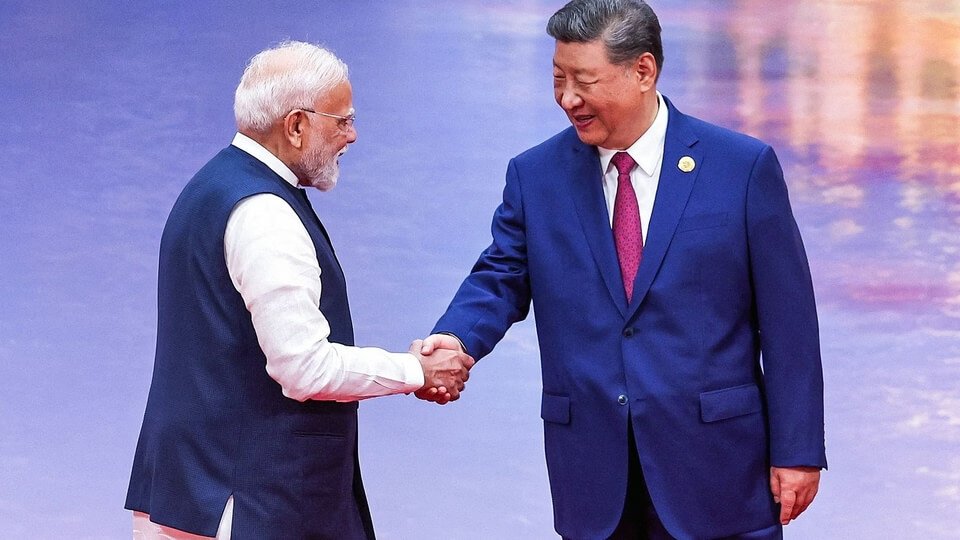
New Delhi: Chinese President Xi Jinping is set to visit India for the first time in nearly seven years to attend the 18th BRICS Summit in New Delhi on September 12 and 13, marking a significant moment in the gradual improvement of relations between the two Asian powers.
China’s foreign ministry confirmed Xi’s visit on Thursday, saying it follows an invitation from Prime Minister Narendra Modi. The visit is expected to provide an important opportunity for the two leaders to assess the progress made in stabilising India-China relations and discuss the remaining challenges, particularly the unresolved boundary question.
Xi Jinping’s First India Visit Since 2019
Xi last travelled to India in October 2019, when he met Prime Minister Modi in Mamallapuram, Tamil Nadu. The informal summit was followed by a severe deterioration in bilateral relations after a military confrontation erupted along the Line of Actual Control (LAC) in eastern Ladakh in 2020.
The situation reached a critical point following the Galwan Valley clash in June 2020, in which 20 Indian soldiers and at least four Chinese troops were killed. The confrontation became one of the most serious setbacks in India-China relations in several decades.
The subsequent military standoff continued for years, involving prolonged deployments of troops and military infrastructure along several friction points in eastern Ladakh.
Disengagement Opens Door for Diplomatic Engagement
A gradual easing of tensions began after India and China reached an understanding in October 2024 regarding disengagement at the remaining friction points of Depsang and Demchok.
Soon afterwards, Modi and Xi met on the sidelines of the BRICS Summit in Kazan, where the two leaders agreed to revive established mechanisms for addressing the border dispute and work towards restoring greater normalcy in bilateral relations.
Since then, both countries have taken a series of measures aimed at rebuilding communication and cooperation.
These steps have included the resumption of direct passenger flights between India and China and the revival of the Kailash Mansarovar Yatra, which had remained suspended for several years.
Diplomatic and military channels have also remained active, with officials from both countries continuing discussions on maintaining peace and stability along the LAC.
Border Talks Continue Despite Improving Ties
India has continued to emphasise that improvements in bilateral relations must be accompanied by sustained peace and tranquillity along the border.
The Working Mechanism for Consultation and Coordination on India-China Border Affairs reviewed the situation in May and noted progress towards maintaining stability along the frontier.
Further momentum came from high-level boundary negotiations in August. National Security Adviser Ajit Doval and Chinese Foreign Minister Wang Yi, who serve as the Special Representatives of India and China respectively on the boundary question, reached an eight-point consensus.
The agreement included proposals for additional military meeting points, new hotline mechanisms and the reopening of three designated border trading points.
In another significant development, India and China held their first corps commander-level meeting in the eastern sector in Arunachal Pradesh on September 6, indicating efforts to extend military-level communication beyond the western sector.
India Maintains Peace on LAC as Key Condition
Despite the recent diplomatic progress, New Delhi has maintained that lasting peace and tranquillity along the LAC remain fundamental to the broader relationship.
External Affairs Minister S. Jaishankar reiterated India’s position during his meeting with Wang Yi in July, stressing that meaningful progress on the border issue is necessary for the complete normalisation of India-China relations.
This position is likely to remain central to discussions between Modi and Xi during the upcoming BRICS summit.
The two leaders are expected to assess the progress made since their previous meeting and consider how the two countries can further stabilise ties while continuing negotiations over the unresolved boundary dispute.
Xi-Modi Meeting to Be Closely Watched
Xi’s presence in New Delhi is expected to make his bilateral engagement with Prime Minister Modi one of the most closely watched meetings on the sidelines of the BRICS Summit.
While the visit is primarily linked to the BRICS gathering, the timing is significant as India and China have been gradually rebuilding diplomatic engagement following years of military tensions.
Observers will closely watch whether Modi and Xi provide any indication of further measures to improve bilateral relations, strengthen border-management mechanisms or accelerate efforts to resolve outstanding issues along the LAC.
BRICS Summit to Focus on Global and Economic Issues
India is hosting the 18th BRICS Summit in New Delhi, bringing together leaders of the grouping to discuss major international political and economic developments.
The summit is expected to provide India with an opportunity to engage with other BRICS members on issues such as global conflicts, economic cooperation, development priorities and reforms of multilateral institutions.
However, Xi’s participation is likely to add particular diplomatic significance to the summit, given the recent efforts by India and China to stabilise their relationship.
His meeting with Modi could therefore emerge as one of the key diplomatic moments of the New Delhi summit, with the border question and the future direction of India-China ties likely to remain closely watched.