

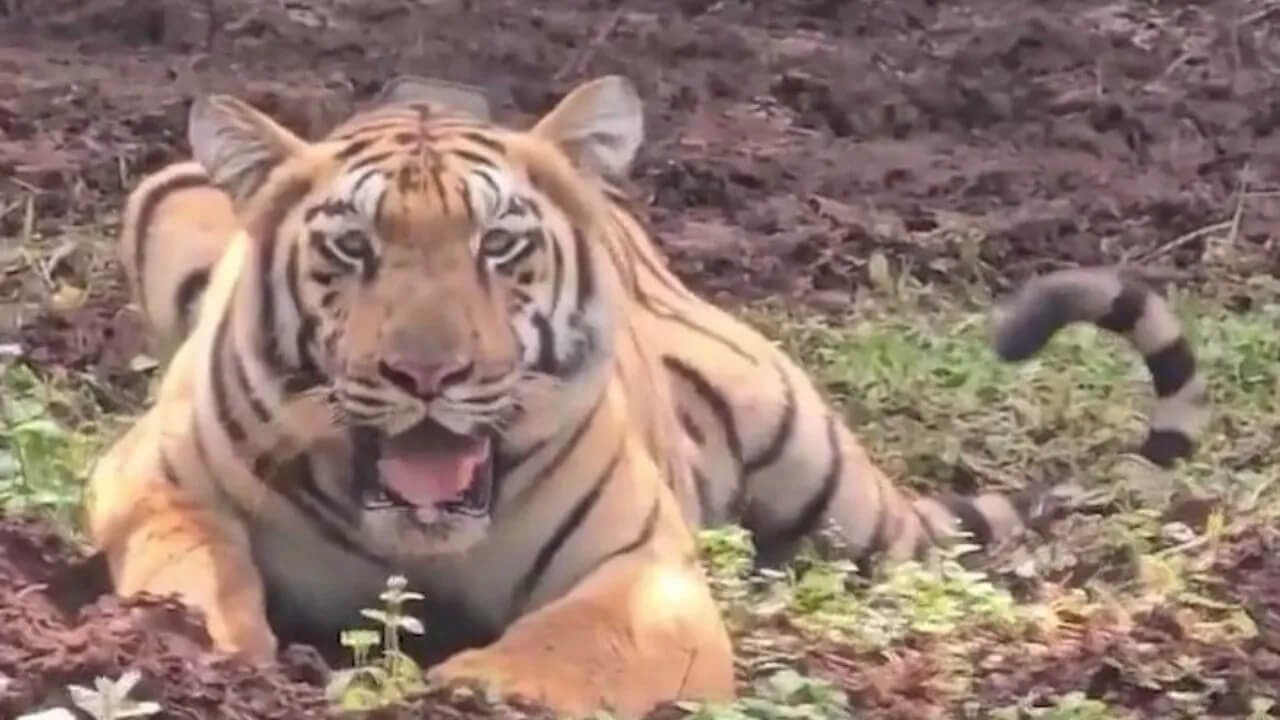
Royal Bengal tigress Zeenat, one of the most closely monitored big cats in Odisha’s Similipal landscape, is likely to be freed from her radio collar in October or November, according to Similipal Field Director Prakash Chandra Gogineni.
Forest officials believe the tigress has now adapted well to the Similipal forest and established a stable range. Her successful settlement, along with the birth of four cubs, has reduced the need for continuous tracking through the radio-collar system.
Radio Collar To Be Removed Without Tranquilisation
Officials are planning to remove Zeenat’s radio collar without administering a tranquiliser. A remote mechanism will reportedly be used to release the collar while maintaining a safe distance from the animal.
The move is aimed at allowing the tigress to continue her life in the wild without the additional equipment, while also avoiding the risks associated with physically capturing and sedating her.
Zeenat Establishes Territory In Similipal
Zeenat and another tigress, Jamuna, were brought to Similipal from Maharashtra’s Tadoba-Andhari Tiger Reserve in 2024 as part of efforts to strengthen the tiger population in the Odisha reserve.
The 3.5-year-old Zeenat later attracted considerable attention after leaving Similipal and travelling through forest areas of Jharkhand and West Bengal. Her movements prompted forest officials across three states to intensify surveillance and monitoring efforts.
She was eventually captured and brought back to Similipal, where officials continued to closely monitor her movements after her release.
The latest assessment suggests that the tigress has now become accustomed to the Similipal habitat and is moving within an established area.
Four Cubs Bring New Hope For Tiger Conservation
Zeenat’s successful breeding has added significance to her establishment in Similipal. The tigress gave birth to four cubs in June this year, providing a major boost to the reserve’s tiger conservation programme.
The development is particularly important as Similipal is known for its unique population of melanistic tigers. The successful reproduction of relocated tigers could contribute to strengthening the reserve’s overall tiger population and genetic diversity.
Zeenat And T-12 Mating Confirmed Through Camera Footage
Zeenat’s breeding success also followed her interaction with T-12, a 12-year-old melanistic tiger in Similipal.
Camera-trap footage recorded the two tigers interacting near the Jamunagarh meadow, providing evidence of their association. Zeenat had earlier reportedly rejected the advances of T-31, the son of T-12, before eventually forming a mating bond with the older tiger.
With Zeenat now established in Similipal and raising four cubs, forest authorities are preparing to gradually reduce direct monitoring. The planned removal of her radio collar in the coming months is being viewed as another indication of the tigress’s successful adaptation to her new habitat.