
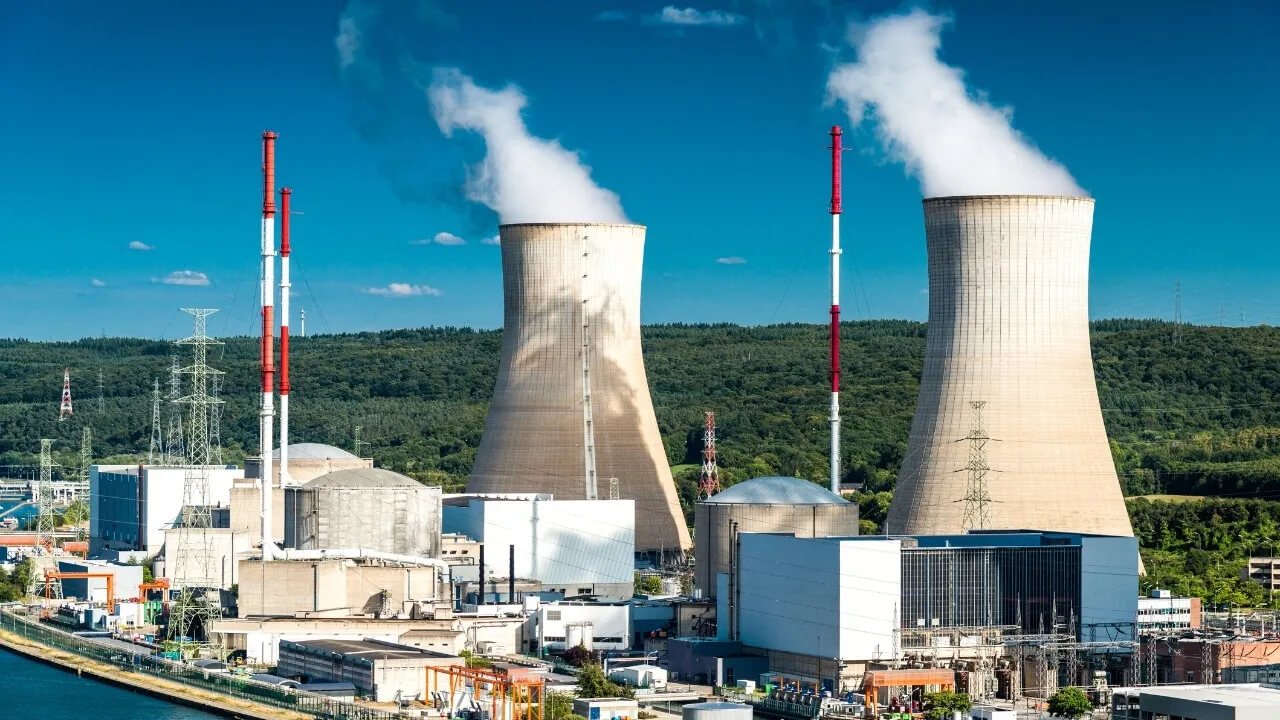
Bhubaneswar: Odisha could be set for a major transformation in its energy landscape, with the Tata Group and Adani Group separately submitting proposals to the state government for establishing nuclear power projects.
Odisha Energy Secretary Vishal Kumar Dev confirmed that both business groups have approached the state administration with proposals, although no final decision has been taken on either offer so far.
The proposals come at a time when the Odisha government is exploring Small Modular Reactors (SMRs) as part of its long-term Vision 2036 and Vision 2047 plans to strengthen the state’s energy infrastructure and establish Odisha as a major energy hub.
Odisha Explores Small Modular Reactor Technology
The state government is examining the potential of Small Modular Reactors, which differ from conventional nuclear power reactors in terms of capacity and deployment.
Traditional nuclear reactors generally have generation capacities ranging from around 1,000 MW to 1,700 MW, while SMRs can generate up to approximately 300 MW per unit.
One of the key advantages of SMRs is their ability to be deployed in phases, potentially allowing power generation capacity to be expanded according to demand.
For Odisha, the technology could form part of a broader strategy to diversify its energy mix and support the state’s growing industrial requirements.
Tata Group Proposes Four Nuclear Units in Malkangiri
The Tata Group has proposed setting up four nuclear power units, each with a capacity of 200 MW, in Malkangiri district.
The proposed project would therefore have a combined capacity of 800 MW.
Officials, however, noted that the Tata Group has not yet disclosed the total investment proposed for the project.
The proposal is currently under consideration as the Odisha government evaluates the feasibility of nuclear energy projects and the suitability of potential sites.
Adani Group Plans ₹1.5 Lakh Crore Clean Energy Investment
The Adani Group has also presented an ambitious clean energy investment proposal to the Odisha government.
An Adani delegation met Deputy Chief Minister Kanak Vardhan Singh Deo on July 30, during which the group outlined plans to invest approximately ₹1.5 lakh crore in Odisha’s clean energy sector.
The proposal includes a significantly larger nuclear power component, with plans for two nuclear power plants having a combined capacity of 6,000 MW.
The group’s broader proposal also includes:
- 2,400 MW ultra-supercritical thermal power plant
- Floating solar power projects
- Pumped storage projects
- Nuclear power generation infrastructure
- Other clean energy investments
If implemented, the proposed investment could significantly expand Odisha’s electricity generation capacity and strengthen the state’s position as an energy and industrial hub.
Government Yet to Take Final Decision
Despite the scale of the proposals, the Odisha government has not made a final decision regarding either project.
Energy Secretary Vishal Kumar Dev said the administration is carefully examining the proposals, particularly because nuclear power projects involve stringent regulatory, environmental and safety requirements.
The state is expected to assess factors including land availability, water resources, geological conditions, environmental considerations and regulatory clearances before deciding on suitable projects and locations.
Strict Safety Requirements for Nuclear Projects
Officials have emphasised that nuclear power projects require substantially stricter site-selection criteria than conventional power plants.
Potential sites must have sufficient land for the main facility as well as mandatory safety and buffer zones. Residential settlements cannot be located within restricted areas around the nuclear facility.
The availability of abundant cooling water is another critical requirement, as nuclear power generation requires reliable water resources for cooling systems.
Sites must also be assessed for their vulnerability to flooding and seismic activity. Areas considered unsuitable from a geological or disaster-management perspective are unlikely to qualify for nuclear development.
Odisha’s Vision to Become an Energy Hub
The proposals from Tata and Adani come as Odisha seeks to significantly expand its energy infrastructure under its long-term development plans.
The state’s Vision 2036 and Vision 2047 objectives envisage stronger industrialisation, increased energy availability and the development of Odisha as a major energy hub.
Nuclear power could potentially complement the state’s existing thermal, renewable, solar and hydropower resources, providing a stable source of electricity for industries and future economic growth.
However, the government is expected to proceed cautiously, with safety, environmental sustainability and regulatory compliance remaining key considerations before any nuclear project receives approval.