
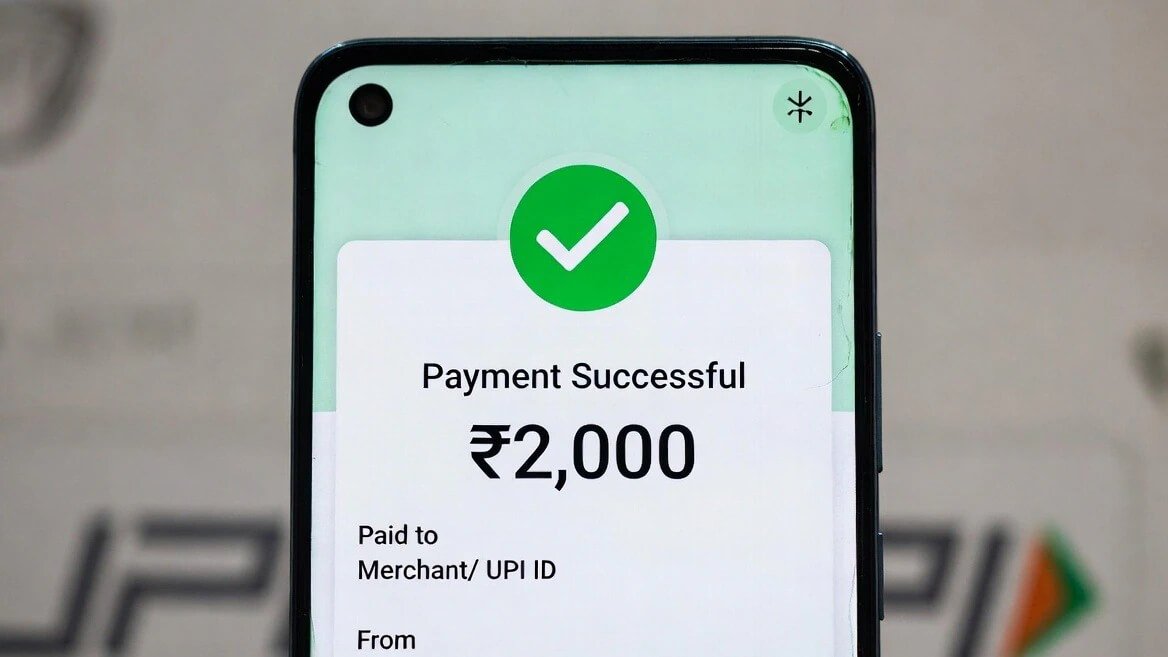
New Delhi: The Central government is considering allowing banks and payment service providers to levy a Merchant Discount Rate (MDR) on certain high-value Unified Payments Interface (UPI) transactions made to businesses. Under the proposal, an MDR ranging between 0.25% and 0.4% may be charged on merchant UPI payments exceeding ₹2,000, while person-to-person (P2P) transactions are expected to remain completely free.
The proposal is part of the Taxation and Other Laws (Amendment) Bill, introduced in Parliament by Finance Minister Nirmala Sitharaman. The Bill seeks to remove the existing legal restriction that prevents the levy of MDR on notified electronic payment modes, including UPI.
However, government officials have clarified that no final decision has been taken regarding the implementation of the proposal, and there is currently no timeline for introducing the charges.
What Is Being Proposed?
If approved, banks and payment service providers would be permitted to charge merchants an MDR of 0.25% to 0.4% on UPI payments above ₹2,000 made for the purchase of goods and services.
The proposed MDR would apply only to merchant transactions (P2M) and not to transfers made between individuals. This means that sending money to friends, family members or other individuals through UPI would continue to remain free.
Officials have emphasised that the proposal is still under consideration and further consultations are expected before any final decision is taken.
Only a Small Percentage of Transactions May Be Affected
According to official estimates, the proposed ₹2,000 threshold would impact only around 5% of all UPI transactions by volume.
However, these transactions account for nearly 65% of the total value processed through the UPI ecosystem, as they primarily involve larger commercial payments.
As a result, most day-to-day digital payments are expected to remain unaffected.
Everyday Payments Likely to Stay Free
If the proposal is implemented in its present form, routine consumer payments such as:
- Grocery purchases
- Milk and dairy products
- Vegetables and fruits
- Auto-rickshaw fares
- Taxi payments
- Small retail purchases
are unlikely to attract any MDR since they generally fall below the proposed ₹2,000 threshold.
Officials believe this approach would protect ordinary consumers while allowing financial institutions to recover a portion of the operational costs associated with processing higher-value merchant transactions.
Industry Expects Cap on MDR
Industry stakeholders have indicated that the government may introduce an upper limit on the maximum MDR that can be charged, ensuring that merchants are not burdened with excessive fees.
Experts have pointed out that UPI transactions do not involve the credit risk or funding costs associated with credit card payments, making it unnecessary to levy high MDR rates.
There is also an expectation that many merchants may choose to absorb the nominal charge rather than pass it on to customers in order to remain competitive.
Majority of UPI Transactions to Remain Free
Officials have reiterated that even if the proposal comes into effect, nearly 95% of all UPI transactions are expected to continue without any MDR.
The move is aimed at balancing the sustainability of India’s rapidly expanding digital payments ecosystem with the government’s objective of promoting cashless transactions.
UPI has become the country’s most widely used digital payment platform, handling billions of transactions every month across individuals, businesses and government services. Any decision on introducing MDR will be closely watched by banks, fintech companies, merchants and consumers alike.