
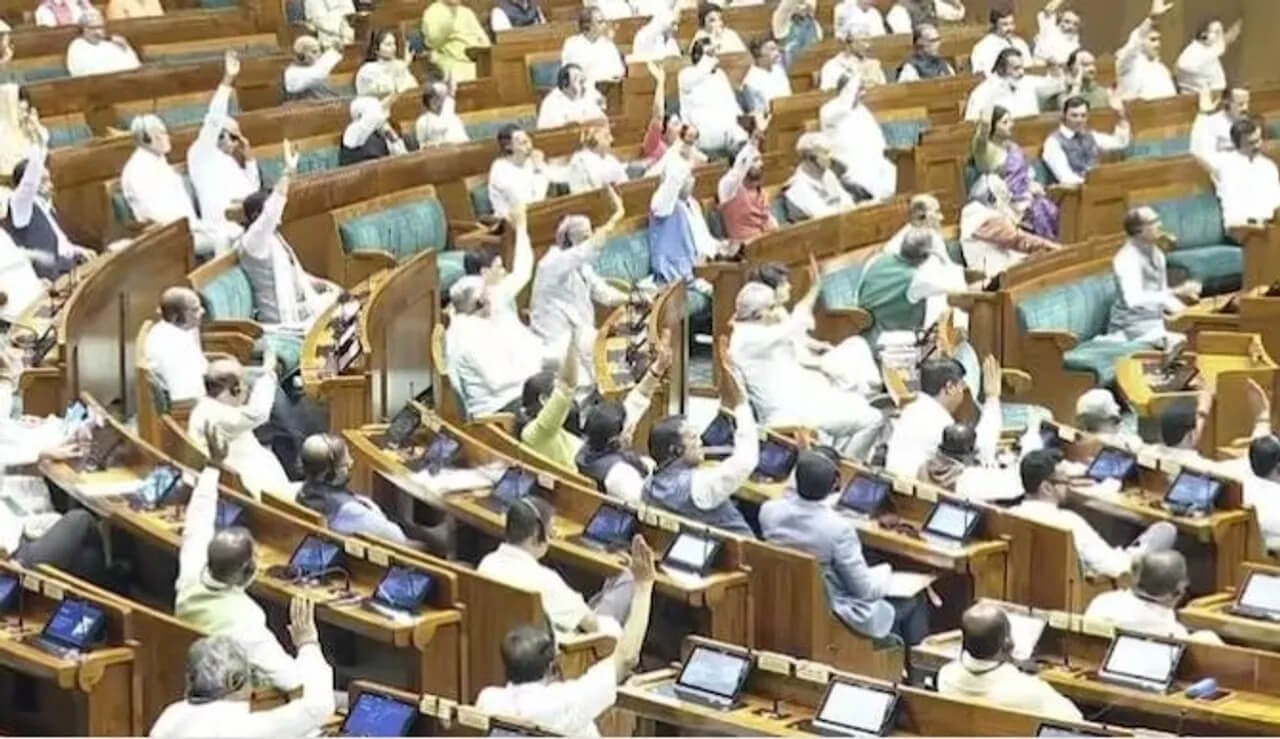
New Delhi: The Lok Sabha on Wednesday passed the Public Examinations (Prevention of Unfair Means) Amendment Bill, 2026 by voice vote, paving the way for stricter action against paper leaks, examination fraud, and organised cheating syndicates across the country.
The legislation significantly strengthens the existing law by introducing harsher penalties, mandatory fast-track trials, and time-bound investigations to ensure swift action against those involved in compromising the integrity of public examinations.
Bill Passed Amid Opposition Protests
The Bill was passed amid noisy scenes in the House as Opposition members raised slogans following a heated exchange over Leader of Opposition Rahul Gandhi’s remarks on the police action against student protesters last week.
The legislation was introduced in the Lok Sabha on July 27 by Union Minister Jitendra Singh, just days after nationwide protests over the alleged NEET paper leak led to the resignation of former Union Education Minister Dharmendra Pradhan.
Up to 10 Years’ Imprisonment for Paper Leaks
Under the amended law, individuals found guilty of leaking examination papers or engaging in organised examination fraud can face:
- Up to 10 years of rigorous imprisonment
- A fine of up to ₹50 lakh
The Bill also introduces stringent provisions to dismantle organised paper leak networks. Syndicates involved in large-scale examination fraud may face fines of up to ₹10 crore, making it one of the toughest legal frameworks against examination-related crimes in India.
Fast-Track Courts and Time-Bound Investigations
To ensure speedy justice, the legislation proposes the establishment of dedicated fast-track courts in every state exclusively for hearing paper leak and examination fraud cases.
The Bill further mandates that all investigations must be completed within two months, aiming to prevent prolonged delays and restore public confidence in the examination system.
Background: Nationwide NEET Protest
The amendment comes in the wake of a 36-day nationwide student agitation over the alleged NEET paper leak.
The movement began at Jantar Mantar in New Delhi on June 20 and gained nationwide momentum after activist Sonam Wangchuk launched an indefinite hunger strike on June 28 in support of the protesting students.
The protests concluded on July 25 after the Centre accepted several key demands raised by the protesters, including:
- The resignation of Union Education Minister Dharmendra Pradhan
- Compensation for the families of students who allegedly died by suicide following the NEET paper leak controversy
- Withdrawal of FIRs registered against peaceful protesters
The passage of the Amendment Bill marks a significant step in the government’s efforts to strengthen the integrity of public examinations, curb organised paper leak rackets, and ensure greater accountability through stricter legal provisions.