
New Delhi: In a significant boost to India’s biofuel mission, the Central Government has exempted petrol blended with higher concentrations of ethanol from excise duty, extending tax benefits beyond the current E20 fuel standard. The move is being viewed as a major step towards reducing crude oil imports, promoting cleaner fuels and preparing the groundwork for the next phase of India’s ethanol-blending programme.
According to a government notification, petrol containing 22% to 30% ethanol will now be exempt from excise duty. The exemption covers fuel variants including E22, E25, E27 and E30, marking the first major fiscal incentive for ethanol blends above the E20 level.
Government Preparing for Future Ethanol Expansion
Sources in the Ministry of Petroleum and Natural Gas clarified that no immediate nationwide rollout of higher ethanol blends has been announced. However, the tax exemption aligns with newly notified fuel-quality standards and indicates that policymakers are actively preparing for future adoption.
The development comes shortly after the Bureau of Indian Standards (BIS) introduced fuel specifications for E22, E25, E27 and E30 petrol under IS 19850:2026, which came into effect on May 15, 2026. The standards define ethanol content, octane requirements, sulphur limits, testing methods and safety protocols.
Together, the BIS standards and the excise-duty exemption provide both the technical and financial framework needed for the eventual introduction of higher ethanol-blended fuels across India.
India’s Ethanol-Blending Programme Gains Momentum
India’s ethanol-blending journey has progressed rapidly over the past few years under the National Policy on Biofuels.
The government had originally targeted 20% ethanol blending by 2030 but later advanced the goal to the Ethanol Supply Year (ESY) 2025-26.
Public sector oil marketing companies achieved 10% blending ahead of schedule in June 2022, and blending levels have continued to rise steadily:
- 12.06% in ESY 2022-23
- 14.60% in ESY 2023-24
- 17.98% in ESY 2024-25 (up to February 2025)
The increased use of ethanol has helped lower fossil fuel consumption while creating additional income opportunities for farmers and ethanol producers.
Reducing Oil Imports and Supporting Farmers
India imports a significant portion of its crude oil requirements, making energy security a key policy priority.
Union Minister for Road Transport and Highways Nitin Gadkari has repeatedly emphasized that ethanol serves as an import substitute, reducing dependence on foreign fuel while supporting domestic agriculture.
The government believes that greater ethanol blending can help retain fuel expenditure within the country, benefiting farmers, rural communities, agricultural industries and biofuel manufacturers.
Higher Ethanol Blends and Consumer Concerns
The expansion of ethanol-blended petrol has sparked debates among vehicle owners regarding fuel efficiency and engine compatibility.
When E20 fuel was introduced nationwide, concerns were raised about mileage losses and suitability for older vehicles. However, the government maintained that the transition was scientifically evaluated and safe for approved vehicles.
Industry bodies have stated that while some older vehicles may experience a marginal reduction in fuel efficiency, E20 does not pose significant safety concerns.
Meanwhile, the government continues to promote flex-fuel technology that allows vehicles to operate on multiple ethanol-petrol blend combinations.
Cost Dynamics Remain Complex
Contrary to popular perception, ethanol-blended fuel is not always cheaper to produce than conventional petrol.
Government data released last year showed that the weighted average procurement cost of ethanol reached Rs 71.32 per litre, including GST and transportation costs, making it more expensive than refined petrol in some cases.
This has complicated expectations that higher ethanol content would automatically translate into lower retail fuel prices.
E85 Fuel Launch Signals Next Phase
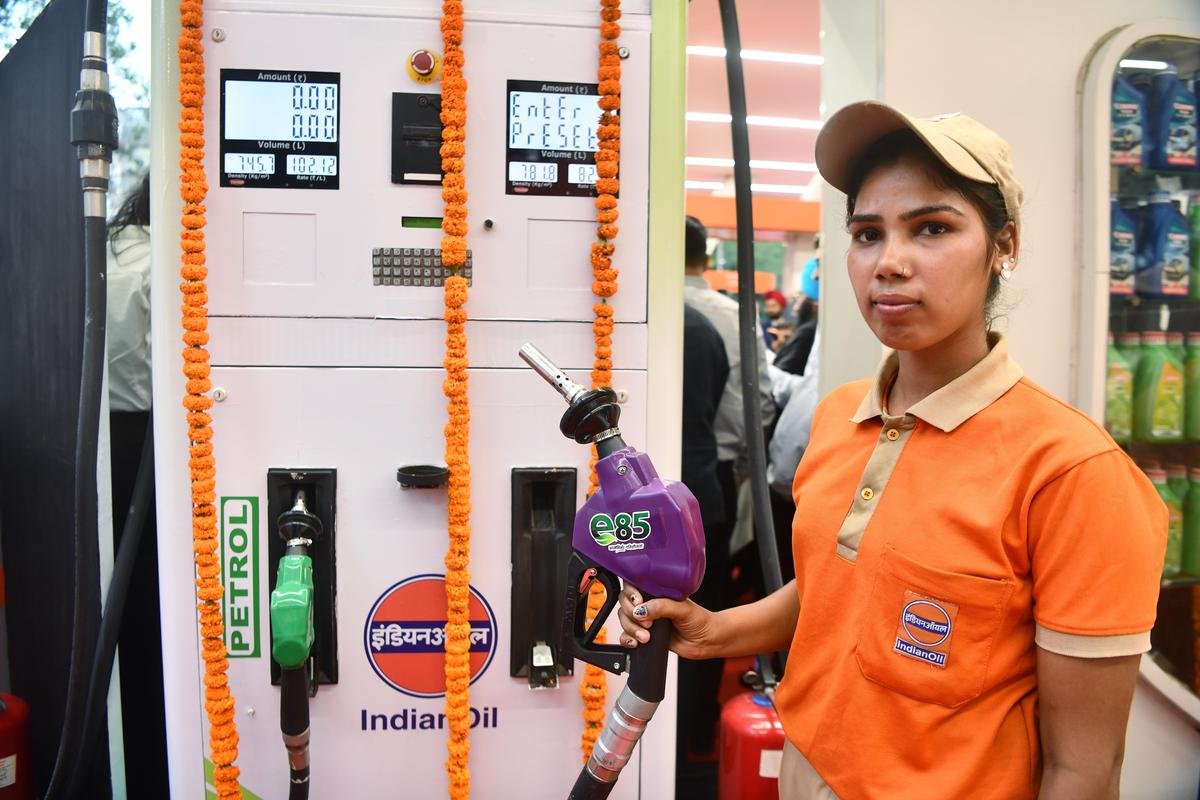
The tax exemption follows the recent launch of E85 fuel, which contains 85% ethanol and is designed specifically for flex-fuel vehicles.
The fuel was launched by Union Petroleum and Natural Gas Minister Hardeep Singh Puri on World Environment Day and is currently being made available through select public-sector fuel stations.
According to the government, E85 is being sold at approximately Rs 20 per litre lower than E20 fuel, offering a cost advantage for owners of flex-fuel vehicles.
What the Excise Duty Exemption Means
The latest decision signals that India is moving beyond its E20 target and preparing for broader adoption of higher ethanol blends in the coming years. By creating regulatory standards and offering tax incentives, the government is laying the foundation for a more diversified and domestically driven fuel ecosystem.
The policy is expected to strengthen India’s energy security, support farmers, encourage investment in biofuel production and contribute to the country’s long-term clean energy goals.