
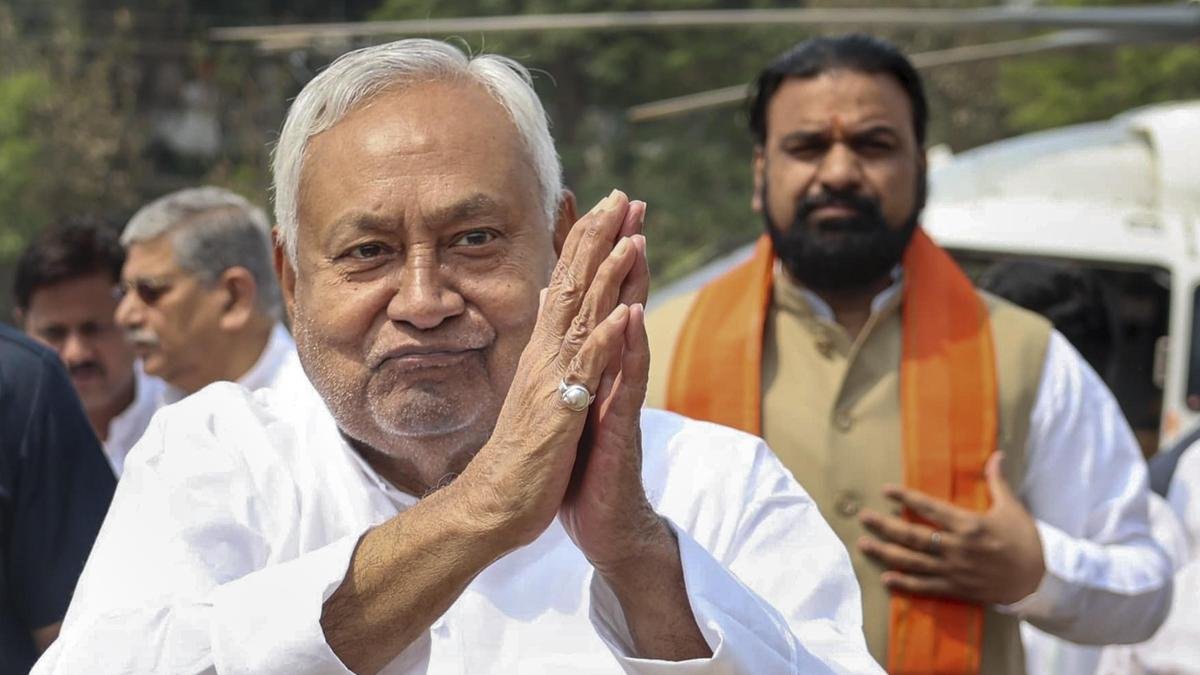
Patna: Bihar Chief Minister Nitish Kumar resigned from his membership in the Bihar Legislative Council on Monday (March 30, 2026) after being elected to the Rajya Sabha, marking a significant political development in the state.
The resignation was confirmed by Legislative Council Chairman Awadhesh Narayan Singh, who said that JD(U) MLC Sanjay Gandhi submitted Nitish Kumar’s resignation letter to the council on his behalf.
Nitish Kumar is expected to take oath as a Member of Parliament in the Rajya Sabha on April 10, following his victory in the Upper House elections held earlier this month.
Rajya Sabha Election and Constitutional Requirement
The veteran Janata Dal (United) leader had secured a Rajya Sabha seat in the election conducted on March 16, 2026. Under constitutional provisions, a person elected to Parliament must resign from membership of a State legislature within 14 days of the election.
Earlier, on March 27, Bihar Assembly Speaker Prem Kumar had indicated that the Chief Minister still had time to submit his resignation from the state legislature before the March 30 deadline.
By stepping down from the Legislative Council, Nitish Kumar has complied with the requirement of relinquishing his state legislative membership after being elected to Parliament.
Speculation Over Future Leadership in Bihar
The resignation has intensified political discussions in Bihar regarding the future leadership of the state and who might succeed Nitish Kumar if he eventually moves fully to national politics.
On the eve of the resignation, senior JD(U) leaders gathered at the Chief Minister’s official residence in Patna for closed-door meetings. According to party sources, some leaders reportedly urged Nitish Kumar to continue leading the state government, while deliberations also focused on potential leadership changes.
Nomination Filed in Presence of Amit Shah
Nitish Kumar had filed his Rajya Sabha nomination papers on March 5, 2026, in the presence of Union Home Minister Amit Shah, a development that fuelled speculation about the possible conclusion of his two-decade-long tenure as Bihar’s chief minister.
Kumar, who has been one of the most prominent political figures in Bihar, has played a major role in shaping the state’s political landscape over the past 20 years.
Can Nitish Kumar Continue as Chief Minister?
Earlier, Bihar Rural Development Minister Sharwan Kumar had suggested that Nitish Kumar could technically continue as the Chief Minister for a limited period even after being elected to the Rajya Sabha.
He had explained that while a leader must resign from membership of the state legislature within 14 days after being elected as an MP, the Constitution allows a person who is not a member of the state legislature to serve as Chief Minister for up to six months, provided they secure membership within that timeframe.
However, the political implications of Kumar’s move to Parliament and the possibility of leadership changes in Bihar remain a subject of ongoing discussion within political circles.
Nitish Kumar’s transition to the Rajya Sabha is being viewed as a major shift in Bihar’s political landscape, potentially opening the door for new leadership within the JD(U) and the state government.