
Iran has said it is allowing India and several other “friendly nations” to continue commercial shipping through the Strait of Hormuz, even as the strategic waterway remains partially restricted amid the ongoing conflict in West Asia.
Iranian Foreign Minister Seyed Abbas Araghchi confirmed that India, China, Russia, Iraq and Pakistan have been permitted to transit through the narrow maritime corridor, which is crucial for global energy supplies.
“We have permitted certain countries that we consider friendly to pass through. We allowed China, Russia, India, Iraq and Pakistan to transit,” Araghchi said, according to Iranian State Television.
Strategic Importance of the Strait of Hormuz
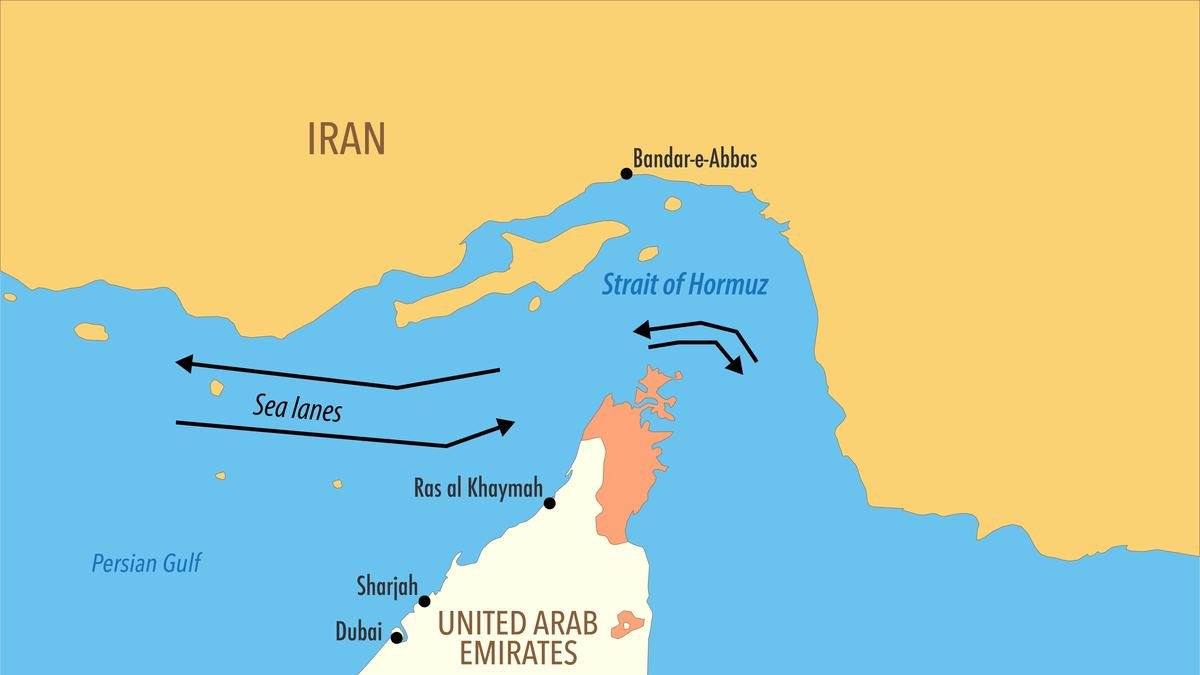
The Strait of Hormuz, located between the Persian Gulf and the Gulf of Oman, is one of the world’s most critical maritime chokepoints.
- Around 20% of the world’s oil and liquefied natural gas (LNG) passes through the strait.
- The route is vital for energy exports from West Asia to global markets.
- Countries like India heavily depend on oil imports from the region.
Recent tensions and restrictions in the area have pushed global oil and gas prices higher, raising concerns about disruptions to energy supply chains.
Restrictions on “Adversary” Ships
While confirming limited access for certain nations, the Iranian foreign minister said ships connected to Iran’s adversaries or their allies would not be permitted to use the route.
“We are in a state of war. The region is a war zone, and there is no reason to allow the ships of our enemies and their allies to pass through. But it remains open to others,” Araghchi said.
The statement comes amid escalating tensions in the region, where military actions and threats have raised fears about the stability of global energy trade.
Global Concerns Over Shipping Disruptions
The situation has triggered widespread international concern, as any prolonged disruption in the Strait of Hormuz could significantly affect global oil supplies.
US President Donald Trump has warned Iran of serious consequences if the strategic waterway is not fully reopened for international shipping.
India’s Diplomatic Efforts
India has been actively pursuing diplomatic efforts to ease tensions in West Asia, emphasising the importance of keeping global energy supply routes open.
Officials in New Delhi believe that continued restrictions in the strait could have serious implications for India’s fuel security as well as fertiliser supplies, both of which depend heavily on imports from the region.
The development highlights the strategic importance of the Strait of Hormuz and the broader geopolitical tensions shaping global energy markets.