

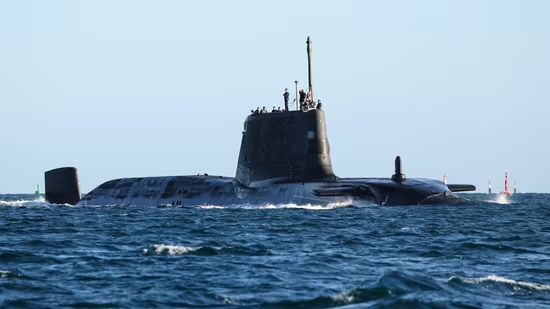
A British nuclear-powered submarine, HMS Anson, has reportedly been deployed in the Arabian Sea as tensions escalate in the Middle East conflict, now entering its third week.
According to media reports citing military sources, the submarine travelled nearly 5,500 miles from Perth, Australia, to reach the region, positioning itself strategically amid growing geopolitical uncertainty.
Advanced Stealth and Strike Capabilities
HMS Anson is part of the UK’s advanced Astute-class submarine fleet and is among the most sophisticated attack submarines operated by the Royal Navy.
It is equipped with:
- Tomahawk Block IV cruise missiles (range up to 1,600 km)
- Spearfish heavyweight torpedoes
- Nuclear propulsion enabling long-duration stealth operations
Its deployment places it within operational range of Iran, raising the stakes if the conflict intensifies.
Strategic Context: Strait of Hormuz Crisis
The move comes amid an ongoing blockade affecting the Strait of Hormuz, a vital maritime route responsible for transporting a significant share of the world’s oil and gas.
Iran’s actions in the region have drawn global concern, with 22 countries, including the UK, condemning attacks on vessels and disruptions to shipping lanes.
Linked to AUKUS Partnership
HMS Anson had recently been stationed in Australia under the AUKUS security partnership involving Australia, the UK, and the United States.
Its rapid redeployment highlights the flexibility of allied military coordination in responding to emerging threats.
Command and Control
Reports indicate the submarine periodically surfaces to communicate with the UK’s Permanent Joint Headquarters in Northwood, where any potential strike orders would be authorised by Prime Minister Keir Starmer.
No Official Confirmation Yet
The UK Ministry of Defence has not officially confirmed the deployment. However, the move follows Britain’s decision to allow the US to use its bases for potential strikes on Iranian targets threatening regional stability.
Rising Global Stakes
The deployment underscores growing military preparedness among Western powers as the conflict threatens:
- Global energy supply chains
- Maritime security
- Broader geopolitical stability