
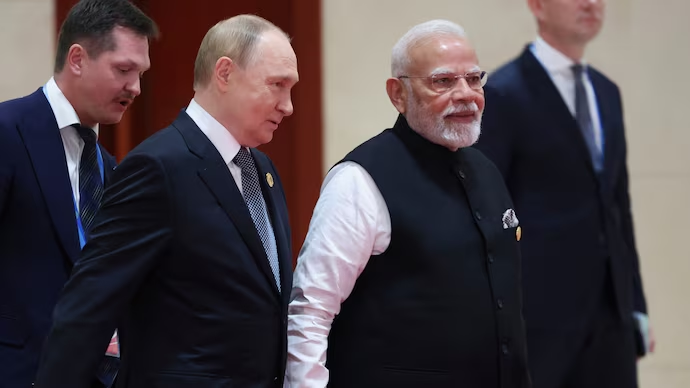
Amid escalating tensions in the Middle East and disruptions along the vital Strait of Hormuz, Russia has indicated its readiness to divert crude oil shipments to India to offset potential supply shortages.
According to an industry source cited by Reuters, around 9.5 million barrels of Russian crude are currently aboard vessels near Indian waters and could arrive within weeks, offering refiners swift relief.
India Forced to Seek Alternative Supplies
Nearly 40% of India’s crude imports transit through the Strait of Hormuz—the world’s most critical oil export route. Recent disruptions, including vessel strikes following military actions involving Iran, the United States and Israel, have made the route nearly inaccessible.
India, the world’s third-largest oil consumer, processes about 5.6 million barrels per day (bpd) of crude. However, its strategic reserves cover only about 25 days of demand, making it highly vulnerable to prolonged supply shocks. Refiners also hold limited inventories of gasoil, gasoline and liquefied petroleum gas (LPG).
With the Hormuz route under strain, India has been compelled to explore alternative supply lines to maintain energy security.
Russia Ready to Meet Up to 40% of India’s Needs
The industry source said Moscow is prepared to help India meet up to 40% of its crude requirements if needed. While Russian oil has been sold at discounted rates since its 2022 invasion of Ukraine, the current geopolitical tensions are expected to narrow those discounts as the market shifts in favour of sellers.
India’s imports of Russian crude had dropped to around 1.1 million bpd in January, the lowest since November 2022, amid trade pressures from Washington. Moscow’s share of India’s total oil imports fell to 21.2% during that period but reportedly climbed back to around 30% in February.
Indian refiners remain in contact with traders handling Russian crude shipments. However, any significant increase in purchases would likely depend on policy guidance from New Delhi, especially as trade discussions with Washington continue.
US Pressure and Strategic Balancing
Last month, US President Donald Trump said punitive tariffs imposed on Indian imports over Russian oil purchases would be dropped, stating that India had agreed to “stop buying Russian oil.” However, New Delhi has maintained that its energy procurement strategy is based on diversification and evolving global market dynamics.
India’s foreign and oil ministries, along with the Russian embassy in New Delhi, have not officially commented on potential increases in Russian oil imports.
LNG Supply and Broader Energy Risks
The crisis has also impacted natural gas markets. With Qatar halting production at key facilities as the conflict widened, Russia has reportedly signalled readiness to supply liquefied natural gas (LNG) to India.
Indian companies have already curtailed gas supplies to certain industrial customers to manage shortfalls.
Both India and China rely on the Middle East for roughly half of their crude imports. However, India’s comparatively lower storage capacity makes it more exposed to sudden supply disruptions, particularly as Russian imports fluctuate under US scrutiny.
President Trump has stated that the US Navy could escort oil tankers through the Strait of Hormuz if necessary and directed the US International Development Finance Corporation to provide political risk insurance and guarantees for Gulf shipping.
Energy Security at a Critical Juncture
With global energy markets tightening and geopolitical tensions intensifying, India faces a delicate balancing act—ensuring energy security while navigating diplomatic pressures from both Washington and Moscow.
The coming weeks will be crucial in determining whether Russian crude can serve as a stabilising buffer for India amid one of the most volatile periods in global oil trade in recent years.