

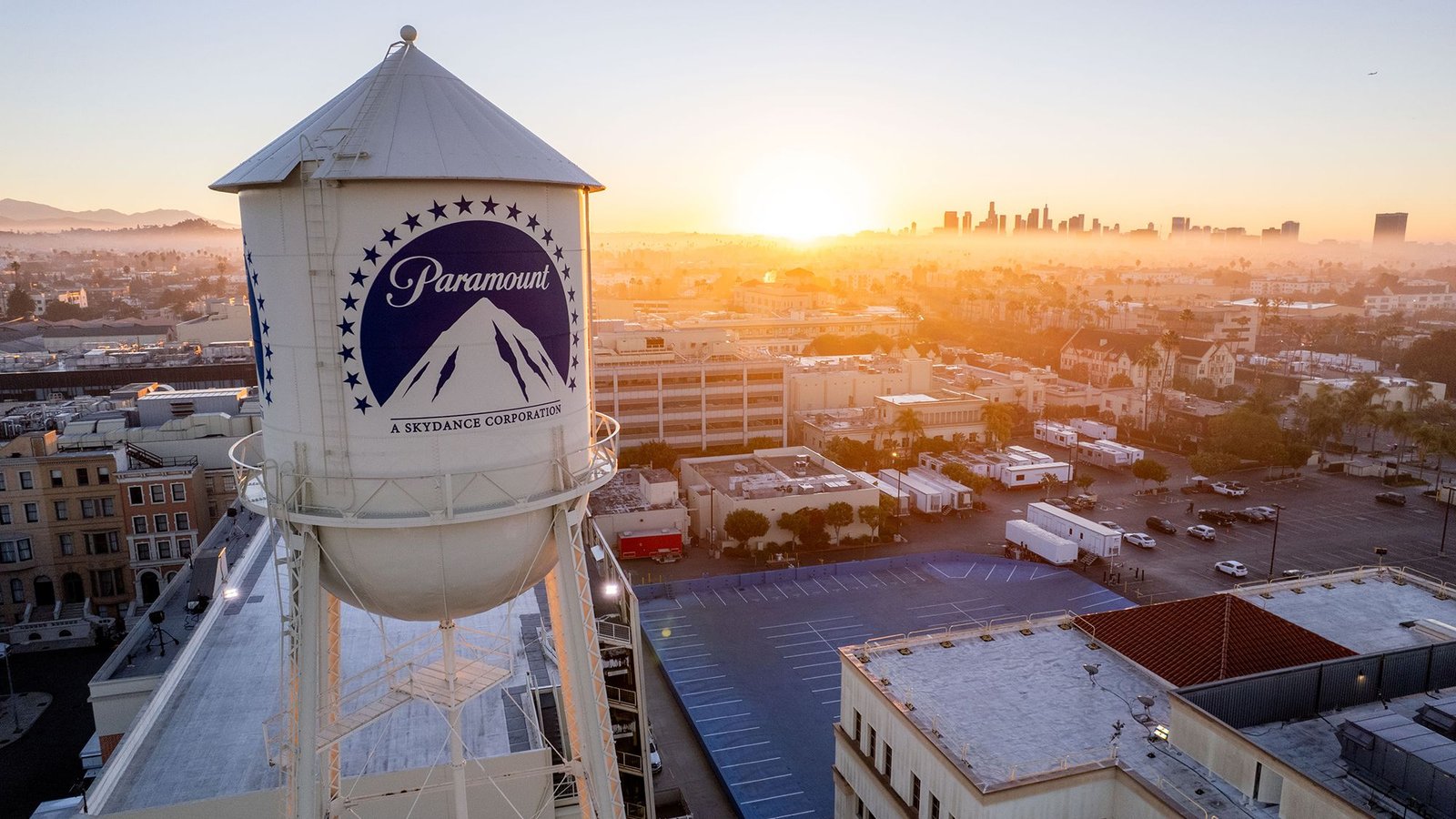
In a dramatic escalation of Hollywood’s biggest corporate battle of the year, Paramount has bypassed Warner Bros. Discovery’s (WBD) board and gone directly to its shareholders, pitching an all-cash offer it claims is far superior to Netflix’s winning bid.
WBD stunned industry insiders last week by selecting Netflix as its preferred buyer, despite widespread expectations that Paramount was in the lead. But Paramount CEO David Ellison is now openly challenging that decision, arguing that shareholders deserve the chance to consider what he calls a “significantly higher-value” proposal.
Paramount Claims Its Bid Beats Netflix by $17.6 Billion
Speaking to CNBC, Ellison emphasized that Paramount’s offer provides $30 per share in cash, valuing the full company at $108.4 billion.
Netflix’s competing offer totals $27.75 per share—with $23.25 in cash and $4.50 in stock—and applies only to the Warner Bros. studio and HBO, excluding WBD’s cable assets such as CNN.
Ellison argued that Paramount’s all-cash approach provides greater certainty:
“We are offering shareholders $17.6 billion more cash than the deal they currently have with Netflix. When they see that, that’s what they’ll vote for,” he said.
Netflix, however, maintains that the future spinoff of WBD’s cable networks will deliver substantial added value, ultimately making its offer more lucrative.
Why the WBD Board Chose Netflix
WBD’s board accepted Netflix’s offer last week, reportedly believing that separating the cable networks from the studio and HBO would generate stronger long-term returns. Analysts have long argued that the legacy TV business—CNN, TNT, HGTV, Discovery—performs better as an independent asset.
Still, Paramount insists the matter should be put directly to shareholders.
Ellison stated:
“WBD shareholders deserve the opportunity to consider our superior all-cash offer.”
WBD said Monday it will formally respond within 10 business days.
If WBD reverses course and accepts Paramount’s bid, it would owe Netflix a $2.8 billion breakup fee.
Stock Market Reacts to Expected Bidding War
Investors appear to be betting on a prolonged battle:
-
WBD stock rose more than 5% on Monday.
-
Paramount (PSKY) jumped 7%.
-
Netflix (NFLX) dipped over 3%, reflecting uncertainty.
Analysts expect Netflix to return with an enhanced offer.
Regulatory Concerns Take Center Stage
Paramount also challenges Netflix’s claim of easy regulatory approval.
Ellison noted that Netflix merging with HBO Max would combine the No. 1 and No. 3 streaming platforms, a scenario he says could trigger antitrust scrutiny.
Netflix counters this by citing Nielsen data showing it holds 8% of total TV viewing time, slightly below Paramount’s 8.2%, placing it sixth overall.
Ellison dismissed that comparison:
“That’s like saying Coke can buy Pepsi because Budweiser sells a lot of beer.”
Ellison Warns Netflix Deal Could Harm Hollywood
Beyond the numbers, Ellison issued a stark warning:
The Netflix–WBD merger would mean “the death of the theatrical movie business in Hollywood.”
He pledged that a combined Paramount–WBD would produce 30 exclusive theatrical films per year, strengthening the industry rather than consolidating it.
He described Paramount’s vision as creating:
“A real competitor to Netflix, a real competitor to Disney.”
Investors Funding the Bid
The Paramount offer is backed by a powerful coalition, including:
-
RedBird Capital
-
Saudi Arabia’s Public Investment Fund (PIF)
-
Qatar Investment Authority
-
Affinity Partners, run by Jared Kushner
-
And a substantial equity contribution from Larry Ellison, David Ellison’s father
To avoid national security concerns, foreign investors will take no board seats and will not vote their shares, Paramount confirmed.
A Corporate Battle With Massive Industry Consequences
As the fight intensifies, the future of Hollywood—streaming dominance, theatrical survival, and studio consolidation—hangs in the balance. Both Netflix and Paramount insist their vision will deliver the best outcome for shareholders, creators, and consumers.
With WBD stock rising and both bidders preparing counteroffers, the industry now braces for what could become one of the biggest media acquisition battles in Hollywood history.