
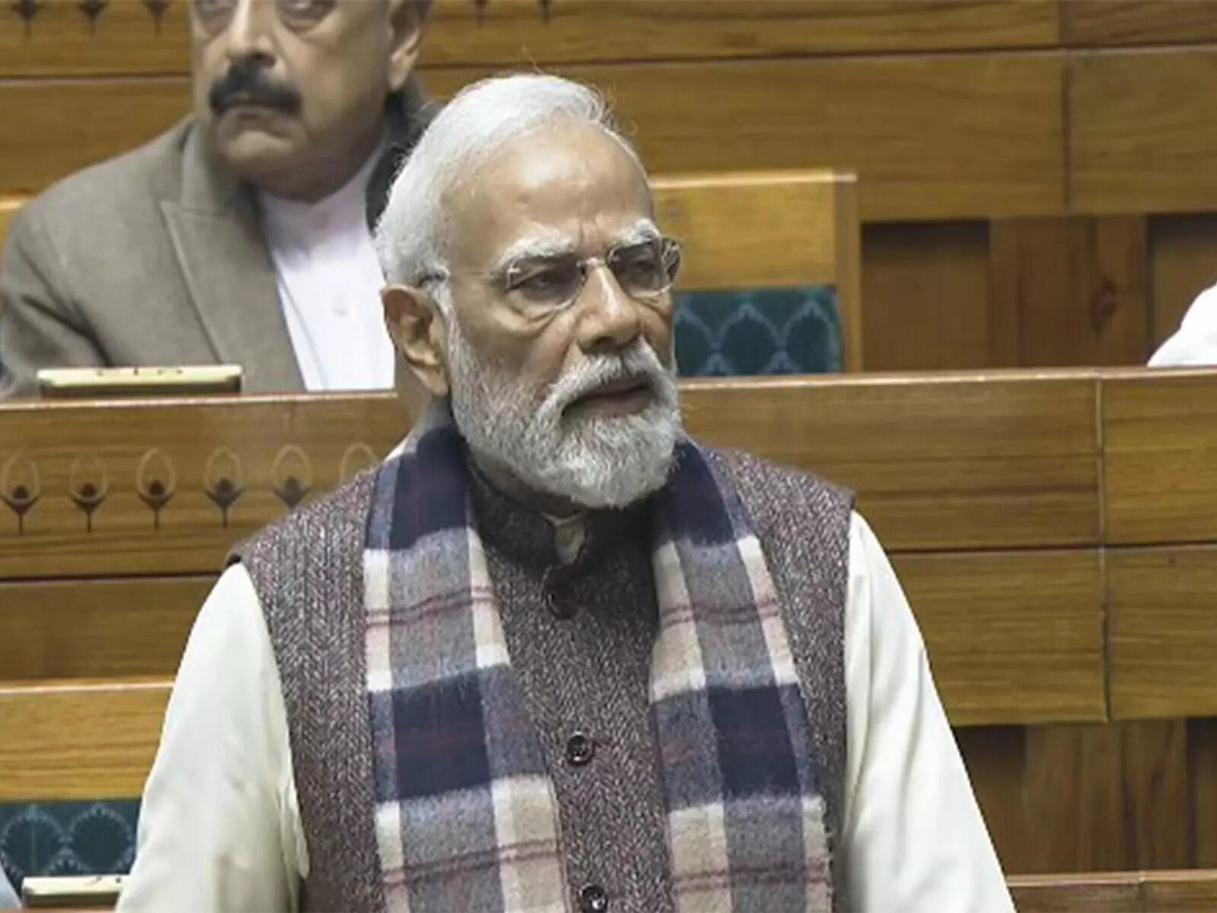
Prime Minister Narendra Modi on Monday said that after the 1857 revolt, the British began treating Bengal as a testing ground for their “divide-and-rule” policy, believing that weakening Bengal would weaken India as a whole. Speaking in the Lok Sabha during a special debate marking 150 years of Vande Mataram, the Prime Minister highlighted the national song’s legacy and its role in mobilising the freedom struggle.
Recalling the 1905 Partition of Bengal, PM Modi said Vande Mataram emerged as the defining slogan of unity and later fuelled the Swadeshi movement. He noted that despite its rising influence, the British government banned the song, with people being punished for singing, printing, or even uttering its words.
“Bankim Chandra created an emotional universe through Vande Mataram. Lakhs chanted it and fought for Independence. We sit here today because of their sacrifices,” the Prime Minister declared. He added that remembering Vande Mataram in Parliament was “a matter of great honour”.
PM Modi also pointed out that the song was written at a time when the British were attempting to push their anthem, God Save the Queen, into every Indian household. The ongoing debate forms part of nationwide celebrations commemorating the 150th anniversary of the national song, composed by Bankim Chandra Chatterjee and tuned by Jadunath Bhattacharya. Union Home Minister Amit Shah is scheduled to open the discussion in the Rajya Sabha on Tuesday.
Key Quotes from PM Modi’s Address in Lok Sabha
-
“We are sitting here because lakhs chanted Vande Mataram and fought for freedom.”
-
“Vande Mataram is a mantra that energised the freedom movement, inspiring sacrifice and resolve. Celebrating 150 years of this song is a historic moment.”
-
“Bengal was partitioned, but the Swadeshi movement rose stronger. The British banned Vande Mataram—singing, publishing, or even speaking it could lead to punishment.”
-
“After 1857, the British realised India could not be controlled easily. They made Bengal their experimental centre for divide-and-rule because Bengal’s intellect guided the nation.”
-
“This is a time when many milestones are being celebrated—75 years of the Constitution, anniversaries of Sardar Patel and Birsa Munda, and the 350th martyrdom year of Guru Tegh Bahadur Ji. Now we honour 150 years of Vande Mataram.”
-
“When Vande Mataram turned 50, India was under British rule. At 100 years, the country was in the grip of the Emergency and patriots were imprisoned. Today’s 150-year celebration is an opportunity to restore pride in our past.”
-
“There is no ruling side or opposition today. We stand united to honour Vande Mataram—a song that brought the nation together from North to South, East to West.”
-
“This is the time to unite again and work towards building a self-reliant and developed India by 2047.”
-
“Congress compromised on Vande Mataram, leading to the acceptance of Partition. Even today, the party attempts to create confusion over the national song.”