

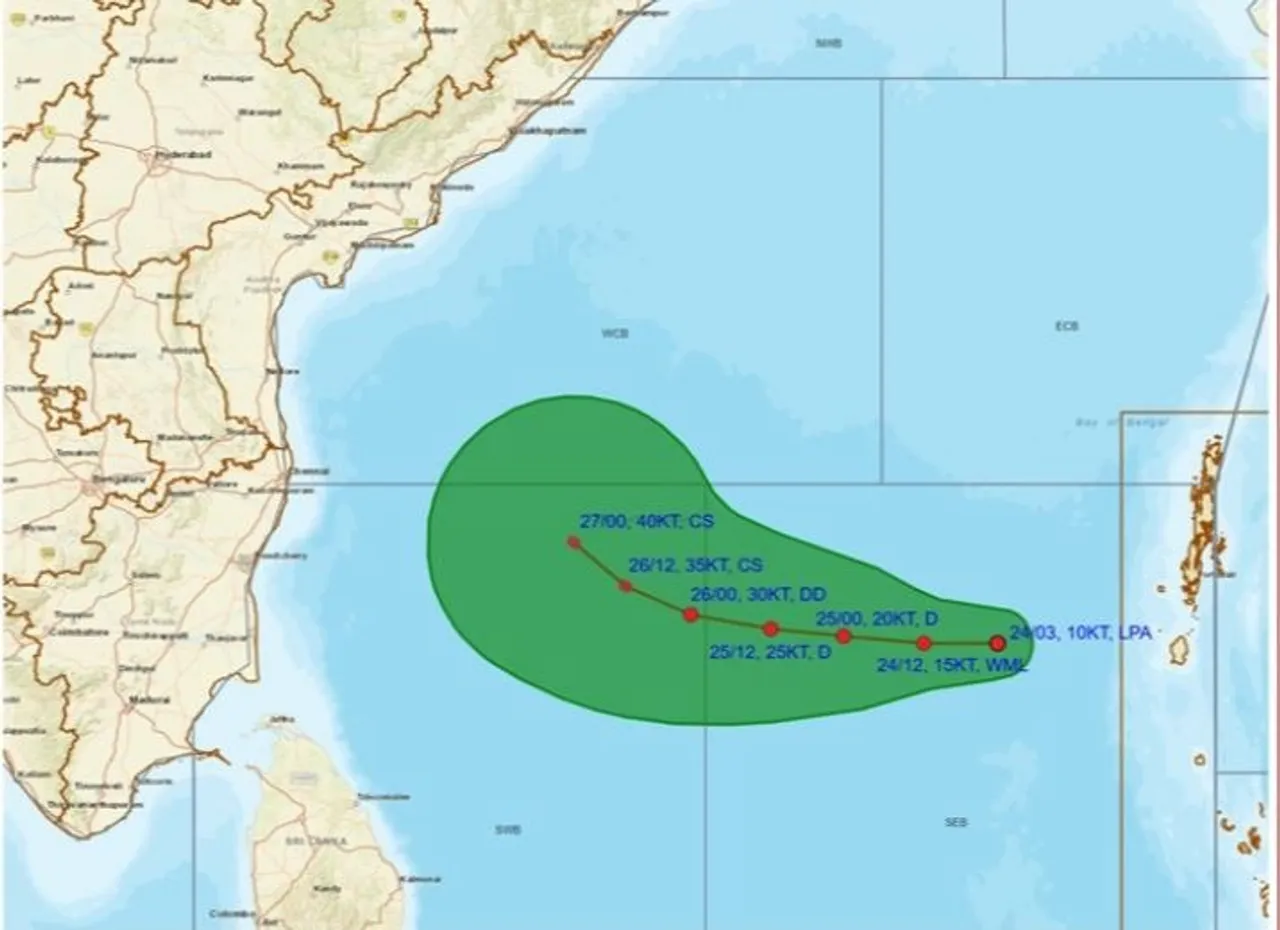
Bhubaneswar, October 18: A fresh low-pressure area over the Bay of Bengal has sparked cyclone fears across Odisha, with meteorologists warning that the system could intensify into a cyclonic storm by October 27. The India Meteorological Department (IMD) said the system, which formed over the southeast Bay of Bengal, is likely to strengthen over the next few days as it tracks west-northwestward.
According to the IMD, the low-pressure system is expected to evolve into a depression by October 25, a deep depression by October 26, and a cyclonic storm over the southwest and adjoining west-central Bay of Bengal by October 27 morning.
Experts Warn of Potential Cyclone Formation
Meteorologist Sarat Sahu said conditions are favorable for the system’s intensification. “The low-pressure area over the Bay of Bengal may develop into a marginal cyclone if sea and wind conditions remain conducive. Rainfall intensity is likely to increase in southern and coastal Odisha from the night of October 27 and morning of October 28,” Sahu said.
He added that southwestern and interior districts could experience heavy rainfall, while coastal Odisha may witness moderate showers and gusty winds.
IMD scientist Umashankar Das echoed the warning, urging residents and authorities to stay vigilant as the system gains strength in the coming days.
Why the System Is Strengthening
Meteorologists explained that late October provides ideal conditions for cyclogenesis in the Bay of Bengal. As the southwest monsoon retreats and the northeast monsoon picks up, warm sea surface temperatures and cooler land masses create the perfect environment for storm formation.
Both the American GFS and European ECMWF weather models have indicated similar tracks, suggesting that the system could intensify further before approaching the eastern Indian coast.
Will Odisha Be Hit?
While the IMD has not yet issued a formal cyclone warning for Odisha, forecasters are closely monitoring the system’s movement. The impact on Odisha remains uncertain, but heavy rainfall, strong winds, and localized flooding cannot be ruled out.
The looming threat has also rekindled memories of the 1999 super cyclone, which devastated the state. Experts caution that even a smaller storm can cause significant disruption, particularly in low-lying coastal areas.
Monitoring Continues
Authorities are preparing for possible contingency measures, and disaster management teams have been put on alert. The next 48–72 hours will be crucial in determining whether the low-pressure system evolves into a cyclone or remains a moderate weather disturbance.
As Odisha keeps a close watch, meteorologists advise residents to follow official updates and avoid panic until clear forecasts emerge.