
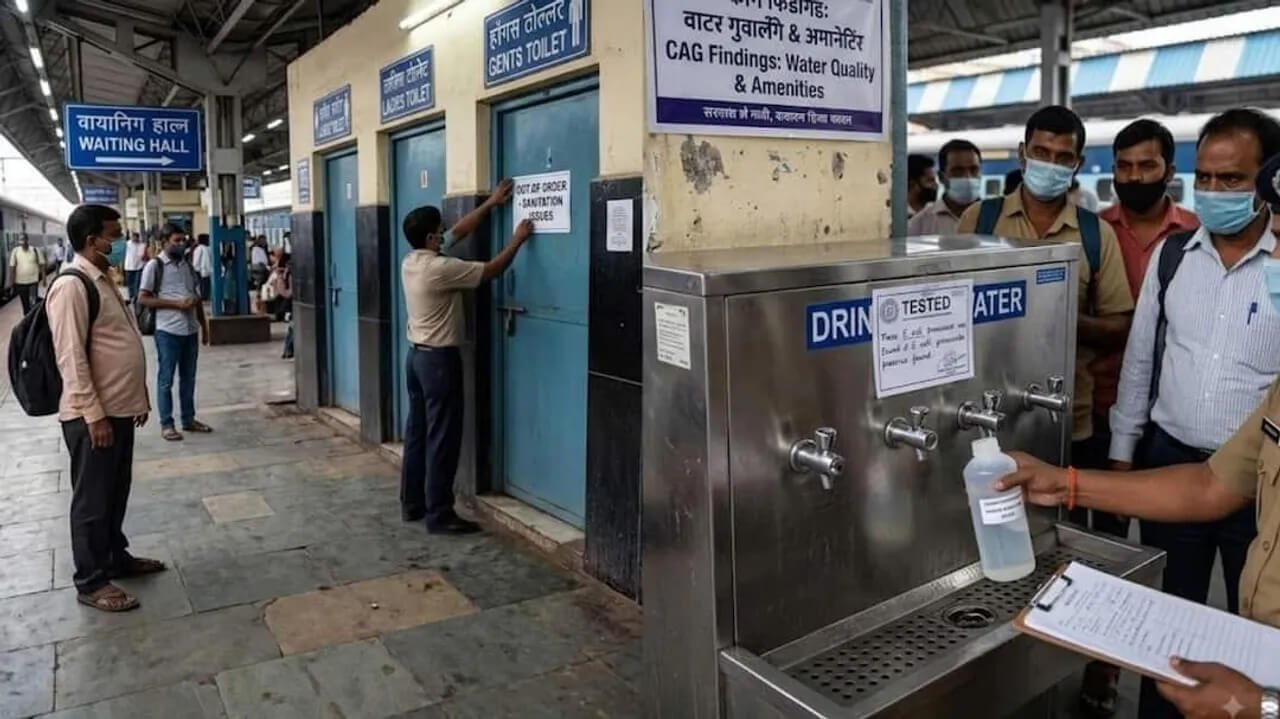
The East Coast Railway (ECoR) is set to intensify inspections and cleaning of drinking water facilities at railway stations as part of a special nationwide drive launched by Indian Railways to improve water quality and passenger amenities.
The exercise will cover the entire drinking water infrastructure at stations, including water sources, treatment and filtration plants, underground and overhead tanks, water booths, taps, coolers and other dispensing points.
Tanks to Be Cleaned and Disinfected
As part of the drive, officials will drain and thoroughly clean drinking water tanks before scrubbing and disinfecting them.
Tank covers, vents and overflow points will also be inspected to prevent contamination caused by birds, animals and algae. Damaged tanks, pipelines and filtration units will be repaired or replaced wherever necessary.
Officials will additionally check for leakage and ensure that potable and non-potable water systems remain properly separated to prevent cross-contamination.
Water Coolers and Purification Systems Under Inspection
Water coolers and purification equipment installed at stations will also undergo detailed checks.
The inspection will include UV and RO-based purification systems, which will be provided or upgraded wherever required to improve the quality of drinking water available to passengers.
Water Samples to Undergo Laboratory Testing
The special drive will also focus on regular testing of drinking water.
Samples collected from selected locations will undergo physical, chemical and bacteriological tests to assess their safety. Officials will also monitor residual chlorine levels on a daily basis.
Wherever test results indicate deficiencies, corrective measures will be taken to ensure that passengers have access to safe drinking water.
Station-Wise Deficiencies to Be Recorded
East Coast Railway will prepare details of deficiencies identified at individual stations and monitor the corrective measures taken to address them.
The inspection will not be limited to passenger areas. Drinking water facilities at railway colonies and workplaces will also be examined as part of the exercise.
Drive Follows CAG Findings
The intensified inspections come against the backdrop of findings highlighted in a recent Comptroller and Auditor General (CAG) report.
According to the report, E. coli was detected in drinking water samples collected from eight of 49 railway stations surveyed. The audit also pointed to shortcomings in water testing, chlorine monitoring and regular inspection of water supply systems.
Following the findings, the Railway Board has directed zonal railways to submit station-wise details of deficiencies and the corrective action undertaken to improve drinking water safety.
The latest drive is therefore aimed at strengthening monitoring systems and addressing gaps in water infrastructure so that passengers and railway employees have access to safer and better-maintained drinking water facilities.