
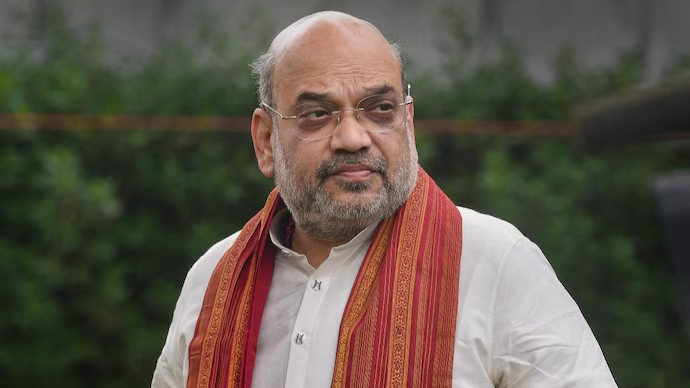
The Central Government is set to introduce a significant amendment to the Prevention of Insults to National Honour Act, 1971, with a proposal to make any intentional obstruction or insult to the national song Vande Mataram a punishable offence. Union Home Minister Amit Shah is scheduled to table the Prevention of Insults to National Honour (Amendment) Bill, 2026 in the Rajya Sabha on the opening day of the Monsoon Session of Parliament on Monday, July 20.
According to the Rajya Sabha List of Business, the proposed legislation seeks to amend the existing law by extending criminal liability to individuals who intentionally prevent the singing of Vande Mataram or disrupt gatherings where the national song is being sung. If passed, the amendment would place legal protection for the national song alongside the safeguards already available under the current Act for the National Anthem and the National Flag.
The introduction of the Bill is expected to trigger intense debate during the Monsoon Session, which will continue until August 13. The session is also notable for marking the parliamentary debut of the Nationalist Citizens Party of India (NCPI), formed by a group of former Trinamool Congress MPs who have aligned with the National Democratic Alliance (NDA).
Supporting the proposed legislation, BJP Rajya Sabha MP Sanjay Seth said the move reflects the growing respect for the national song across the country.
“Vande Mataram is our national song. Earlier, the complete version was not sung everywhere, but today it is being recited across the country. We welcome the introduction of this Bill,” Seth said.
However, the proposal has drawn sharp criticism from Opposition leaders, who argue that it could infringe upon constitutional freedoms.
CPI(M) Rajya Sabha MP John Brittas has written to Home Minister Amit Shah requesting the withdrawal of the Bill. While acknowledging the historic role of Vande Mataram during India’s freedom movement, Brittas argued that criminalising the prevention of its singing departs from the constitutional understanding that has governed the status of the national song since Independence.
In his letter, Brittas said the amendment could disturb the balance between patriotism and individual liberty guaranteed by the Constitution.
He cited Article 19(1)(a), which guarantees freedom of speech and expression, including the right to remain silent, Article 25, which protects freedom of conscience and religion, and Articles 14, 21 and 29, which uphold equality, personal liberty and India’s pluralistic values.
According to Brittas, while respect for Vande Mataram is unquestionable, expressions of patriotism should remain voluntary unless specifically mandated by law.
The proposed amendment has also been opposed by the Aam Aadmi Party (AAP). Rajya Sabha MP Sanjay Singh accused the BJP of politicising nationalism and alleged that those associated with the party’s ideological predecessors had themselves failed to uphold national symbols during the freedom movement.
The Bill is expected to become one of the most closely watched pieces of legislation during the current Parliament session, with both the government and Opposition likely to engage in a heated debate over the balance between national honour and constitutional rights.
If enacted, the amendment would expand the scope of the Prevention of Insults to National Honour Act, 1971, making deliberate obstruction or disruption of the singing of Vande Mataram a criminal offence and strengthening legal protection for one of India’s most iconic patriotic songs.