

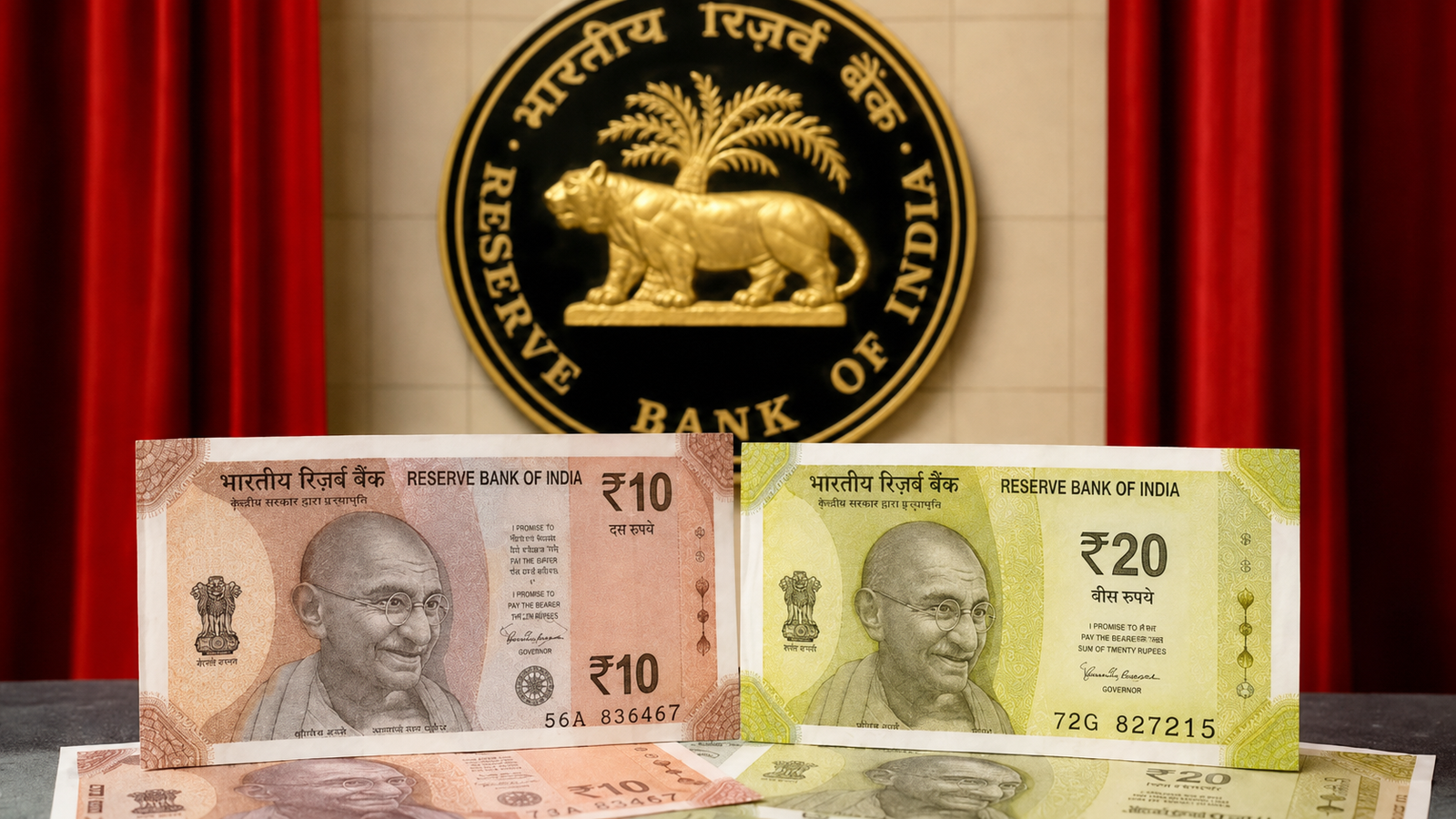
New Delhi: India could soon witness the introduction of polymer (plastic) currency notes, with the Reserve Bank of India (RBI) moving forward with preparations for a pilot project involving ₹10 and ₹20 denominations. The initiative marks a significant step towards modernising India’s currency system by introducing banknotes that are more durable, secure, and resistant to counterfeiting.
According to official sources cited by ANI and Dainik Bhaskar, the RBI is planning to begin field trials of polymer banknotes next year. If the pilot project proves successful, the central bank could gradually roll out polymer notes on a larger scale beginning in 2027.
RBI Invites Global Suppliers for Pilot Project
As part of the preparations, Bharatiya Reserve Bank Note Mudran Private Limited (BRBNMPL), the RBI’s wholly owned currency-printing subsidiary, has issued a Global Expression of Interest (EOI) inviting international manufacturers to supply specialised polymer substrates required for printing Indian banknotes.
According to the tender, the RBI plans to procure approximately 68,000 reams of Biaxially Oriented Polypropylene (BOPP)-based polymer substrate, with 34,000 reams each allocated for two different denominations, widely reported to be ₹10 and ₹20 notes.
Each ream will contain 500 polymer sheets, which will later be used for printing currency at facilities operated by BRBNMPL and the Security Printing and Minting Corporation of India (SPMCIL).
The global tender has reportedly marked the formal beginning of India’s first large-scale trial of polymer currency notes. The last date for submission of bids is August 18.
Advanced Security Features To Be Included
The polymer substrate proposed for the pilot project will incorporate several advanced anti-counterfeiting technologies designed to enhance the security of Indian currency.
According to the tender document, the new polymer notes are expected to feature:
- Clear transparent security window with portrait
- Metallic denomination numeral
- Magnetic pseudo security thread
- Shadow image security feature
- Iridescent optical patterns
- Advanced security printing compatible with Indian currency presses
These features are expected to make polymer banknotes significantly more difficult to counterfeit than conventional paper notes.
Strict Procurement Conditions
The RBI has imposed stringent eligibility conditions for companies participating in the bidding process to ensure supply chain security and national interests.
According to reports, bidders must:
- Have at least three years of experience supplying polymer banknote substrates to a central bank or authorised currency-printing organisation.
- Demonstrate the capacity to supply at least 20,400 reams, equivalent to 30 per cent of the total requirement.
- Submit polymer sheet samples for laboratory testing.
- Certify that the material is free from animal tallow and DNA content.
Additionally, companies must ensure that operations related to the Indian project remain completely separate from any work carried out in China or Pakistan. They are also prohibited from sourcing raw materials from these countries or deploying personnel previously associated with similar operations there.
Firms from countries sharing a land border with India must also obtain clearance from the Department for Promotion of Industry and Internal Trade (DPIIT) Registration Committee before becoming eligible for the project.
Pilot Rollout Before Wider Introduction
While the RBI has not officially confirmed the denominations for the pilot project, official sources indicate that ₹10 and ₹20 notes have been identified for the initial field trials due to their high circulation and frequent usage.
Officials said the larger rollout across additional denominations will depend on the performance of the polymer notes during real-world circulation, including durability, public acceptance, and printing efficiency.
If the pilot is successful, polymer notes could gradually replace conventional paper currency beginning in 2027.
RBI Yet To Make Formal Announcement
Although reports suggest that preparations are progressing rapidly, the Reserve Bank of India has not yet issued an official notification confirming the launch schedule.
Following the June Monetary Policy Committee (MPC) meeting, RBI Governor Sanjay Malhotra had confirmed that the central bank was evaluating the feasibility and benefits of introducing polymer banknotes before taking a final decision.
His remarks indicated that the proposal remains under active consideration as part of the RBI’s long-term currency modernisation strategy.
Why Polymer Currency Notes?
Polymer banknotes were first introduced by Australia in 1988 and are now used by more than 50 countries, including Canada, New Zealand, the United Kingdom, Singapore, Vietnam, and Romania.
Compared to traditional cotton-based paper notes, polymer currency offers several advantages:
- Longer lifespan, lasting two to four times longer than paper notes.
- Greater resistance to wear and tear, moisture, dirt, and folding.
- Enhanced security features, making counterfeiting significantly more difficult.
- Lower replacement costs over time due to increased durability.
- Reduced environmental impact through fewer replacement cycles.
The introduction of polymer banknotes is expected to strengthen India’s currency security while reducing long-term printing and replacement costs.
If implemented successfully, the initiative will mark one of the most significant changes to India’s currency system since the introduction of the Mahatma Gandhi (New) Series banknotes.