
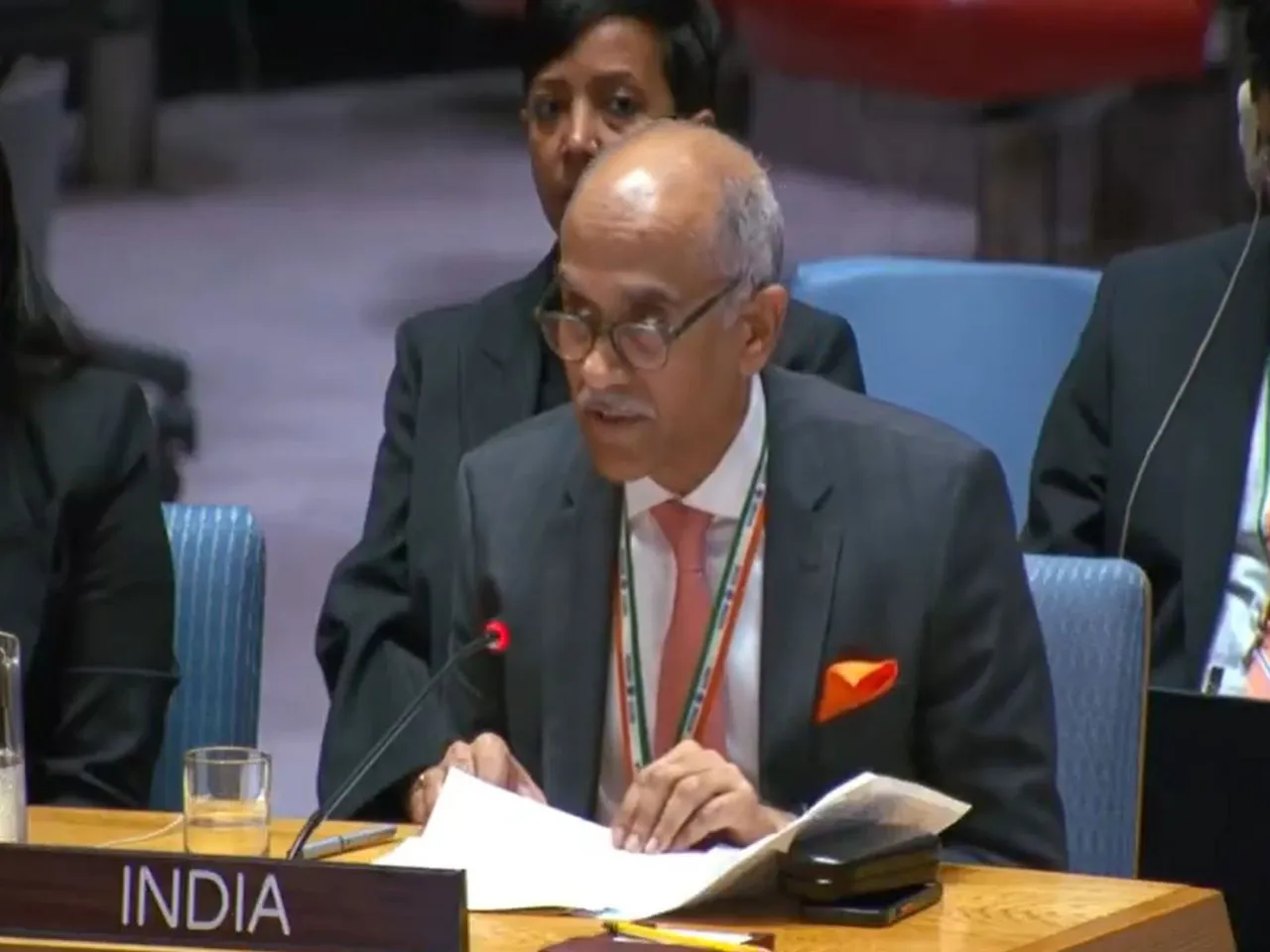
India launched a strong diplomatic offensive against Pakistan at the United Nations Security Council (UNSC), accusing Islamabad of weaponising Afghanistan’s landlocked geography through transit restrictions and carrying out military actions that have resulted in significant civilian casualties.
Addressing the UNSC, India’s Permanent Representative to the UN, Parvathaneni Harish, termed Pakistan’s denial of transit access to Afghan traders as an unprecedented act of “trade and transit terrorism.”
India Raises Concern Over Transit Restrictions
Highlighting the challenges faced by Afghanistan, Ambassador Harish said Pakistan’s actions have severely impacted Afghan traders and businesses by restricting access to international markets.
He argued that preventing a landlocked country from accessing trade routes violates global commitments towards developing nations and undermines international norms.
“This cynical closure of access for this landlocked country is in total violation of UN declarations on Landlocked Developing Countries and a clear weaponisation of their trade and transit vulnerabilities,” Harish stated.
India also noted that it has been extending support to Afghan traders by issuing hundreds of long-term business visas free of cost.
Pakistan Accused of Causing Civilian Casualties
India also strongly criticised Pakistan’s military operations inside Afghanistan, citing reports of heavy civilian casualties.
Referring to findings by the United Nations Assistance Mission in Afghanistan, Harish said Pakistani airstrikes had resulted in the deaths and injuries of hundreds of Afghan civilians.
According to figures cited during the UNSC session, around 372 civilians were killed and 397 injured in strikes attributed to Pakistan.
Condemning the attacks, the Indian envoy remarked that civilian deaths cannot be justified under the guise of counter-terrorism operations.
“Dressing up a massacre as a military operation does not absolve the perpetrator. Killing, maiming and orphaning civilians is not counter-terrorism,” he said.
India Calls Out Alleged Double Standards
Harish accused Pakistan of preaching international law and regional solidarity while simultaneously carrying out military actions that harm innocent civilians.
He also criticised what he described as Pakistan’s tendency to blame neighbouring countries for its own internal challenges and condemned alleged state-backed disinformation campaigns targeting India.
Strong Stand Against Terrorism
Reaffirming India’s position on global security, Harish reiterated New Delhi’s zero-tolerance approach towards terrorism.
He specifically named terror groups such as Lashkar-e-Taiba, Jaish-e-Mohammed and The Resistance Front while calling for stronger international action against terrorist organisations including ISIL and Al-Qaida affiliates.
India urged the international community to adopt a unified and consistent approach to combating terrorism in all its forms.
India Highlights Humanitarian Support to Afghanistan
Contrasting its approach with Pakistan’s, India highlighted its extensive humanitarian and development assistance to Afghanistan.
According to the Indian delegation, New Delhi has provided:
- More than 50,000 tonnes of wheat
- Around 420 tonnes of medicines and vaccines
- Earthquake relief assistance
- Medical treatment for Afghan children with congenital heart diseases
- Support for healthcare infrastructure
- Scholarships for nearly 3,000 Afghan students, including around 1,000 women
India also announced plans to expand educational support and financial assistance programmes, particularly for women-led self-help groups.
Cricket and Cultural Bonds
The Indian envoy also underlined the strong people-to-people relationship between India and Afghanistan.
Harish noted the popularity of Afghan cricketers participating in the Indian Premier League and highlighted India’s efforts to strengthen sporting and cultural ties through cricket exchanges and bilateral initiatives.
“Sports have a rare power to lift a nation’s spirit. We definitely believe that our Afghan brothers and sisters deserve this,” he said.
India Seeks Global Support
India concluded its intervention by urging the international community to condemn actions that undermine Afghanistan’s stability and economic development.
The remarks reflect New Delhi’s continued focus on supporting Afghanistan through humanitarian assistance, educational initiatives and development partnerships while raising concerns over regional security challenges and cross-border terrorism.