
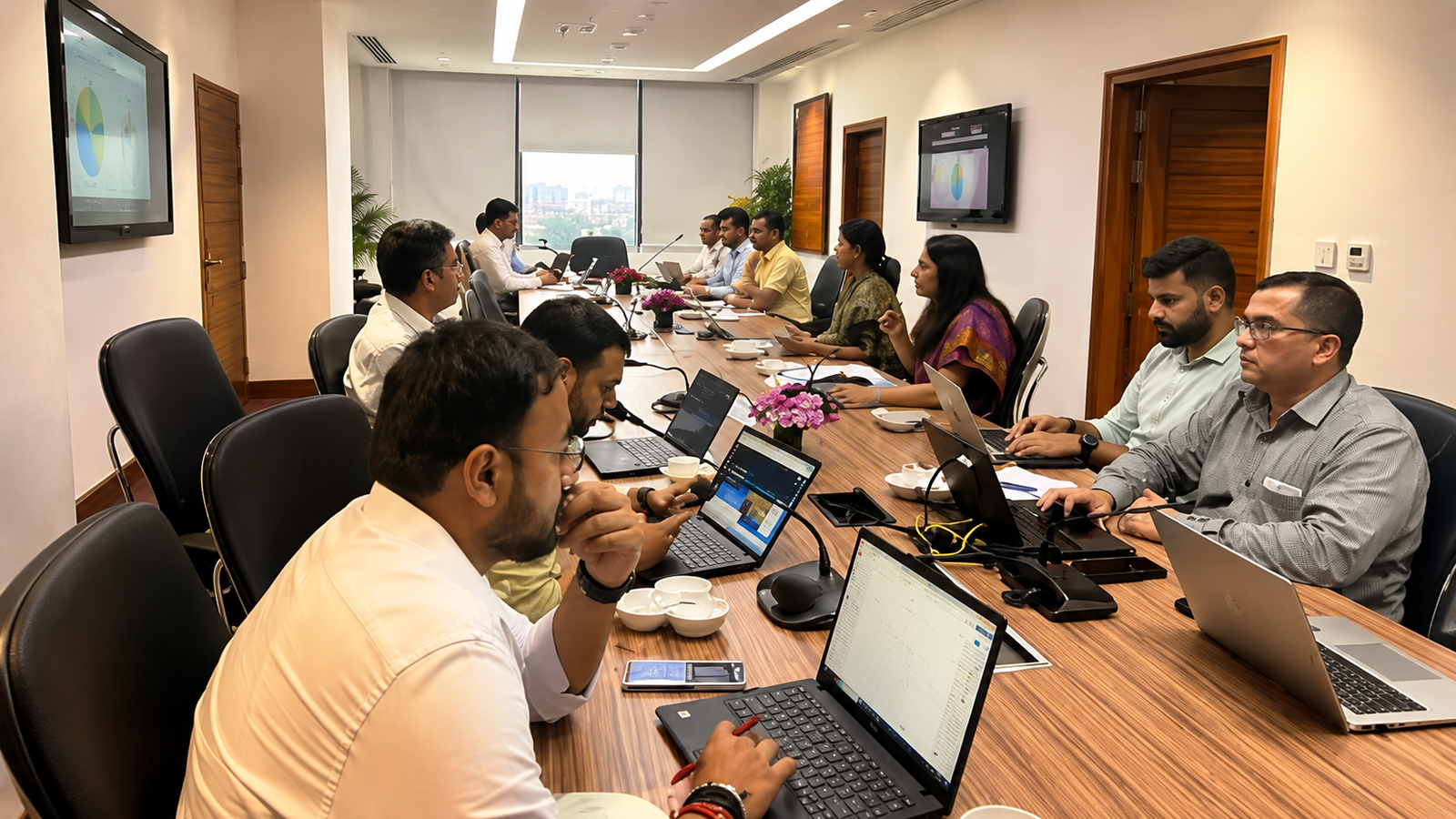
Bhubaneswar: As part of the nationwide ‘Catch the Rain’ campaign, the Ministry of Housing and Urban Affairs (MoHUA), in collaboration with the National Institute of Urban Affairs (NIUA), organised a national interaction with 75 cities implementing the Shallow Aquifer Management (SAM) programme under the Atal Mission for Rejuvenation and Urban Transformation (AMRUT). The initiative focused on strengthening urban groundwater recharge, promoting sustainable water management, and enhancing climate resilience across Indian cities.
The interaction served as a platform for participating Urban Local Bodies (ULBs) to present their progress, exchange best practices, and showcase successful groundwater recharge interventions designed to improve urban water security. Officials also discussed future strategies to scale up these initiatives in the face of increasing urbanisation and climate-related challenges.
The Shallow Aquifer Management (SAM) programme is aimed at improving groundwater recharge through scientific planning and technical support. Under the initiative, 75 cities are implementing a variety of nature-based water conservation measures, including recharge shafts, injection wells, check dams, gabion walls, circular khals, and modular recharge pits. These interventions are expected to boost rainwater harvesting, replenish depleted aquifers, reduce water stress, and improve the resilience of cities against climate change.
The meeting was chaired by D. Thara, Additional Secretary, MoHUA, and moderated by Isha Kalia, Joint Secretary, MoHUA, with representatives from all 75 participating cities sharing their implementation experiences, achievements, challenges, and future action plans.
Several cities highlighted notable progress under the programme. Korba announced plans to revive 95 additional defunct borewells after witnessing positive results from its groundwater recharge initiatives. Vizianagaram reported a measurable improvement in groundwater levels, while Nagpur committed to constructing 100 additional recharge structures during the ongoing monsoon season.
Bhubaneswar emerged as one of the key success stories during the interaction. Officials stated that the city’s SAM interventions have not only strengthened groundwater recharge but have also played a significant role in reducing urban flooding by improving stormwater infiltration. The integrated approach has enhanced the city’s ability to manage excess rainwater while simultaneously improving groundwater availability.
Groundwater experts participating in the interaction stressed that long-term success of such programmes depends on active community participation, local stewardship, and continuous maintenance of recharge structures. They emphasised that scientific planning combined with citizen involvement can significantly improve the sustainability of urban water resources.
The national interaction reaffirmed the Ministry of Housing and Urban Affairs’ commitment to promoting sustainable groundwater management under the AMRUT mission. Officials reiterated that scientific, nature-based, and community-driven solutions will continue to remain central to India’s efforts to build water-secure, climate-resilient, and future-ready cities under the ‘Catch the Rain’ campaign.