
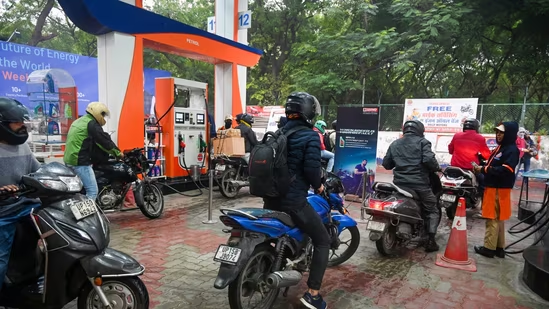
Amid growing concerns over global energy disruptions due to escalating tensions in West Asia, the Government of India on Wednesday reassured that the country’s crude oil supply remains stable and uninterrupted. Officials said India has taken several proactive measures to diversify its energy imports and maintain sufficient stock to meet domestic demand.
During a press briefing, a senior government official stated that India currently has access to around 55 lakh barrels of crude oil per day, a volume that exceeds the quantity that would typically arrive through the Strait of Hormuz during the same period.
Supply Stable Despite Regional Conflict
Officials emphasised that both the government and domestic oil companies have been working to secure alternative supply sources in order to minimize risks arising from geopolitical tensions.
“India’s crude supply remains secure,” the official said, adding that existing procurement arrangements ensure the country has enough crude oil to meet its consumption requirements.
The reassurance comes at a time when the global energy market is facing uncertainty due to the ongoing conflict involving United States, Israel and Iran. The confrontation, which intensified after strikes carried out on February 28, has triggered concerns about possible disruptions to oil and gas shipments from the Middle East.
Strait of Hormuz Remains Key Energy Route
The situation has become particularly sensitive around the strategic maritime passage of the Strait of Hormuz, a narrow waterway connecting the Persian Gulf to international shipping lanes. The strait handles nearly one-fifth of global oil and gas trade, making it one of the most important energy transit routes in the world.
Following the recent attacks and the reported assassination of Iranian Supreme Leader Ali Khamenei, Iran announced the closure of the Strait of Hormuz, raising fears about potential supply disruptions across global markets.
India is particularly sensitive to developments in the region as nearly half of its crude oil imports pass through the Strait of Hormuz. Additionally, a significant portion of the country’s liquefied petroleum gas (LPG) and liquefied natural gas (LNG) shipments also travel through the same route.
Government Steps Up LPG Production
Addressing concerns about cooking gas availability, another official said the government issued a directive on March 8 asking refineries to maximise LPG production to meet domestic demand.
The Ministry of Petroleum and Natural Gas also appealed to the public not to engage in panic booking of LPG cylinders. According to officials, the normal delivery cycle for domestic LPG consumers currently remains around 2.5 days, indicating that supply chains are functioning smoothly.
Authorities reiterated that India’s diversified import strategy and domestic production measures are helping maintain stability in the country’s energy sector despite the volatile global situation.