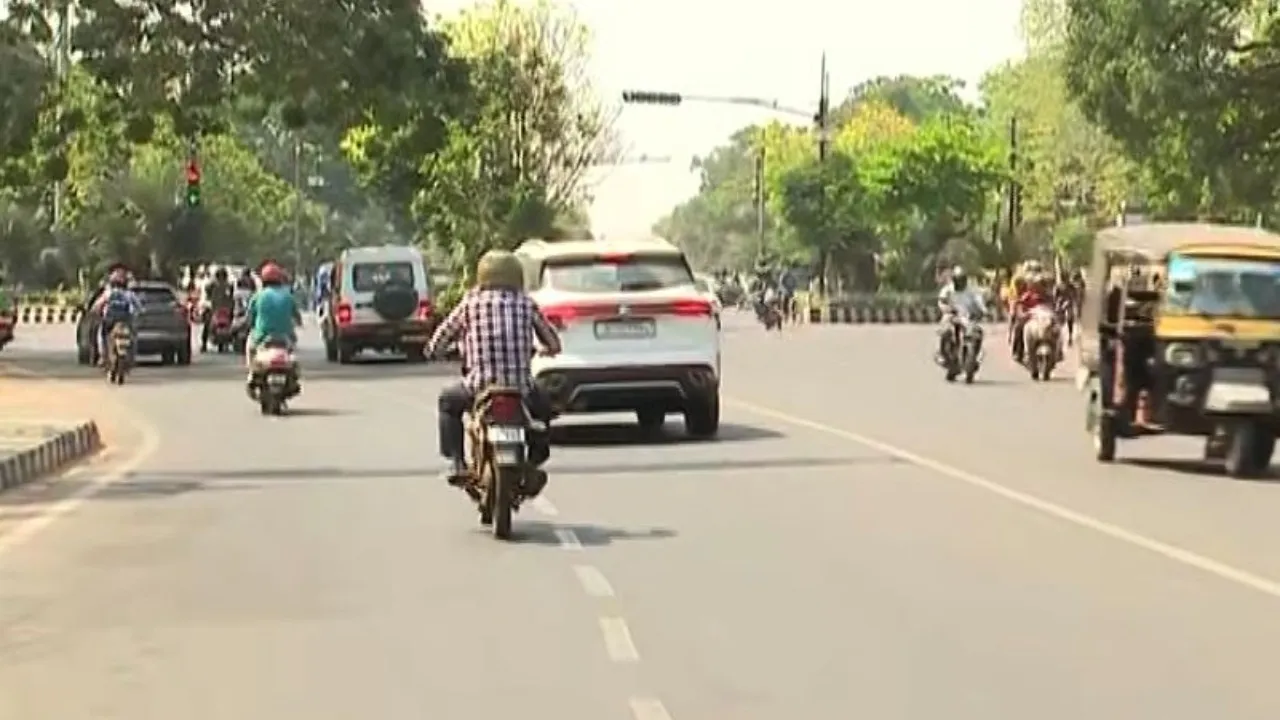

New Delhi, November 10: Delhi’s air quality showed a slight improvement on Monday morning after touching a season-high Air Quality Index (AQI) of 391 on Sunday — firmly in the ‘very poor’ category. Despite the marginal relief, residents woke up to dense smog and biting cold, with the minimum temperature dipping to 11.6°C, making the air toxic and visibility low.
According to data from the Central Pollution Control Board (CPCB), the city’s overall AQI stood at 346 at 6:05 am, still in the ‘very poor’ category. Most monitoring stations in the capital recorded air quality between ‘severe’ and ‘very poor’ levels, with Bawana (412), Wazirpur (397), Jahangirpuri (394), and Nehru Nagar (386) among the worst-affected areas.
Slight Improvement Linked to Wind and Reduced Stubble Burning
Experts attributed the minor improvement to increasing wind speeds and a dip in stubble burning activity across neighbouring states. However, air quality across the National Capital Region (NCR) continues to remain toxic.
Noida reported an AQI of 335, Ghaziabad 302, and Greater Noida 314, all falling within the ‘very poor’ range, CPCB data showed.
Just a day earlier, over 20 of Delhi’s 39 monitoring stations had entered the ‘severe’ category, with AQI readings crossing 400 — prompting widespread concern among residents and environmentalists.
GRAP Stage 3 Restrictions Deferred
The Commission for Air Quality Management (CAQM) sub-committee met on Sunday evening to assess the situation under the Graded Response Action Plan (GRAP).
After reviewing real-time data and forecasts from the India Meteorological Department (IMD) and the Indian Institute of Tropical Meteorology (IITM), officials decided not to enforce Stage 3 restrictions for now, citing signs of gradual improvement.
Currently, Stage 1 and Stage 2 measures remain in effect across Delhi-NCR, which include strict controls on dust emissions, industrial activity, and vehicular pollution.
Under Stage 3, additional curbs such as a ban on non-essential construction, restrictions on BS-III petrol and BS-IV diesel vehicles, and closure of primary school classes would come into force — but authorities have opted to hold off unless the air quality worsens again.
Public Protests Call for Stronger Action
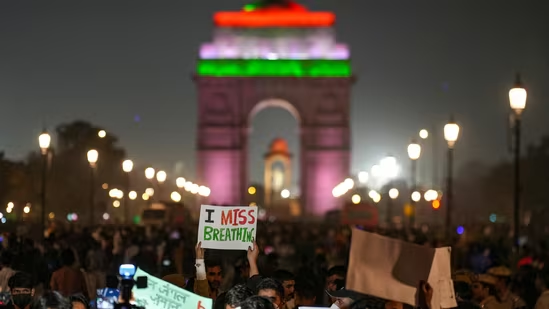
Meanwhile, protests broke out at India Gate on Sunday, where several college students and environmental activists demanded urgent government action to combat air pollution.
Police detained a group of demonstrators holding placards reading “Clean Air for Children” and “Stop the Air Emergency.”
Protesters accused both state and central governments of showing a “lack of political will” to address what they called a public health crisis.
Toxic Air Likely to Persist
According to the Air Quality Early Warning System, Delhi’s air quality is likely to remain in the ‘very poor’ category for the next few days, with no major change expected in wind patterns or dispersion levels.
Since Diwali, the national capital’s air quality has oscillated between ‘poor’ and ‘severe’ categories — a recurring pattern driven by post-harvest stubble burning, vehicular emissions, industrial pollutants, and calm weather conditions.
As authorities continue to monitor the situation, residents are advised to limit outdoor exposure, use air purifiers indoors, and avoid strenuous physical activity in open areas.