

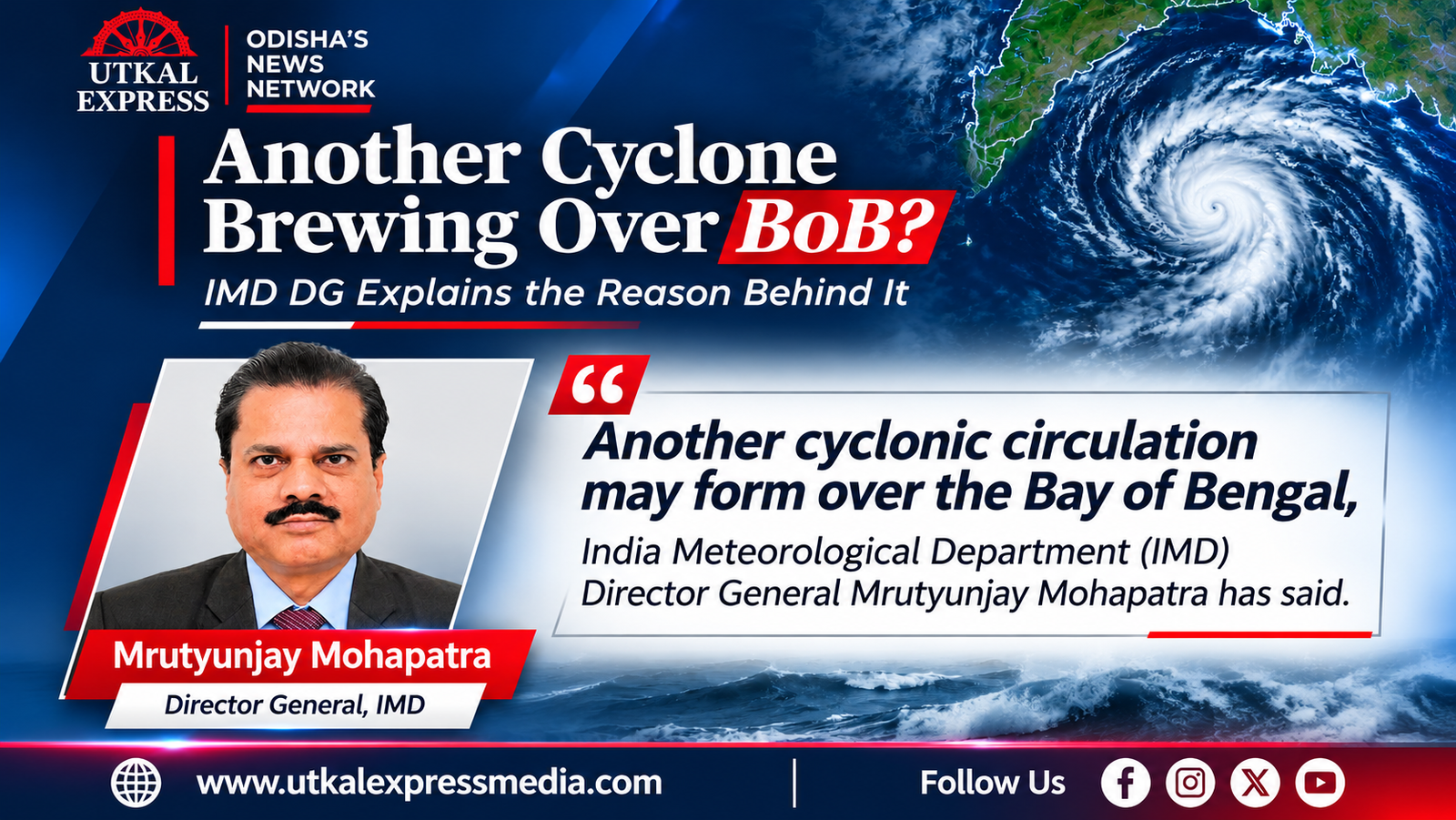
The India Meteorological Department (IMD) has indicated the possibility of another cyclonic circulation developing over the Bay of Bengal, raising the prospect of further weather activity in the region. IMD Director General Mrutyunjay Mohapatra said the possibility was highlighted in the department’s 15-day extended-range forecast issued last Thursday.
However, the weather agency has not yet provided details about the possible system, including its likely location, intensity, structure or potential impact. Officials are closely monitoring atmospheric conditions, and a clearer picture is expected to emerge if the system shows signs of development.
Three Cyclonic Systems Have Already Formed Over Bay of Bengal
According to Mohapatra, around five cyclones generally develop over the Bay of Bengal in a typical year. Of these, three to four usually form during October, November and December, while one or two develop between April and June.
He noted that three cyclonic systems have already formed over the Bay of Bengal this year, making the possibility of another circulation noteworthy.
Mohapatra also pointed out that a similar pattern of cyclone activity had been observed in the country after 1987. He suggested that the current weather pattern could be associated with a strong El Niño.
Although none of the recent systems intensified into a severe cyclonic storm, they developed one after another and affected coastal regions, particularly Odisha and Andhra Pradesh.
IMD Monitoring Weather Conditions Daily
Despite the possibility indicated in the extended-range forecast, the IMD has clarified that there is currently no specific prediction of another cyclone.
“There is no specific forecast for another cyclone at present. We are monitoring the situation daily and will issue a forecast if any new development takes place,” Mohapatra said.
The department is keeping a close watch on changing atmospheric and oceanic conditions over the Bay of Bengal. Any significant development will be assessed before an official forecast is issued.
Improved Forecasting Helps Authorities Prepare
The IMD Director General also highlighted improvements in the accuracy of cyclone forecasting over the years. Better prediction capabilities have helped authorities identify potential threats earlier and prepare for emergencies.
Advance warnings allow state administrations and disaster management agencies to organise evacuation measures, arrange relief operations and deploy rescue teams before a cyclone makes landfall.
For coastal states such as Odisha and Andhra Pradesh, continuous monitoring of the Bay of Bengal remains particularly important, given their exposure to tropical weather systems.