
The mass festival of western Odisha, Nuakhai, is being celebrated across the region with traditional fervour, bringing villages, towns and families together to welcome the year’s new harvest.
From Sundargarh to Sambalpur, Bolangir to Bargarh, and Kalahandi to Deogarh, the festival has transformed the region into a vibrant celebration of agriculture, family bonds and cultural traditions.
The sounds of bells, gongs and traditional musical instruments have filled villages and towns, while homes are witnessing preparations of pitha and other traditional delicacies.
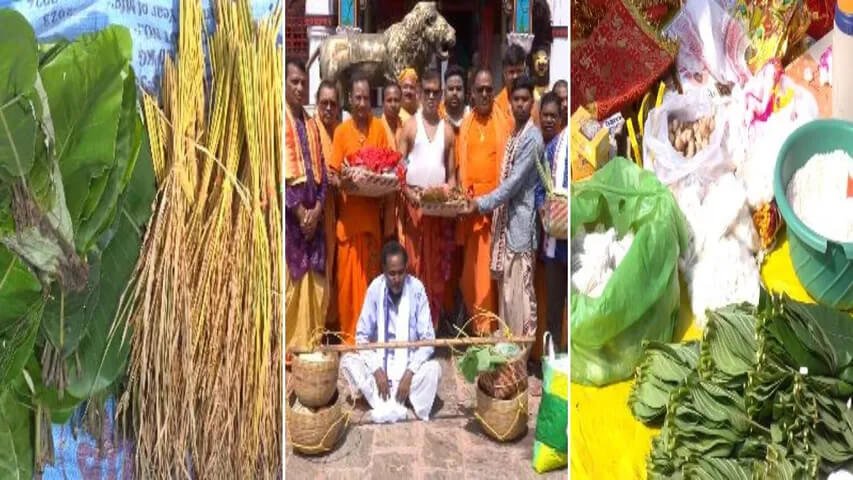
At the heart of the celebration is the offering of Nabanna, or the newly harvested crop, to presiding deities before families themselves consume the first produce of the season.
Nabanna Marks the Beginning of Nuakhai Celebrations
The principal ritual of Nuakhai involves offering the newly harvested crop to the presiding deity during an auspicious period in the morning.
Only after the religious rituals are completed do families traditionally sit together to consume the new harvest.
The practice carries deep significance, reflecting gratitude towards the deities and the agricultural cycle that sustains communities across western Odisha.
An important family tradition follows the Nabanna ritual. Younger members seek the blessings of elders by touching their feet, reinforcing the values of respect, family and continuity between generations.
Families and relatives subsequently meet one another as part of Nuakhai Bhetghat, extending the celebrations beyond the household and strengthening social bonds.
Maa Samaleswari Nabanna Ritual in Sambalpur
In Sambalpur, the celebrations are closely associated with Maa Samaleswari, the presiding deity of the city.
The newly harvested rice is being prepared for the traditional Nabanna offering at the Samaleswari Temple.
The ceremonial offering is scheduled between 9:40 am and 9:54 am during the predetermined auspicious period.
Preparations at the homes of temple priests began from the previous night and continued from the early hours of the morning. Members of priest families, particularly women, took up the initial preparation of the Saria Dhan, cleaning and grinding the paddy before keeping it ready for the temple rituals.
Priests will carry the offerings to the Garbha Gruha during the auspicious period. The blowing of conch shells will signal to devotees that the Nabanna has been offered to the Goddess.
Temple Rituals Continue After Nabanna
The Nabanna offering to Maa Samaleswari will be followed by offerings to other deities within the temple premises.
The Mangala Alati of Maa Samaleswari will then be performed, followed by the offering of Anna Bhog.
Devotees are expected to be allowed to have darshan of Maa Samaleswari after the completion of these rituals, with darshan scheduled to begin after 12 noon.
The temple rituals remain a central part of Nuakhai celebrations in Sambalpur, linking the community’s harvest traditions with its religious heritage.
CM Mohan Majhi Extends Nuakhai Greetings
Chief Minister Mohan Charan Majhi extended his Nuakhai greetings to the people of Odisha, describing the festival as an expression of the state’s soil, culture, lifestyle and social unity.
The Chief Minister emphasised the festival’s tradition of setting aside differences and seeking the blessings of elders while sharing affection with younger members of the family.
He said the customs associated with Nuakhai help strengthen family relationships, social harmony and brotherhood.
Majhi also urged students, young people, workers, farmers and members of the armed forces to perform their responsibilities sincerely and contribute towards the goal of building a prosperous Odisha by 2036 and a developed India by 2047.
He prayed for happiness, peace, progress and success in the lives of the people and extended his Nuakhai greetings to the people of the state.
Suresh Pujari Highlights Farmers’ Role
Odisha Revenue Minister Suresh Pujari also extended his greetings on the occasion and underlined Nuakhai’s strong connection with farmers and agriculture.
He described Nuakhai as a mass festival of farmers, where the first produce of the season is offered to Maa Samalei with prayers for the welfare of society.
Pujari expressed hope that the festival would bring an environment where everyone has access to food and that happiness, peace and brotherhood continue to grow within society.
Baijayant Panda Wishes Prosperity on Nuakhai
Kendrapara MP and BJP National Vice President Baijayant Panda also conveyed his Nuakhai greetings.
Describing the occasion as a celebration of the joy associated with the harvest, Panda highlighted Nuakhai’s importance as an agrarian, social and cultural festival of Odisha.
He prayed to Maa Samaleswari for the happiness, peace and prosperity of everyone celebrating the festival.
Naveen Patnaik Extends Nuakhai Juhar
Leader of Opposition and former Chief Minister Naveen Patnaik also extended his wishes to the people on the sacred occasion.
He wished everyone happiness, peace and prosperity and conveyed his Nuakhai Juhar to the people of Odisha, invoking the blessings of Maa Samalei.
Narasingha Mishra Calls Nuakhai a Festival of Entire Odisha
Senior Congress leader Narasingha Mishra emphasised that Nuakhai should not be viewed solely as a festival of western Odisha.
He said the festival belongs to the entire state and extended his Nuakhai Juhar to the people.
Mishra expressed hope that the coming year would bring peace, prosperity, development and brotherhood for everyone across Odisha.
Nuakhai Celebrates Agriculture, Family and Community
Beyond the rituals, Nuakhai represents the deep relationship between Odisha’s people and agriculture.
The tradition of offering the first produce to the deity before consuming it reflects gratitude for the harvest, while the practice of seeking blessings from elders reinforces family values.
The subsequent gatherings and Nuakhai Bhetghat provide an opportunity for relatives, friends and communities to reconnect.
With homes preparing traditional food, temples conducting sacred rituals and people exchanging greetings, Nuakhai 2026 is once again bringing the cultural identity of western Odisha to the forefront while carrying a message of unity, gratitude and shared prosperity across the state.