
A fresh earthquake struck off the northern coast of Venezuela, adding to the challenges facing the South American nation as rescue teams continue searching for survivors following the devastating twin earthquakes that hit the country earlier this week.
According to the European-Mediterranean Seismological Centre (EMSC), the latest offshore tremor measured 5.6 in magnitude and occurred off the coast of Aragua at a depth of around 30 kilometres. The earthquake was felt in several parts of northern Venezuela, although there were no immediate reports of significant damage or casualties linked to the latest seismic event.
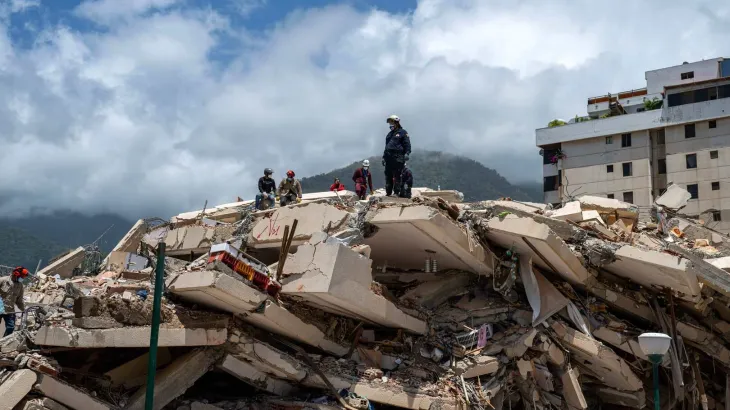
The latest quake comes just days after Venezuela was rocked by two powerful earthquakes that triggered widespread destruction across several regions. Buildings collapsed, roads and public infrastructure suffered extensive damage, and thousands of people were forced to flee their homes as emergency services launched large-scale rescue operations.
Rescue Operations Continue
Search-and-rescue teams remain engaged in a race against time to locate survivors trapped beneath collapsed buildings. Authorities have warned that the likelihood of finding people alive decreases significantly after the first 72 hours following a major earthquake, making ongoing rescue efforts increasingly challenging.
Several aftershocks have continued to shake affected areas, complicating operations and raising fears among residents already traumatized by the disaster. Emergency personnel are using heavy machinery, sniffer dogs, and specialized equipment to search through debris in the worst-hit locations.
International Support Grows
The United States has announced immediate humanitarian assistance for Venezuela following the disaster. Speaking on the relief efforts, U.S. Department of State spokesperson Tommy Pigott said that integrating international disaster response programs under the State Department has enabled faster deployment of emergency aid.
According to Pigott, the United States quickly mobilized urban search-and-rescue teams while dispatching humanitarian relief supplies, medical assistance, and emergency resources to support ongoing rescue and recovery operations in the affected areas.
Messages of solidarity have also poured in from across the international community. Acting President Delcy Rodríguez expressed gratitude to United Arab Emirates President Mohamed bin Zayed Al Nahyan for extending condolences to families affected by the tragedy.
Meanwhile, International Monetary Fund (IMF) Managing Director Kristalina Georgieva conveyed her support to the Venezuelan leadership and reaffirmed solidarity with communities struggling to recover from the disaster.
Recovery Challenges Mount
Despite the arrival of international assistance, residents in several affected regions have voiced concerns over the pace and coordination of relief efforts. Communication has been hampered by widespread mobile network disruptions and internet outages, making it difficult for families to contact missing relatives and for emergency responders to coordinate rescue missions effectively.
Many survivors remain without access to stable shelter, electricity, clean drinking water, and healthcare services, increasing pressure on authorities to accelerate relief operations.
Heavy Human and Economic Losses
The humanitarian impact of the earthquakes continues to worsen. Reports indicate that more than 1,400 people have lost their lives, while tens of thousands remain missing or displaced as rescuers continue combing through collapsed structures. Officials have cautioned that the death toll is expected to rise as additional victims are recovered from the rubble.
The United Nations Development Programme (UNDP) has estimated that the earthquakes have caused approximately USD 6.7 billion in direct physical damage, equivalent to nearly 6 percent of Venezuela’s Gross Domestic Product (GDP). The assessment highlights extensive destruction to homes, public infrastructure, hospitals, schools, transportation networks, and essential public services.
While the financial losses are substantial, humanitarian agencies emphasize that the greatest impact has been borne by affected families and communities, many of whom now face the difficult task of rebuilding their lives amid continuing seismic activity and ongoing rescue operations.