
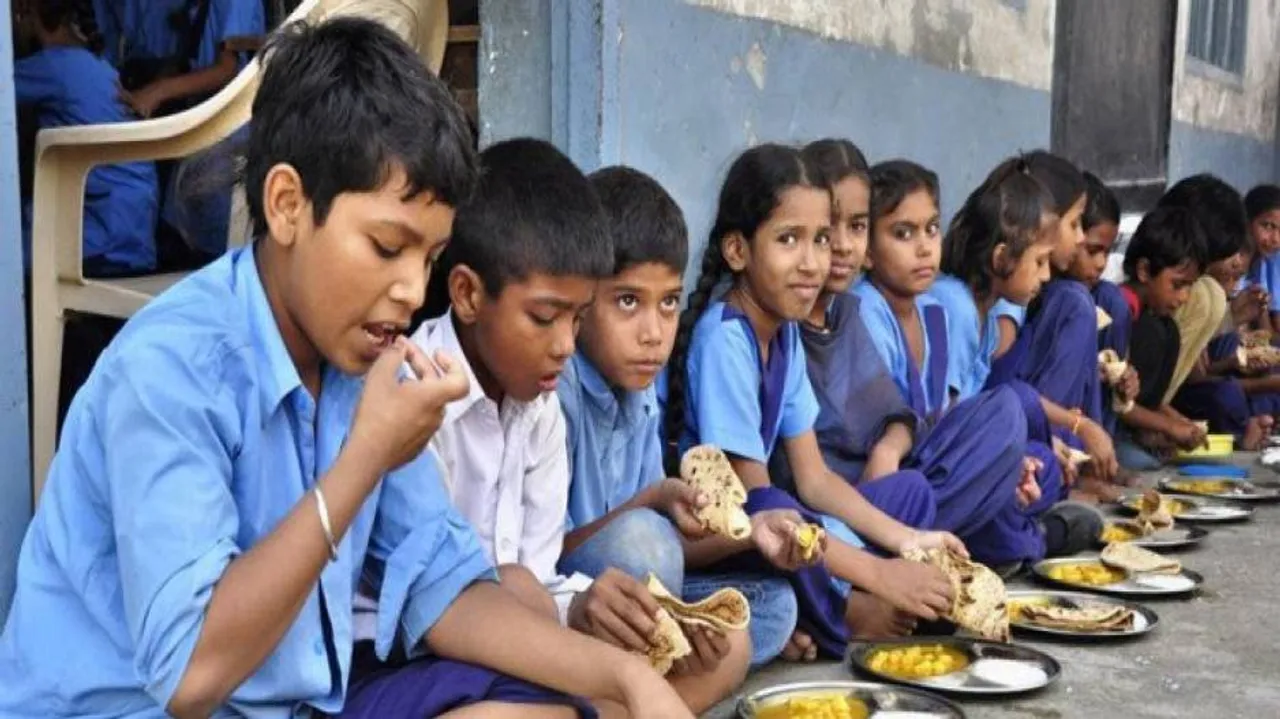
Kolkata: The West Bengal government is considering adopting Odisha’s model of serving eggs in school midday meals amid a political row over its decision to entrust the preparation and distribution of meals in government-aided schools in Kolkata to ISKCON.
The proposal comes after criticism erupted over concerns that eggs, a key source of protein for schoolchildren, would be removed from the midday meal menu because ISKCON follows a strictly vegetarian food policy. To address the issue, the School Education Department is now exploring an alternative arrangement that would allow students to continue receiving eggs without requiring the organisation to alter its dietary practices.
Odisha Model Under Review
Officials said the state is examining Odisha’s approach, where the agency responsible for cooking and serving midday meals does not provide eggs directly. Instead, schools receive additional government funds to procure and distribute eggs separately to students.
If implemented in West Bengal, ISKCON would continue preparing and serving the vegetarian meals, while individual schools would purchase eggs independently using separate financial assistance provided by the government.
Senior officials are expected to deliberate on the proposal during a meeting scheduled for Wednesday, where the feasibility of adopting the Odisha model is likely to be discussed.
How the Controversy Began
The debate began after the West Bengal government announced that ISKCON would be responsible for preparing and serving midday meals in government-aided schools in Kolkata. Soon after the announcement, the organisation clarified that its meals would remain entirely vegetarian and would not include eggs or any other non-vegetarian items.
The clarification triggered criticism from opposition parties, nutrition experts, and sections of civil society, who argued that eggs are an important source of affordable protein for children, particularly those from economically weaker backgrounds who rely heavily on school meals for daily nutrition.
Critics also questioned whether a vegetarian-only menu would adequately reflect the dietary habits and nutritional needs of students in the state.
Political Reactions
The issue has quickly turned into a political flashpoint.
BJP leader Amit Malviya defended the government’s decision to involve ISKCON, stating that the organisation has decades of experience in preparing hygienic, nutritious, and quality meals for students across the country. He argued that well-balanced vegetarian meals are capable of meeting children’s nutritional requirements and noted that students remain free to consume eggs or other non-vegetarian food at home.
On the other hand, Trinamool Congress MP Mahua Moitra strongly opposed removing eggs from the school menu. She argued that many children do not prefer substitutes such as soya or rajma and that the midday meal is often the only nutritious meal they receive each day. Moitra also questioned replacing a commonly consumed food item with alternatives that are not widely accepted in Bengal, stressing that school nutrition programmes should reflect local food preferences and dietary habits.
Focus on Children’s Nutrition
The controversy has renewed the debate over balancing religious beliefs, cultural practices, and nutritional requirements in government welfare schemes.
Nutrition experts have long maintained that eggs are among the most cost-effective sources of high-quality protein, vitamins, and essential nutrients for growing children. Several states, including Odisha, continue to include eggs in their midday meal programmes to improve child nutrition and reduce malnutrition among school-going students.
By considering Odisha’s model, the West Bengal government appears to be seeking a middle path that respects ISKCON’s vegetarian policy while ensuring students continue receiving the nutritional benefits of eggs.
Increased Budget for Midday Meals
The development comes shortly after the West Bengal government enhanced funding for the school midday meal programme. The allocation for primary school students has been increased from ₹6.78 to ₹10 per child, while the allocation for upper primary students remains unchanged at ₹10.17 per child.
The additional funding is aimed at improving the quality of meals served in schools and ensuring better nutrition for lakhs of students enrolled under the state’s midday meal programme.
The final decision on the proposed egg distribution model is expected after discussions among education department officials, with the government aiming to strike a balance between nutritional needs, administrative feasibility, and public sentiment.