
Puri, Odisha: The sacred city of Puri witnessed an overwhelming wave of devotion as the annual Snana Purnima rituals of Lord Jagannath, Lord Balabhadra, and Devi Subhadra commenced on Monday under elaborate security arrangements. The centuries-old festival, observed on the full moon day of the Hindu month of Jyestha, marks the ceremonial beginning of the world-famous Rath Yatra and attracts thousands of devotees from across India and abroad.
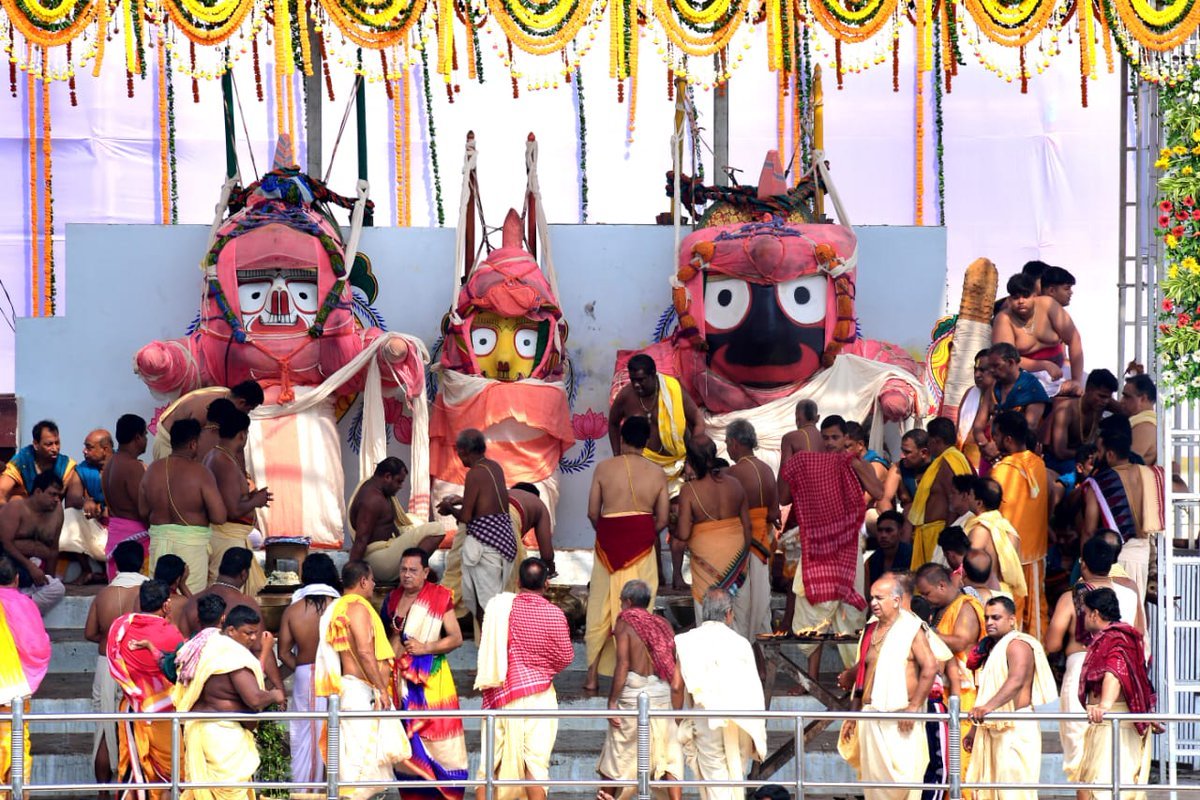
Snana Purnima is regarded as one of the most significant festivals in the Jagannath tradition. It is the only occasion in the year when the three sibling deities are brought out from the sanctum sanctorum of the Jagannath Temple and placed on the Snana Mandap, the grand bathing platform, allowing devotees to have their sacred darshan before the annual chariot festival.
The central ritual of the festival involves the ceremonial bathing of the deities with 108 pitchers of sacred water drawn from the temple’s revered golden well. The water is infused with sandalwood paste, fragrant flowers, herbs, and medicinal ingredients, reflecting the ancient Ayurvedic tradition of purification and spiritual healing. Priests perform the elaborate rituals amidst the chanting of Vedic hymns, beating of traditional drums, and devotional music, creating a deeply spiritual atmosphere within the temple premises.
Following the grand bathing ceremony, the deities are dressed in the unique Hati Besha, or Elephant Attire, one of the rarest and most anticipated adornments in the Jagannath tradition. In this special form, Lord Jagannath, Lord Balabhadra, and Devi Subhadra are decorated to resemble Lord Ganesha. Devotees believe that this divine appearance symbolizes strength, wisdom, prosperity, and the removal of obstacles, making it especially auspicious for those seeking blessings before embarking on new journeys or important endeavors.
According to temple traditions, the extensive ceremonial bath causes the deities to fall ill. This marks the beginning of the Anasara period, a 15-day phase during which the deities remain away from public view. During this time, the temple remains closed for regular darshan as the deities are believed to undergo a period of recovery. Special herbal medicines, medicinal preparations, and a light diet are offered as part of their traditional treatment. In the absence of the deities, devotees worship the Anasara Pata, a sacred painted representation that symbolizes Lord Jagannath and his siblings.
The conclusion of the Anasara period paves the way for the grand Rath Yatra, one of India’s largest and most celebrated religious festivals. Once the deities are believed to have regained their health, they reappear before devotees and undertake their majestic journey on elaborately decorated wooden chariots from the Jagannath Temple to the Gundicha Temple. The procession is attended by lakhs of devotees who gather to pull the massive chariots, considering it an act of immense spiritual merit.
Beyond its religious significance, Snana Purnima represents the timeless themes of purification, renewal, healing, and the eternal bond between the divine and devotees. Every ritual, from the sacred bath and Hati Besha to the Anasara period and the Rath Yatra, carries profound spiritual symbolism that has been preserved through centuries of tradition.
As Puri prepares for the upcoming Rath Yatra, the successful completion of Snana Purnima marks the beginning of one of the most revered spiritual journeys in Hinduism, reinforcing the rich cultural and religious heritage of Odisha that continues to inspire millions of devotees every year.