
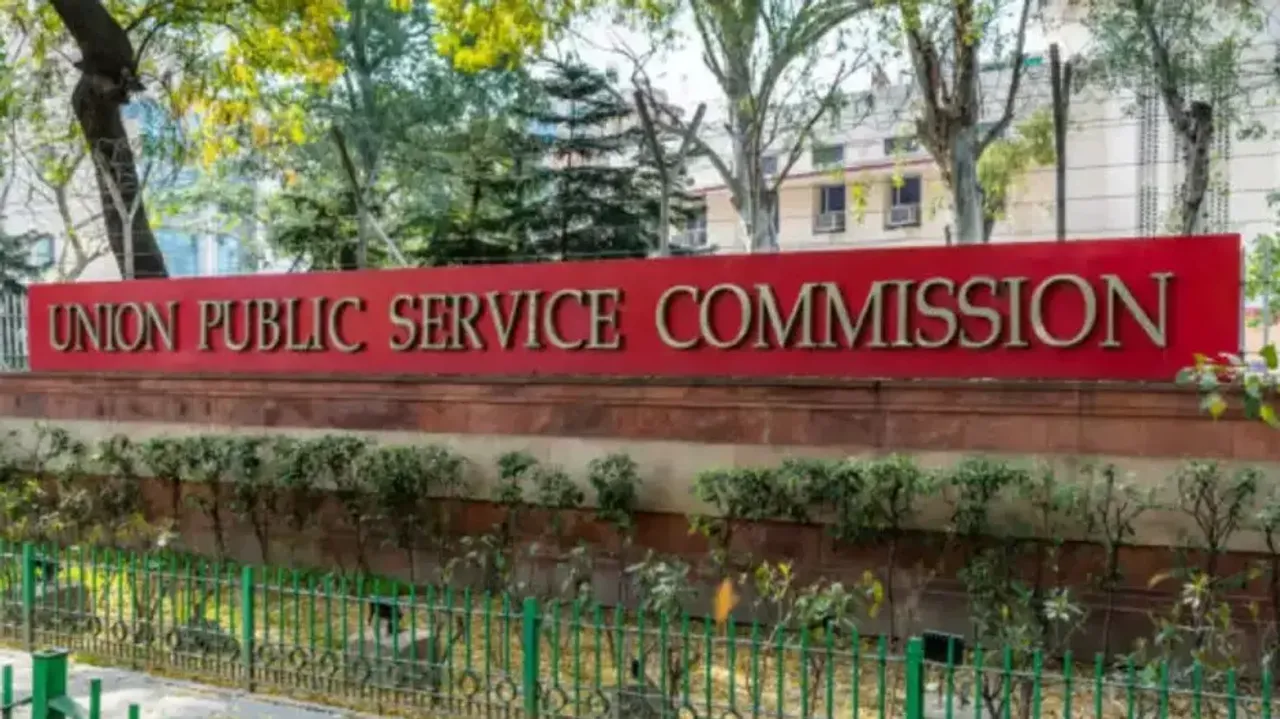
In a landmark technological initiative, the Union Public Service Commission (UPSC) has successfully implemented a real-time face authentication system during the Civil Services Examination (Preliminary) 2026 and Indian Forest Service (Preliminary) Examination 2026, significantly strengthening examination security and transparency.
5.5 Lakh Candidates Verified Across India
The face authentication system was deployed at 2,072 examination centres nationwide, covering nearly 5.5 lakh candidates who appeared for the prestigious recruitment examination.
The technology verifies whether the candidate present at the examination venue matches the photograph uploaded during the application process, helping eliminate impersonation and examination fraud.
Developed with NeGD and MeitY Support
The solution was developed by the Union Public Service Commission with technical support from the National e-Governance Division (NeGD) under the Ministry of Electronics and Information Technology (MeitY).
The authentication process was conducted through Android smartphones used by invigilators, allowing real-time candidate verification before entry into examination halls.
Cost-Effective and Scalable Solution
Unlike traditional biometric systems that require dedicated hardware and extensive infrastructure, the UPSC solution operated efficiently on standard Android devices.
Key advantages included:
- No specialised biometric equipment required
- Minimal infrastructure costs
- Easy nationwide deployment
- Faster candidate verification
- Reduced operational expenses
Invigilators were able to authenticate candidates using their smartphones, making the system highly scalable and economical.
Authentication Completed in 6–8 Seconds
According to UPSC, the technology demonstrated remarkable efficiency:
- Average authentication time: 6–8 seconds per candidate
- Peak processing capacity: 12,000 authentications per minute
- Simultaneous usage by over 7,000 invigilators
- Coverage across more than 2,000 examination venues
The quick verification process helped prevent long queues and ensured smooth candidate entry during peak examination hours.
Extensive Training and SOP Implementation
To ensure successful execution, UPSC:
- Prepared a detailed Standard Operating Procedure (SOP)
- Shared guidelines with state governments and district administrations
- Conducted multiple training sessions for invigilators
- Coordinated implementation across examination centres nationwide
UPSC Chairman Highlights Success
UPSC Chairman Ajay Kumar described the initiative as a major milestone in creating impersonation-free examinations.
He noted that while the technology was developed with support from NeGD, the larger challenge was implementing it nationwide within a limited timeframe and training thousands of personnel for seamless execution.
A New Benchmark for Competitive Examinations
The successful deployment of real-time face authentication represents a significant advancement in examination security. As recruitment agencies across India face growing concerns over impersonation and malpractice, UPSC’s model could become a benchmark for other large-scale competitive examinations.
Key Highlights
✅ Real-time face authentication introduced in UPSC Prelims 2026
✅ Nearly 5.5 lakh candidates verified
✅ Implemented at 2,072 exam centres nationwide
✅ Developed with NeGD and MeitY support
✅ Authentication completed in 6–8 seconds on average
✅ No dedicated biometric hardware required
✅ Peak capacity of 12,000 verifications per minute
✅ Major step towards impersonation-free examinations