
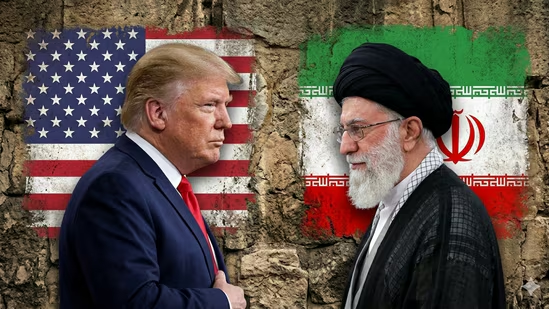
Tensions between the United States and Iran have escalated sharply after Iran reportedly opened fire on a container ship in the strategically crucial Strait of Hormuz, even as US President Donald Trump announced an indefinite extension of the ceasefire between the two nations.
According to the United Kingdom Maritime Trade Operations (UKMTO), the attack occurred around 7:55 AM when a vessel linked to Iran’s Islamic Revolutionary Guard Corps fired on a commercial container ship without prior warning. The vessel sustained damage, but no casualties or environmental harm were reported.
Ceasefire Extended, Talks Stall
The latest incident comes just hours after Trump extended the ceasefire, citing a request from Shehbaz Sharif and Asim Munir, who are acting as mediators. The extension is intended to provide Tehran time to present a “unified proposal” for peace.
However, planned talks in Pakistan have fallen through. The White House confirmed that Vice President JD Vance will not travel for negotiations, and no new timeline for in-person discussions has been announced.
Despite extending the truce, Trump emphasized that the US military blockade of Iranian ports near the Strait of Hormuz will continue, keeping pressure on Tehran.
Iran Pushes Back, Maritime Dispute Deepens
Iran has not officially responded to the ceasefire extension. Reports from Iranian media suggest that Tehran did not request the extension and will not reopen the strait while the US blockade remains in force.
Iran’s ambassador to the United Nations, Amir Saeed Iravani, has urged the United Nations to intervene, demanding the immediate release of an Iranian commercial vessel, Touska, and accusing the US of violating international law.
Iranian agencies, including Fars and Tasnim, defended the latest maritime action, claiming it was part of enforcing control over the Strait of Hormuz—one of the world’s most vital energy corridors through which nearly 20% of global oil and gas supplies pass.
Rising Military Pressure and Shipping Disruptions
The attack follows recent US military actions, including the seizure of an Iranian-linked container ship and operations targeting vessels associated with Iran’s oil trade in the Indian Ocean. These developments have further strained relations and heightened the risk of confrontation.
Shipping activity through the Strait of Hormuz has slowed significantly, with reports indicating minimal vessel movement over the past 24 hours. The disruption has raised global concerns about energy supply chains and maritime security.
Trump, in a series of statements, claimed Iran is under severe financial strain due to the blockade and the partial closure of the strait, asserting that Tehran is under pressure to reopen the route.
Uncertain Path Ahead
The situation remains volatile, with both nations warning they are prepared to resume hostilities if negotiations fail. The collapse of talks, combined with escalating military actions, underscores the fragility of the current ceasefire.
As global stakeholders closely monitor developments, the coming days will be critical in determining whether diplomacy can stabilize the region or if tensions will spiral into a broader conflict.