
India on Thursday expressed condolences following the assassination of Ayatollah Ali Khamenei, who was reportedly killed on February 28 in what has been described as the opening phase of a widening confrontation involving the United States, Israel and Iran. The development has heightened geopolitical tensions across West Asia and raised concerns about regional stability and global energy security.
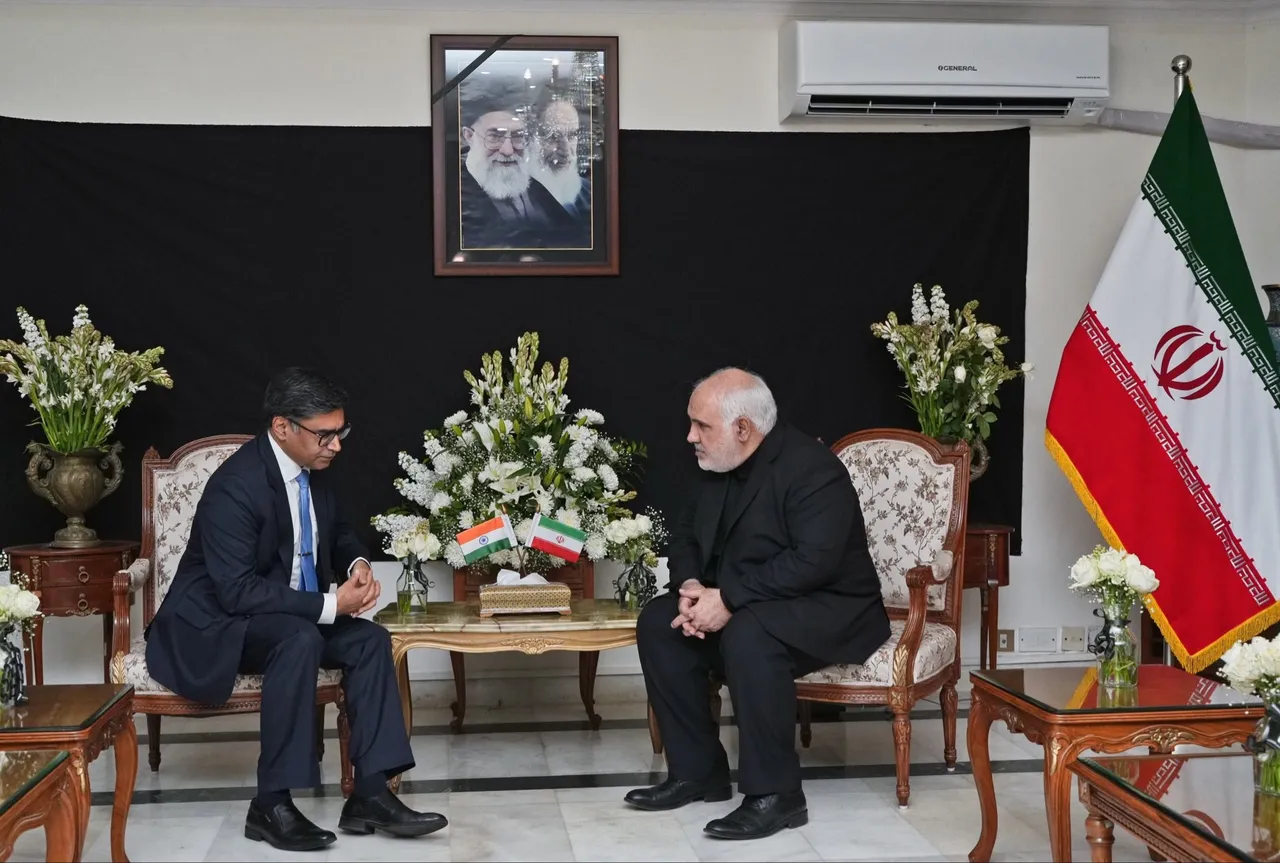
Representing the Government of India, Foreign Secretary Vikram Misri visited the Iranian Embassy in New Delhi and signed the condolence book, conveying sympathies on behalf of the Indian government and its citizens. The diplomatic gesture came as India intensified outreach to Tehran amid the rapidly evolving situation in the region.
Meanwhile, External Affairs Minister S. Jaishankar held a phone conversation with Iran’s Foreign Minister Seyed Abbas Araghchi to discuss the implications of the assassination and the broader regional security environment. According to officials, the discussion focused on maintaining stability and ensuring the safety of Indian nationals in the region.
Diplomatic Engagement Amid Regional Uncertainty
Confirming the outreach, External Affairs Ministry spokesperson Randhir Jaiswal stated that Misri conveyed India’s condolences during his visit to the Embassy of the Islamic Republic of Iran. The diplomatic move came after a brief period of silence from New Delhi following the assassination, during which Tehran reportedly expressed disappointment that India had not explicitly condemned the killing.
During the conversation between Jaishankar and Araghchi, India emphasised the need for an “early cessation of hostilities” and urged all parties involved to avoid further escalation. Officials also highlighted India’s priority of ensuring the safety of its citizens working and living across West Asia, as well as Indian sailors operating commercial vessels in sensitive maritime zones.
Concerns Over Strait of Hormuz and Energy Security
A senior Iranian diplomatic source described the ongoing conflict as an “existential war” for Tehran and said Iran’s retaliatory strikes against U.S. and Israeli targets were carefully planned and executed. The official also warned that escalating tensions could disrupt maritime activity in the strategically crucial Strait of Hormuz, one of the world’s most important oil shipping routes.
The source further urged the international community to condemn the assassination of Khamenei, arguing that targeting the head of a state could set a dangerous precedent in international relations and global security norms.
For India, the situation carries significant implications. Millions of Indian expatriates live and work across the Middle East, making regional stability a key concern for New Delhi. Additionally, India depends heavily on energy imports from the region, particularly crude oil shipments that pass through the Strait of Hormuz.
India Balances Strategic Interests
In response to potential disruptions, India has been actively engaging with regional partners to secure energy supplies and protect its citizens abroad. As part of these efforts, India’s Ambassador to Saudi Arabia Suhail Ejaz Khan recently met Waleed bin Abdulkarim El-Khereiji, Saudi Arabia’s Vice-Minister of Foreign Affairs, to discuss the safety of Indian nationals and the continuity of oil shipments.
Sources indicate that some Saudi oil supplies to India are being rerouted through the Red Sea port of Yanbu to minimize risks associated with the Strait of Hormuz, reflecting the growing uncertainty surrounding maritime trade routes in the Gulf region.
As tensions continue to rise, India has adopted a cautious diplomatic approach—balancing its strategic partnerships in the Middle East while advocating dialogue and restraint to prevent further escalation in the region.