
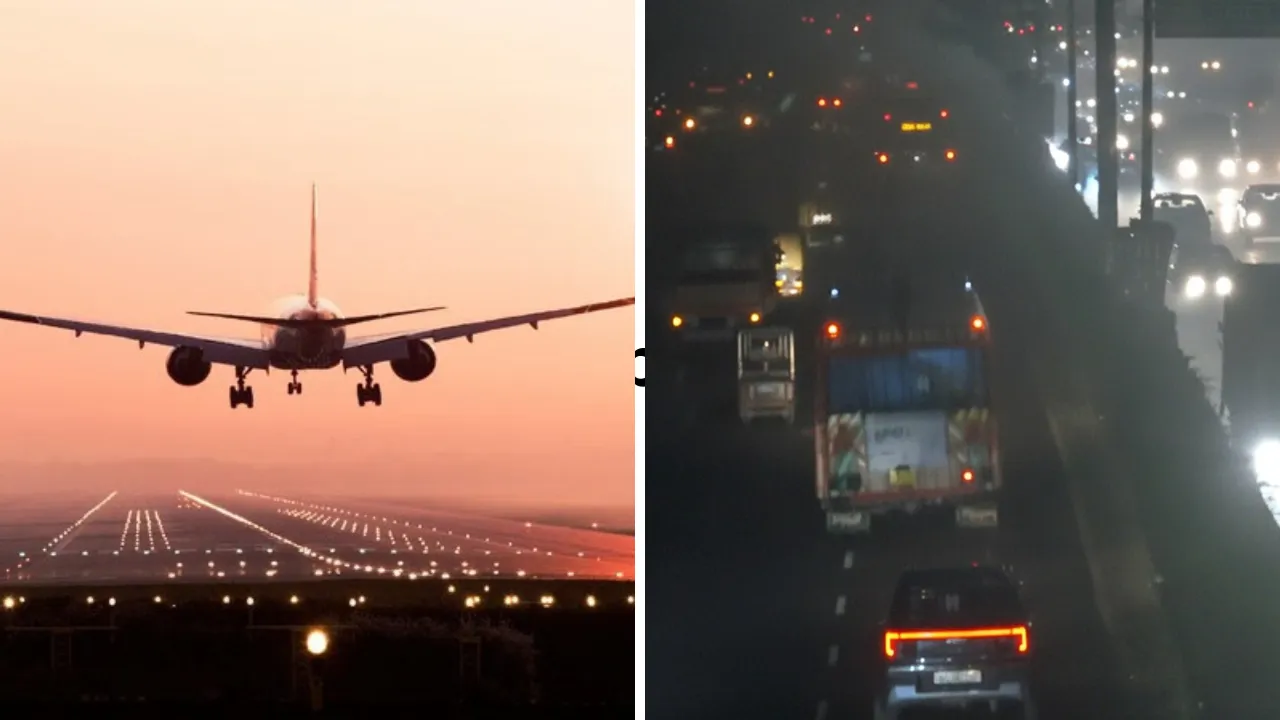
New Delhi: A thick blanket of dense to very dense fog, combined with hazardous air pollution, brought parts of the national capital to a near standstill on Monday morning, with visibility plunging to zero in several areas. This marked the first major fog episode of the winter season, creating a toxic layer of smog that severely disrupted air and rail traffic and raised serious health concerns.
The India Meteorological Department (IMD) confirmed that visibility dropped to zero at Safdarjung and around 50 metres at Palam, triggering low-visibility protocols at Indira Gandhi International (IGI) Airport. Satellite images showed an extensive fog cover across the northern plains, including Delhi and surrounding regions.
Over 400 Flights Delayed, Trains Run Behind Schedule
The poor visibility had an immediate impact on transportation. According to airport authorities, more than 400 flights were delayed at Delhi airport till noon, while at least 61 flights were cancelled and five diverted. Low visibility procedures were activated at around 2:30 am, and CAT-III operations remained in force through the morning.
“Due to dense fog, flight operations may experience disruptions,” Delhi Airport posted on X early morning, later warning passengers of cascading delays throughout the day.
Rail services were also affected. Northern Railways said around 50 trains were delayed in the Delhi division alone as fog reduced visibility along tracks, impacting long-distance services as well as local operations.
Air Quality Remains in ‘Severe Plus’ Category
Alongside the fog, Delhi’s air quality remained alarmingly poor, firmly entrenched in the ‘severe plus’ category. The 24-hour rolling average Air Quality Index (AQI) stood at 452 at 9 am, slightly lower than 461 recorded on Sunday evening, which marked December’s second-worst air quality day on record.
Saturday had already recorded an AQI of 431, making this the third consecutive day of severe pollution. On Sunday, 38 out of 39 monitoring stations reported ‘severe’ air quality, with several stations including Rohini, Ashok Vihar and Wazirpur touching the maximum AQI value of 500. Jahangirpuri and Mundka followed closely at 499.
Why the Smog Turned So Dangerous
Meteorological experts explained that a combination of easterly winds, high moisture levels, and very low surface wind speeds created ideal conditions for both fog formation and pollution entrapment.
“Moisture-laden easterly winds and calm conditions have trapped pollutants near the surface, while also leading to dense fog,” said Mahesh Palawat, Vice President at Skymet Weather. He added that a shift to northwesterly winds later in the day could help initiate gradual dispersion.
The IMD noted that visibility deteriorated rapidly late Sunday night, falling from 150 metres at 11:30 pm to zero by 12:30 am, remaining so for nearly two hours before improving marginally.
IMD Fog Classification Explained
The IMD classifies fog based on visibility levels:
-
Shallow fog: 500–1,000 metres
-
Moderate fog: 200–500 metres
-
Dense fog: 50–200 metres
-
Very dense fog: Below 50 metres
Monday’s conditions fell into the very dense fog category, posing risks to both transport and public health.
Relief Expected Later in the Day
Weather officials indicated that wind speeds are likely to pick up after noon, which may gradually improve visibility and help disperse pollutants. However, authorities cautioned that winter smog episodes are likely to recur, especially during calm and humid conditions.
Residents have been advised to limit outdoor exposure, especially during early morning hours, and follow health advisories as the city continues to grapple with extreme winter pollution.