

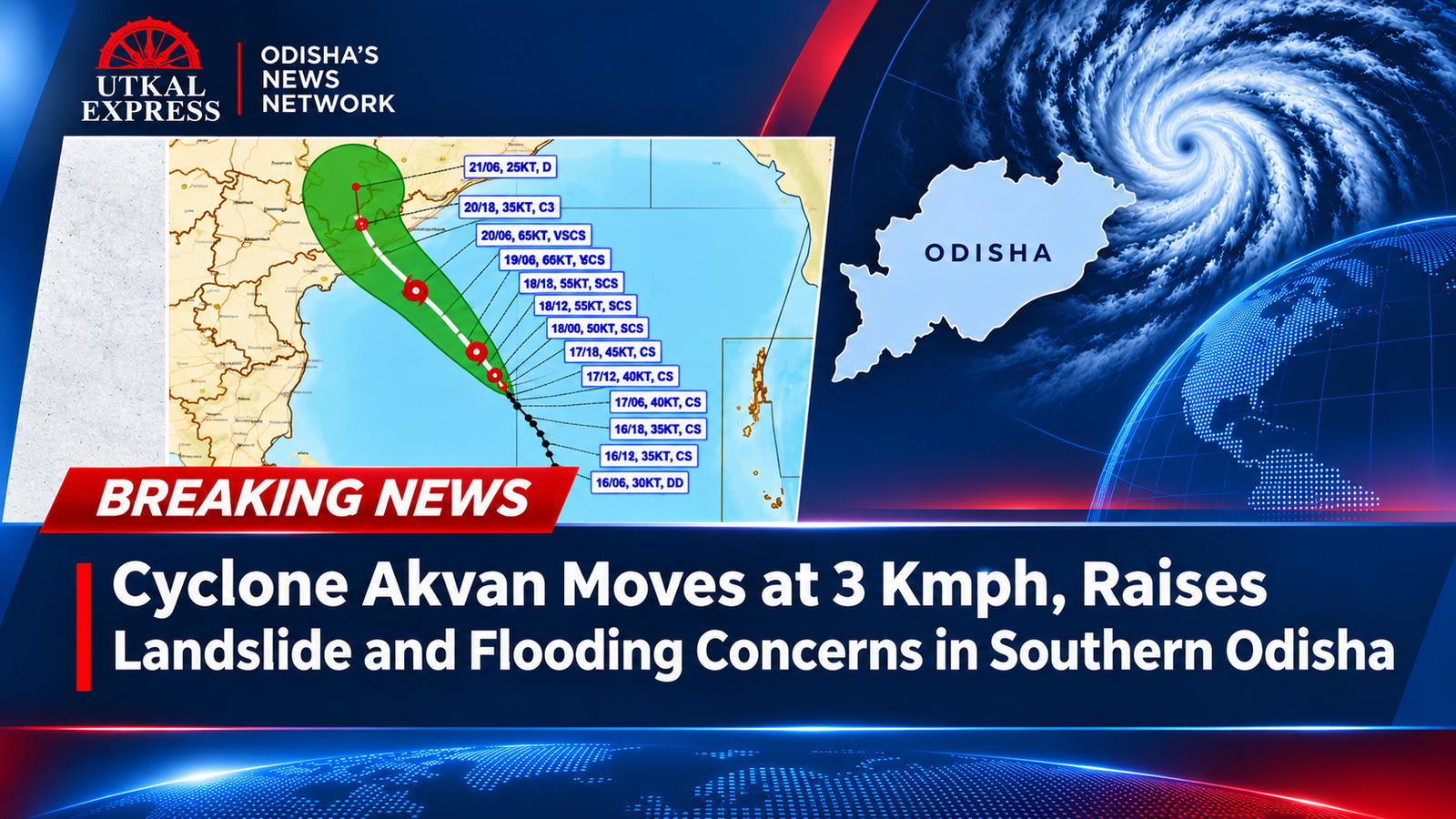
Cyclone Akvan is moving slowly over the Bay of Bengal while steadily intensifying, raising concerns over its potential impact on southern Odisha. The cyclonic system, moving at just 3 kmph over the past six hours, is likely to intensify further, with meteorologists warning of adverse weather conditions across parts of Odisha as it approaches the Andhra Pradesh coast.
According to the India Meteorological Department (IMD), the system remained nearly stationary over the same region until 2.30 am on Wednesday. It is expected to intensify into a severe cyclonic storm and strengthen further in the coming days, bringing the possibility of heavy rainfall, strong winds and disruptions across vulnerable regions.
Cyclone Akvan Likely to Intensify Further
The IMD’s latest forecast indicates that Cyclone Akvan is likely to move north-northwestwards over the Bay of Bengal. The system is expected to intensify into a severe cyclonic storm and subsequently strengthen further before approaching the Andhra Pradesh coast.
The cyclone is forecast to cross the Andhra Pradesh coast between Nellore and Visakhapatnam around noon on November 20. At the time of landfall, the system is expected to generate sustained wind speeds of 120-130 kmph, with gusts reaching up to 145 kmph, according to the forecast cited in the report.
The slow movement of the cyclonic system and its projected intensification have prompted heightened concern among authorities, particularly over the possible weather impact on southern Odisha.
Southern Odisha Faces Fresh Cyclone Concerns
Although Cyclone Akvan is forecast to make landfall along the Andhra Pradesh coast, its projected movement after landfall has emerged as a major concern for Odisha.
According to the revised forecast track, the cyclone could move inland towards southern Odisha through the Malkangiri region. The latest projections suggest that the system may retain significant intensity while moving through parts of the state, contrary to earlier assessments that indicated it could weaken into a deep depression.
Malkangiri, Koraput, Nabarangpur and Nuapada are among the districts likely to be affected by the projected movement of the system.
The possibility of the cyclone moving inland through vulnerable areas of southern Odisha has prompted authorities to closely monitor the situation and strengthen preparations for evacuation, rescue and relief operations.
Why Cyclone Akvan’s Slow Movement Is a Concern
The cyclone’s slow movement, combined with its expected intensification, could increase the duration of adverse weather conditions over affected regions.
Slow-moving cyclonic systems can bring prolonged rainfall over specific areas, increasing the risk of flooding, waterlogging, landslides and damage to infrastructure. The situation could be particularly challenging for districts with hilly terrain, vulnerable roads and settlements located near rivers or low-lying areas.
The major concerns for southern Odisha include:
- Heavy rainfall: Prolonged rainfall could cause waterlogging, flooding and rising water levels in low-lying areas.
- Landslides: Hilly and vulnerable terrain in Malkangiri, Koraput and adjoining districts could face landslide risks.
- Road connectivity: Flooding, falling trees and landslides may disrupt road connectivity, particularly in remote areas.
- Power and communication disruptions: Strong winds and heavy rainfall could damage electricity infrastructure and affect communication networks.
Odisha Authorities Step Up Disaster Preparedness
With the revised cyclone forecast indicating a potential threat to southern Odisha, authorities are closely monitoring the system’s movement and intensifying disaster preparedness measures.
Evacuation planning, deployment of disaster response teams, identification of vulnerable settlements and arrangements for relief supplies are among the key priorities as the system approaches the coast.
The evolving track and intensity of Cyclone Akvan have made the next 48 hours crucial for Odisha’s disaster management machinery, particularly in districts that may experience heavy rainfall, flooding and landslides.
Residents in vulnerable areas are being urged to remain alert, follow official weather advisories and cooperate with local administrations in case evacuation becomes necessary.