
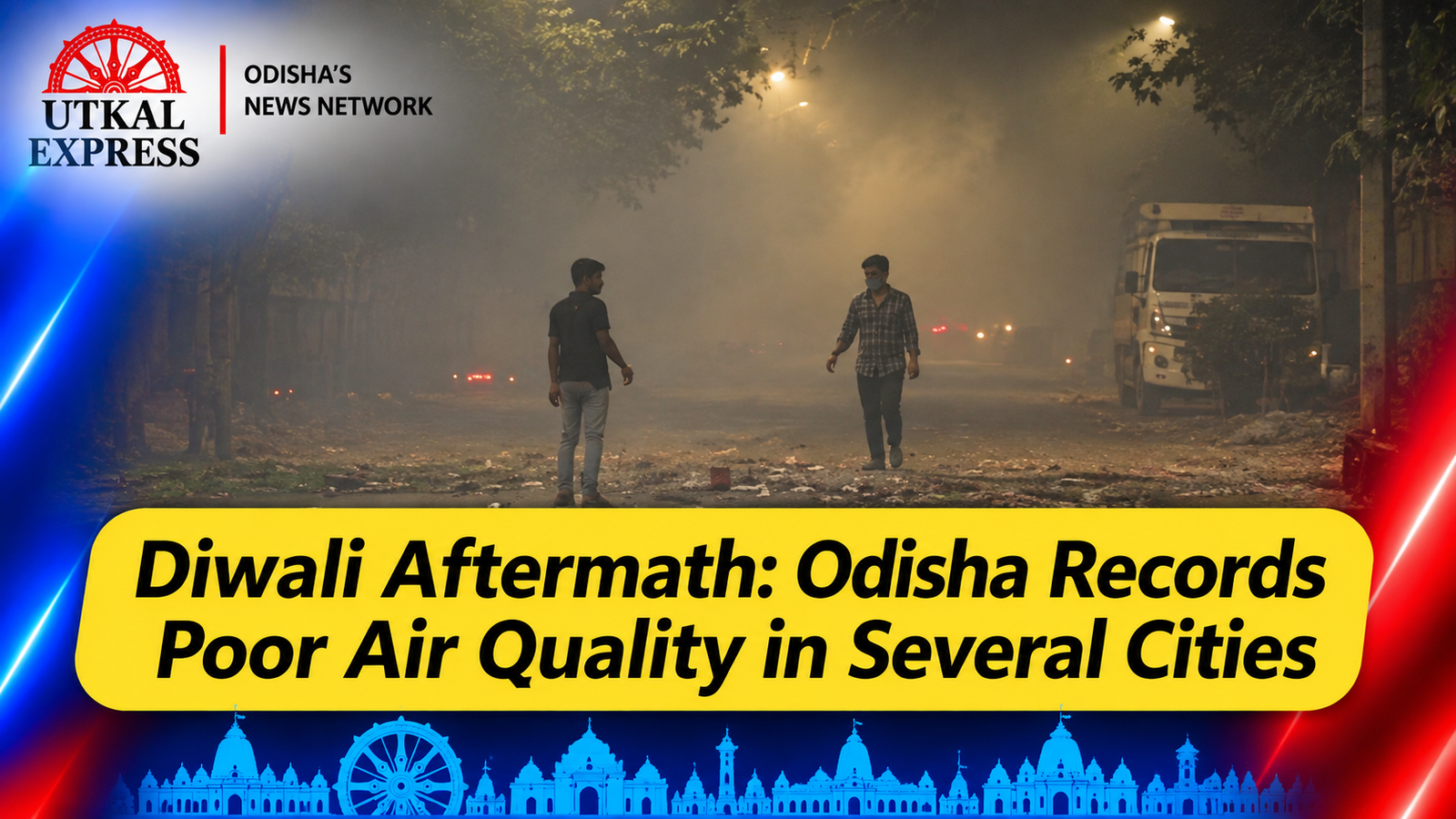
Bhubaneswar: Air pollution levels have increased across Odisha following Diwali celebrations on Sunday, with several locations recording elevated Air Quality Index (AQI) readings. Keonjhar’s Bileipada recorded the state’s highest AQI of 288, followed by Talcher at 266 and Bhubaneswar at 207. All three locations fell under the ‘Poor’ air quality category.
The rise in pollution has raised concerns over the possible health impact on residents, particularly those exposed to smoke and pollutants released during firecracker celebrations.
Bileipada Records Odisha’s Highest AQI
According to available air quality readings, Bileipada in Keonjhar recorded an AQI of 288, making it the most polluted location among the areas mentioned. Talcher followed with an AQI of 266, while Bhubaneswar registered 207.
Air quality in Cuttack, Baripada, Balasore and Barbil remained in the ‘Moderate’ category. However, the post-Diwali pollution increase has drawn attention to air quality conditions across several urban and industrial areas of the state.
Bhubaneswar Areas Report Elevated Pollution Levels
Several parts of the state capital also witnessed a deterioration in air quality following the celebrations.
The AQI at the Lingaraj Temple monitoring station stood at 242 on Monday morning, placing the area in the ‘Poor’ category. Patia recorded a reading of 171, while PM2.5 and PM10 levels in the Lingaraj area reportedly touched 500 on Sunday night.
An AQI below 50 is classified as ‘Good’, while readings above 200 fall under the ‘Poor’ category. The latest readings indicate that residents in some parts of Bhubaneswar were exposed to significantly elevated pollution levels after Diwali.
Firecracker Smoke Leaves Parts of Capital Hazy
Several areas of Bhubaneswar reportedly remained covered in smoke following Diwali celebrations. Despite restrictions and awareness campaigns, firecrackers were burst in numerous localities throughout the night, adding to the pollution in the atmosphere.
The resulting smoke created hazy conditions and reportedly reduced visibility in some areas. Residents also complained that smoke was entering their homes even when doors and windows were closed.
Some people reported breathing difficulties, while families expressed concern over the possible effects of the polluted air on their health.
Concerns Over Health Impact and Enforcement of Restrictions
The rise in pollution levels has renewed concerns about the health risks associated with excessive firecracker use. Exposure to smoke and fine particulate matter can be particularly concerning for children, elderly people and individuals with existing respiratory conditions.
The Bhubaneswar Municipal Corporation (BMC), the Pollution Control Board and other departments had undertaken awareness and enforcement measures ahead of Diwali to encourage compliance with restrictions.
However, the pollution readings recorded after the celebrations suggest that several areas continued to experience poor air quality.
With elevated AQI levels reported in multiple locations, monitoring air pollution and ensuring compliance with firecracker-related restrictions remain important for protecting public health.