
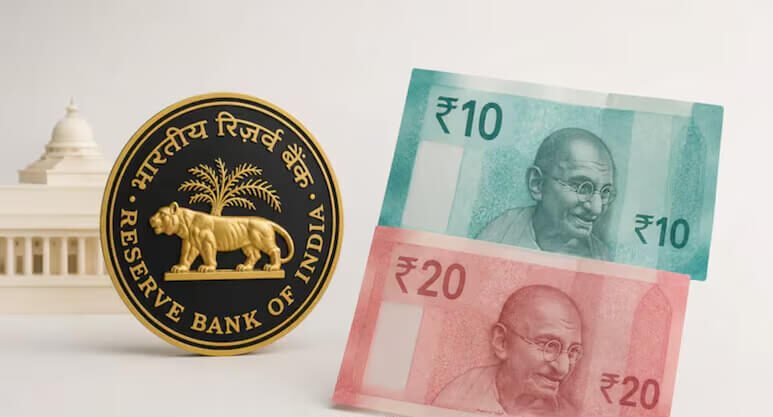
The Reserve Bank of India (RBI) is set to begin field trials of polymer ₹10 and ₹20 banknotes as part of its efforts to make Indian currency more durable, secure, and cost-effective. The Centre informed Parliament that it has approved the pilot project, which will evaluate the performance and lifespan of polymer notes compared to conventional paper currency.
The announcement was made in response to a parliamentary question on July 27, 2026, with officials stating that the initiative is currently in its initial phase.
RBI Plans to Print 2 Billion Polymer Notes
According to the Ministry of Finance, the RBI has proposed printing 1 billion polymer ₹10 notes and 1 billion polymer ₹20 notes for the field trial, based on recommendations of its Central Board.
If the pilot proves successful, the central bank plans to introduce polymer versions of these denominations into circulation in a phased manner.
Why Polymer Notes?
The primary advantage of polymer banknotes is their significantly longer lifespan. Unlike conventional paper notes, polymer currency is more resistant to water, dirt, moisture, folding, and everyday wear and tear, enabling it to remain in circulation for much longer.
Since ₹10 and ₹20 notes are among the most frequently used denominations in India, they tend to wear out quickly. Officials believe polymer notes could substantially reduce the cost of replacing damaged currency while improving the overall quality of notes in circulation.
Paper Notes Will Continue Alongside Polymer Currency
The government has clarified that the introduction of polymer notes does not mean existing paper currency will be withdrawn.
There are currently no plans to phase out or demonetize paper ₹10 and ₹20 notes. If the pilot is successful, both polymer and paper notes are expected to circulate simultaneously, giving the RBI flexibility in currency management.
No Immediate Impact on UPI or Digital Payments
Responding to concerns over whether polymer currency could influence the growth of digital payments such as UPI, the Finance Ministry said it is too early to assess any impact, as the notes have not yet entered general circulation.
The government reiterated that cash and digital payments complement each other rather than compete, with both expected to continue serving different payment needs across the country.
The proposed field trial marks another step in India’s efforts to modernise its currency system while improving durability, reducing maintenance costs, and enhancing security features in banknotes.