
Bhubaneswar: Healthcare services across Odisha remained severely affected on the second consecutive day of the statewide doctors’ protest, with outpatient departments (OPDs), registration counters, and routine medical services witnessing major disruptions in several government hospitals. The agitation, led by various medical associations over a 10-point charter of demands, left hundreds of patients without access to scheduled consultations and routine treatment.
While emergency and critical care services continued to function, the suspension of regular healthcare services caused widespread inconvenience for patients who had travelled from different parts of the state for treatment.
OPD Services Disrupted Across the State
The impact of the protest was visible in several districts, including Balasore, Cuttack, Kendrapara, Rourkela, and other major government healthcare facilities across Odisha.
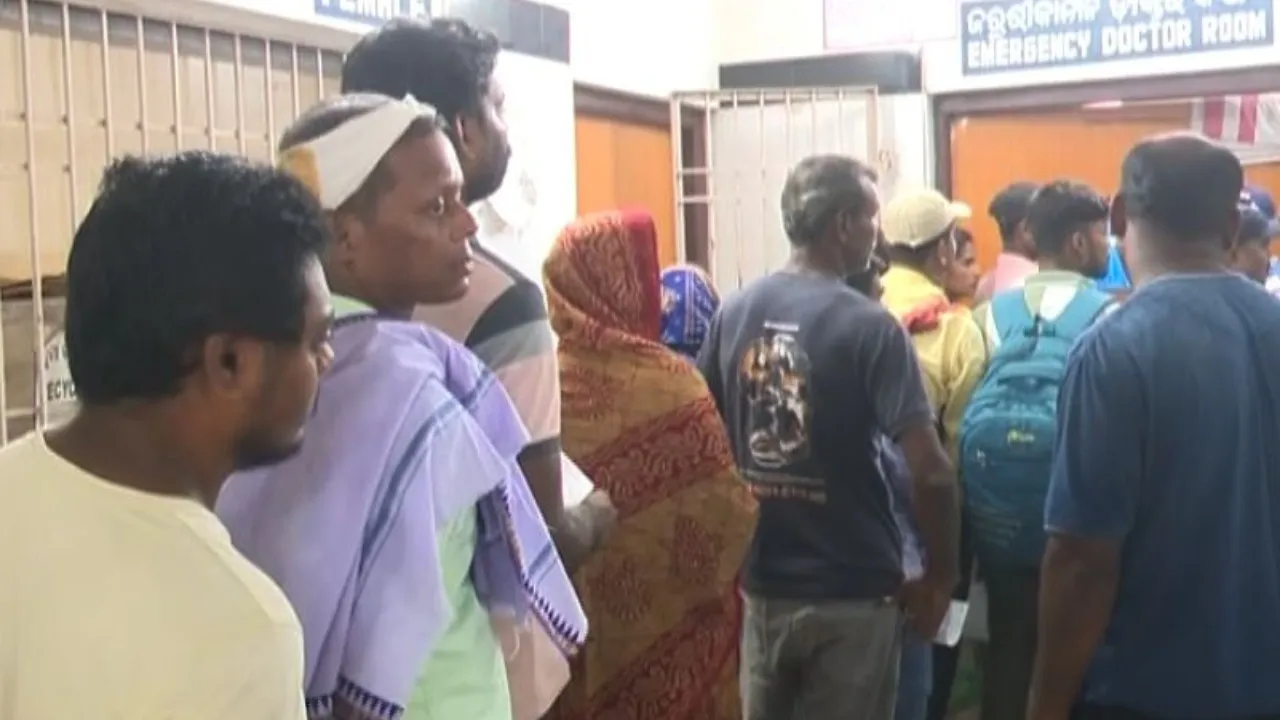
Routine outpatient consultations were suspended in many hospitals, while registration and ticketing services either remained closed or operated with minimal staff, resulting in long queues and confusion among patients.
Many people were forced to return home without consulting a doctor after being informed that OPD services had been suspended due to the ongoing agitation.
Despite the disruptions, hospitals continued to provide emergency medical care to critically ill patients to ensure that lifesaving services remained uninterrupted.
Balasore Hospital Witnesses Heavy Rush
The situation was particularly difficult at the Balasore District Headquarters Hospital (DHH), where hundreds of patients gathered from the early hours hoping to receive treatment.
With most registration counters remaining closed, hospital authorities reportedly operated only a single ticket counter, leading to long waiting lines and overcrowding.
Even patients who managed to obtain registration slips said they were unable to meet doctors because regular OPD services had been suspended.
One woman waiting outside the hospital expressed her frustration, saying the closure of the dedicated women’s registration counter forced her to stand in a queue meant for male patients.
Another patient alleged that he was denied a registration ticket and was asked to approach another section of the hospital instead.
Patients Bear the Brunt
The disruption caused significant hardship for patients and their families, many of whom had travelled long distances from rural areas to access affordable treatment at government hospitals.
Several patients said they had spent hours travelling only to learn that doctors were participating in the protest and routine consultations had been suspended.
“I came here for a medical check-up, but they refused to issue a ticket, saying the doctors are on strike. It has caused us a lot of inconvenience,” said one patient waiting outside the OPD block.
The situation led to frustration among attendants and family members, who urged authorities to resolve the impasse at the earliest to restore normal healthcare services.
Protest Over 10-Point Charter of Demands
The ongoing agitation has been launched by doctors’ associations seeking the fulfilment of a 10-point charter of demands. While the associations have continued their protest, emergency departments have been kept operational to ensure that patients requiring urgent medical attention are not affected.
The protesting doctors have maintained that their demands relate to improving the healthcare system and addressing long-pending issues affecting medical professionals.
Government Yet to Restore Normal Services
As the protest entered its second day, normal hospital operations remained affected across several districts.
Health authorities are expected to continue discussions with representatives of the medical associations in an effort to resolve the deadlock and restore routine services.
Until a resolution is reached, patients requiring non-emergency consultations have been advised to check with their respective hospitals regarding the availability of OPD services.